This is a very popular yet feared term. You could easily hear astrologers, pandits, and especially people who believe in astrology as a science talk about it as a way to know about one's life. In this blog, we will cover all the information about what Kaal Sarp Dosh is and whether it deserves the reputation it has. Not only that, but we will also unravel the kaal sarp yoga meaning along with the most common kaal sarp dosh symptoms people report. We will discover what tradition says causes it, and seek meaningful kaal sarp dosh remedies that astrologers typically recommend.
What Is Kaal Sarp Dosh? The Basic Definition
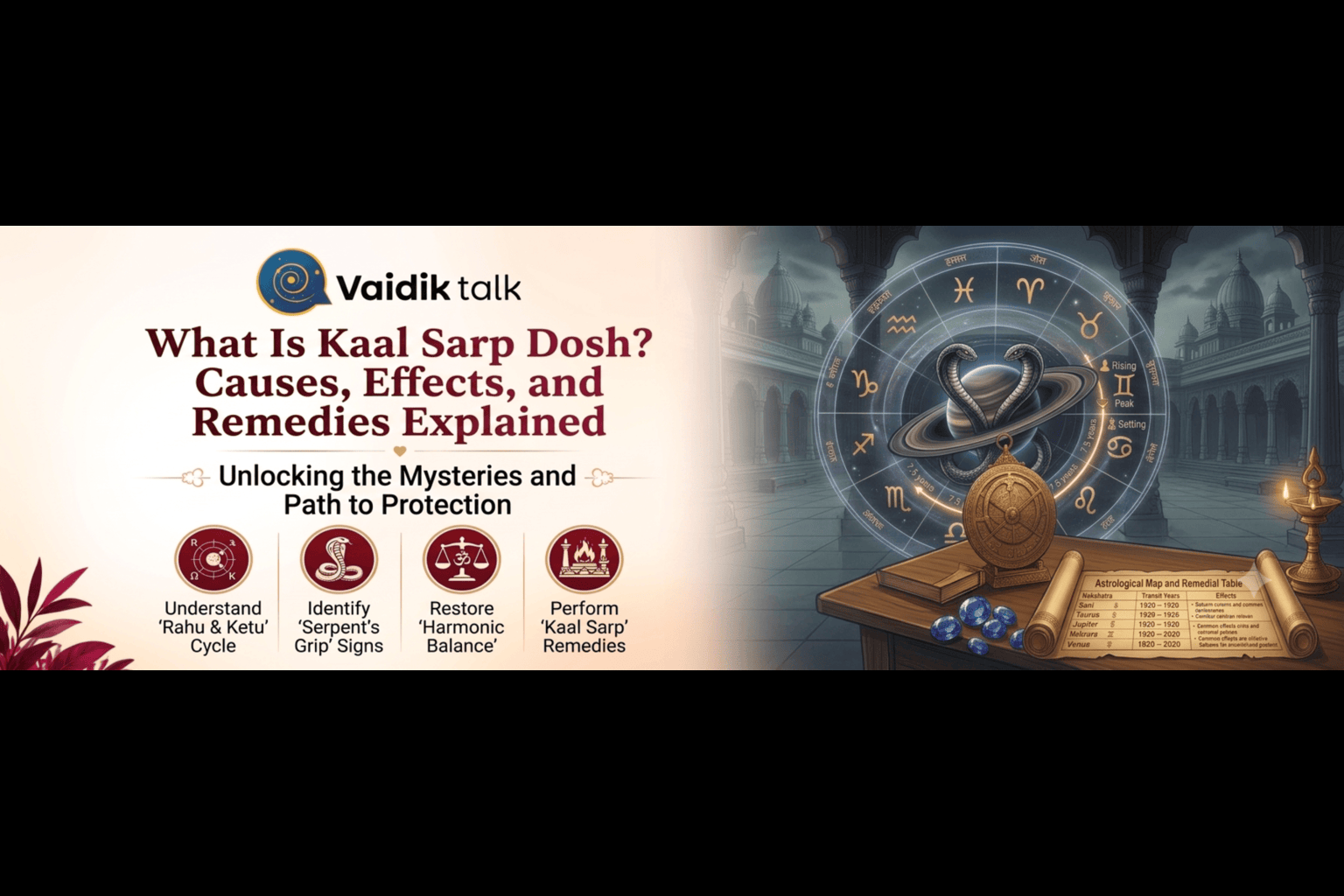
Kaal Sarp Dosh, aka Kaal Sarp Yoga, occurs when all 7 of the Sun, Moon, Mars, Mercury, Jupiter, Venus, and Saturn planets in a chart are in a linked position between Rahu and Ketu, the two lunar nodes. Imagine the zodiac as a single circle broken by the Rahu-Ketu axis. If the other planets are in this circle on one side of the axis line, this will be a Kaal Sarp Dosh. However, if one or more planets cross over to the other side of the line, astrologers will say that it is a partial formation and will hold very little importance and very little intensity.
Full vs Partial Formation
When all the 7 planets sit on the Rahu side of the axis with none on the Ketu side, it is called a full Kaal Sarp Dosh. Conversely, if one planet breaks the pattern, it is called a partial formation. This planet is termed by most astrologers as a milder version at present, and it has less influence on the overall chart.
Kaal Sarp Yoga Meaning: Where the Name Comes From
In this structure, Rahu is associated with the head of the serpent and Ketu with the tail, explaining the ‘sarp’ part of the name. ‘Kaal’ relates to time and fate, and ‘sarp’ is the serpent. So, ‘kaal sarp’ translates as a case of the serpent’s influence being funneled through one narrow channel rather than being contained in a full circle. Diagrams are usually more effective in conveying the concept of the kaal sarp yoga meaning to the beginner, because most astrologers prefer to draw diagrams when they explain the meaning to a client for the first time, as there is an increasing regard for drafters of astrological charts.
Kaal Sarp Dosh as a configuration of hemmed planets is not found by this name in classical texts of the past such as Brihat Parashara Hora Shastra or Saravali and is a newer addition to the astrological community and practiced by modern-day astrologers, while others of the older generation of astrologers tend to avoid it or omit it. This does not mean that it is devoid of value, but it should be known of and understood before taking any canceling effect as a given.
The 12 Types of Kaal Sarp Dosh
Astrologers have divided the Kaal Sarp Dosh into 12 types -
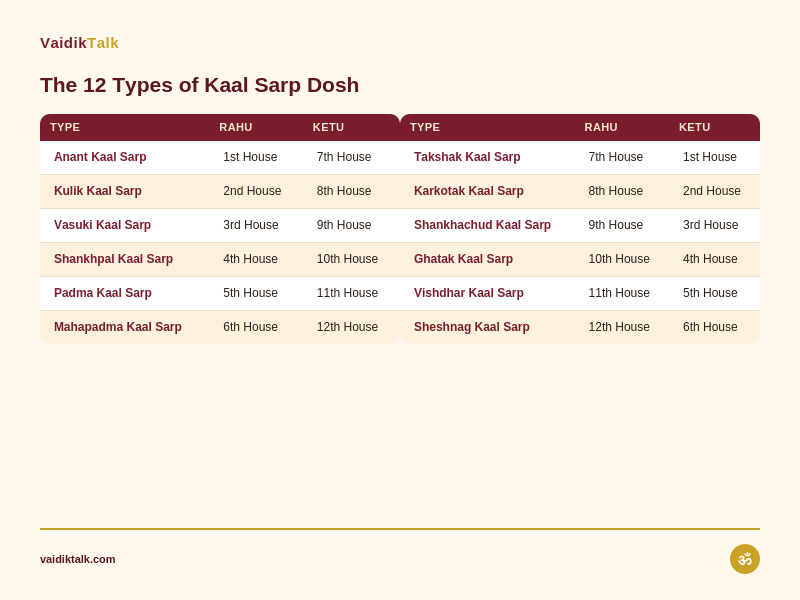
Common Kaal Sarp Dosh Symptoms
The symptoms of kaal sarp dosh are different for each person, but below are some patterns that are often seen in consultations:
- Repeated postponements of marriage or children
- A string of career setbacks that seem to come just when things are going well
- Financial insecurity with regular, consistent effort
- Family quarrels and tension
- Anxiety, restlessness, and sleep disturbances
- A feeling of working harder than results would suggest
None of these symptoms of kaal sarp dosh are individual to this dosh alone; astrologers usually look for a cluster of these symptoms as well as the actual planetary placement before blaming a problem on this particular pattern.
What Causes Kaal Sarp Dosh?
Kaal Sarp Dosh is believed to be related to one’s past life karma and is often described as doing harm to snakes. This is because Rahu and Ketu are associated with the serpents in Vedic symbolism. Some schools of thought have a less literal view and see this as an intensified karmic pattern as it relates to the house that Rahu and Ketu are placed in and not as a punishment for some specific act in the past. In either case, the basic idea is the same: it’s not permanent, but something to work through and soften.
How Common Is This Belief?
Belief in this kind of planetary influence remains widespread. According to the study by the Pew Research Center on Indian religions, it is reported that 44% of Indians believe planetary positions can affect events in their lives. 83% accepted that they schedule important events around auspicious timing. Market research from Bonafide Research observed that this same pattern is followed by people in the context of spending.
Kaal Sarp Dosh Remedies Commonly Recommended
Here are the 2 types of remedies that people can opt for -
Puja-Based Remedies
The cures for kaal sarp dosh usually fall into a few categories. The most popular remedy is to perform Puja, especially the Kaal Sarp Dosh Nivaran Puja, which is generally performed at the Trimbakeshwar Temple near Nashik, which is one of the twelve Jyotirlinga sites, although many astrologers do perform simplified pujas at other places as well. Another remedy that is directly related to the symbolism of Rahu and Ketu is the worship of serpent deities on Nag Panchami.
Mantra and Lifestyle Remedies
Remedies are used or replaced with Mantra and lifestyle-based remedies based on the astrologer and the person’s preference, along with puja. These usually involve chanting the Maha Mrityunjaya Mantra or specific Rahu and Ketu mantras on particular days of the week, donating items associated with Rahu or Ketu such as mustard oil, black sesame or blankets, regularly feeding birds and sometimes wearing gemstones like hessonite (gomed) for Rahu or cat’s eye (lehsunia) under the guidance of an astrologer rather than on a whim. None of these kaal sarp dosh remedies are to be thought of as instant solutions, as they are usually presented by astrologers as consistent practices that ease the effects of the dosh over months.
Where to Start
It all starts with a well-structured Vedic chart. Vaidik Talk's guide on what is Vedic astrology can help you understand how a kundli is constructed from birth details. Anyone looking to understand the basics can learn from it. If you are someone who is already dealing with a confirmed dosh, you may also like to go through the Pitru Dosh guide, because there is a possibility that the two can occur together and even compound each other's effects.
Our Vaidik Talk's AI Astrologer can evaluate birth details and point out the concerning factors regarding the Kaal Sarp Dosh presence at no cost. For a more detailed reading, you can also talk to an Astrologer to see what remedies fit the specific chart.
Getting the Right Guidance
It may sound menacing, but we would urge our readers not to get scared of it. It is talked about with a dramatic reputation, but with the right knowledge and guidance, you can understand and sidestep its effects. If you are doubtful about your own chart and seeking guidance, you should reach out to us through the Contact Us page, and our team will counsel you for the right steps with proper consultation.
Frequently Asked Questions (FAQs)
Is Kaal Sarp Dosh harmful in every case?
No, the effects of Kaal Sarp Dosh depend on the rest of the chart. People having strong yogas will experience fewer effects of it.
Can Kaal Sarp Dosh be fully removed?
It is unheard of, as per many astrologers, its intensity can be diminished and maintained, but total removal is less heard of by people.
How is Kaal Sarp Dosh different from Sade Sati?
Both are different, Kaal Sarp Dosh refers to the formation of planetary placement around Rahu and Ketu, but Sade Sati is linked to the Saturn transit usually stays for about seven and a half years.
Does everyone with Rahu-Ketu in their chart have this dosh?
It will only form when all the 7 planets join along between Rahu and Ketu.
Where is the Kaal Sarp Dosh Nivaran Puja usually performed?
It is usually linked to Nashik with the Trimbakeshwar Temple, but the simplified versions can also be performed in other places.