Navratri Day 8 is dedicated to Maa Mahagauri, the eighth form of Navadurga. Her radiant white form represents purity, peace, forgiveness and renewal. After the intense strength of Maa Kalaratri on Day 7, Maa Mahagauri offers a message of calmness: darkness can be followed by clarity when a devotee chooses sincere reflection and disciplined action.
The nine forms of Maa Durga are worshipped through Navratri as symbols of spiritual qualities such as grounding, courage, devotion, wisdom and inner strength. You can start reading about it from the point of Navratri’s meaning leading to more interesting topics.
Maa Mahagauri is symbolically connected with Rahu Graha, the lunar node associated in Jyotish with ambition, confusion, sudden change, desires, foreign connections and unconventional paths. This association highlights an important contrast. Rahu may represent uncertainty or illusion, while Maa Mahagauri represents purification of thought, clarity of intention and the strength to leave harmful patterns behind.
Who Is Maa Mahagauri?
The name Mahagauri refers to the greatly radiant or fair one. Devotional traditions describe Maa Parvati undertaking intense penance to attain Lord Shiva. Her form became covered by dust and hardship during this period. Lord Shiva is said to have bathed her in the waters of the Ganga, after which she appeared radiant and pure as Maa Mahagauri.
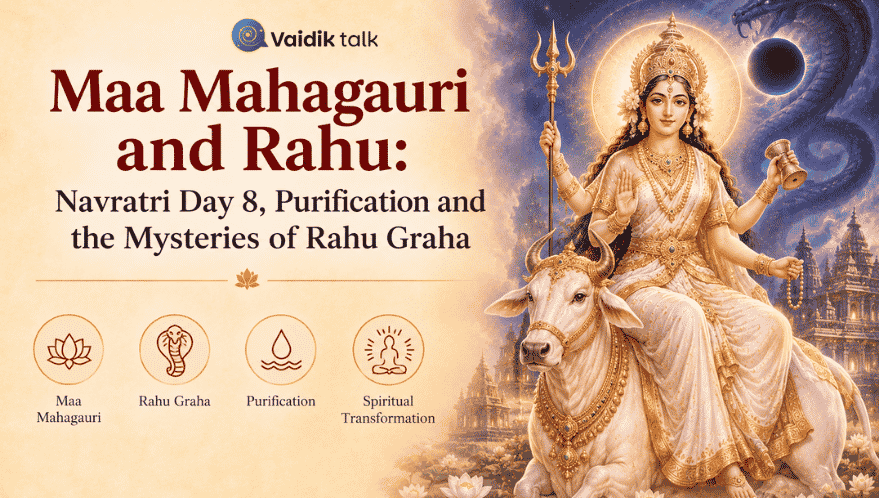
Maa Mahagauri is commonly depicted wearing white garments and riding a bull. She is usually shown with four arms, holding a trident and damaru in two hands, while the other two hands display blessing and protection gestures. The bull, also associated with Lord Shiva, represents steadiness, devotion and calm strength.
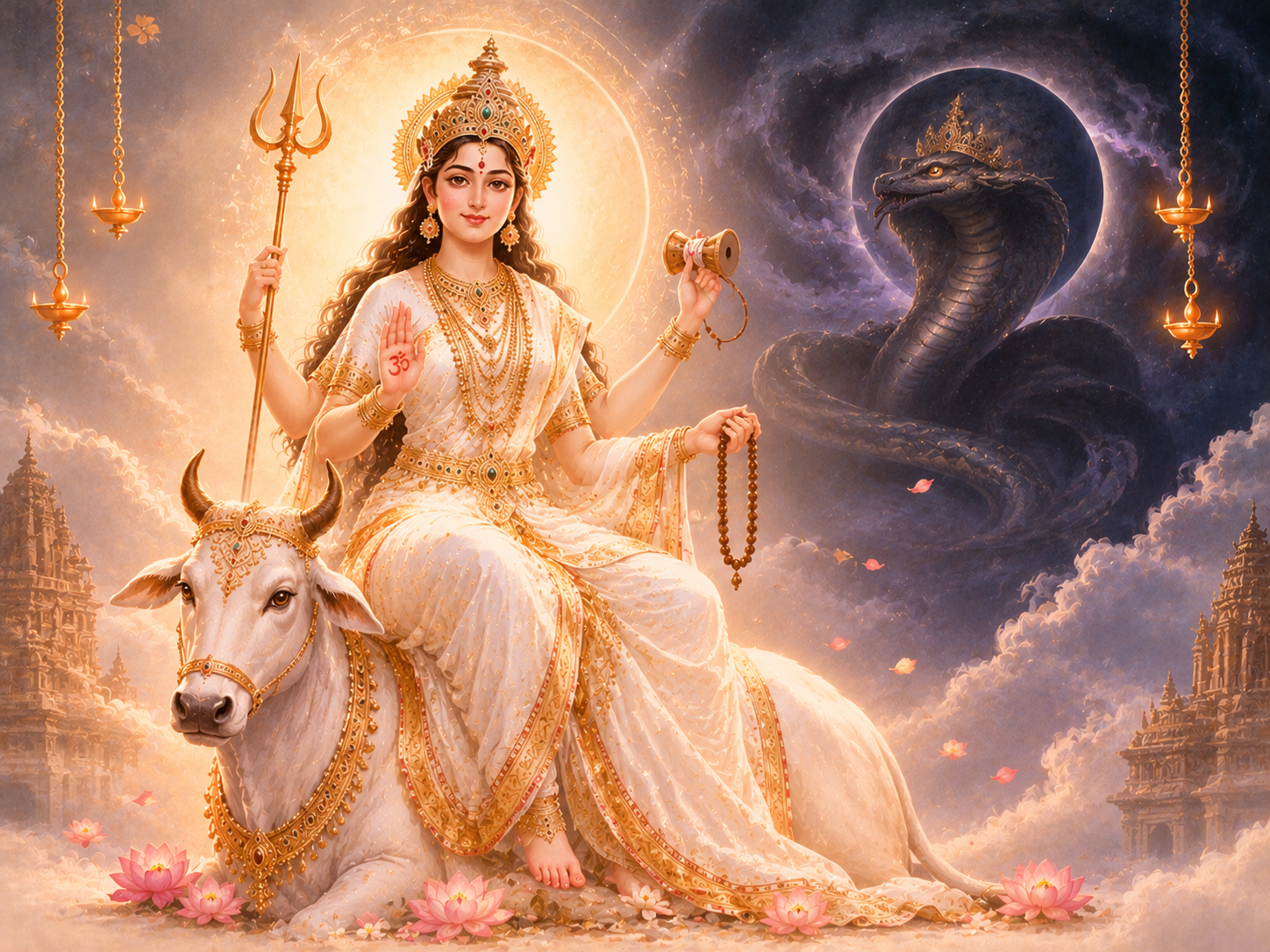
Her white appearance does not simply represent outward purity. It encourages devotees to examine their intentions, speech and actions. Purification can mean apologising after a mistake, ending a harmful habit, choosing honesty or bringing greater order to one’s daily conduct.
Maa Mahagauri’s Day 8 worship follows the earlier Navratri forms. Maa Shailputri and the Moon introduce emotional stability on Day 1, while Maa Brahmacharini and Mars represent focused discipline. Maa Chandraghanta and Venus add the balance of grace and courage.
Maa Mahagauri and Rahu Graha
Rahu is one of the nine grahas considered in Jyotish, though it is not a physical planet. Astronomically, Rahu corresponds to the Moon’s ascending node, one of the points where the Moon’s orbital path intersects the apparent path of the Sun. Eclipses can occur when the Sun, Earth and Moon align close to these nodal points. NASA’s eclipse guidance explains that eclipses occur due to this alignment of the Sun, Moon and Earth.
In Vedic astrology, Rahu is traditionally associated with strong desires, unpredictability, material ambition, illusion, technology, foreign influences and sudden shifts. Its meaning in an individual Kundli depends on its sign, house, conjunctions, aspects and planetary periods. Rahu should not be treated as a simple marker of bad fortune.
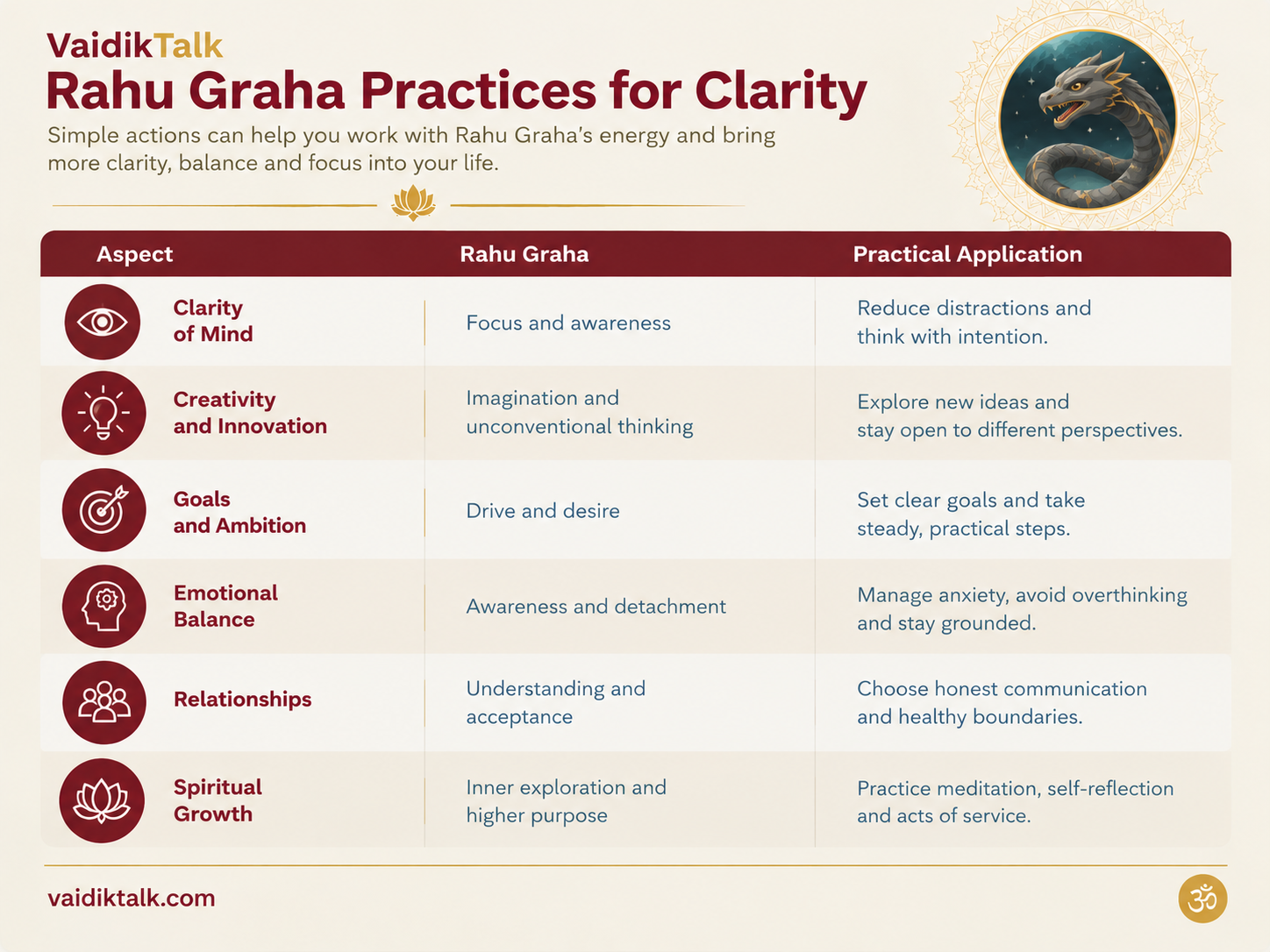
The spiritual connection between Maa Mahagauri and Rahu Graha centres on clarity. Rahu can represent a mind that feels pulled toward appearances, comparisons or impulsive choices. Maa Mahagauri represents the pause that allows a person to ask: Is this choice honest, healthy and aligned with deeper values?
If you are someone who is interested in building a foundation before interpreting planetary placements, you can start by learning what Is Vedic Astrology and comprehend the key concepts such as grahas, houses and Kundli analysis.
Purification as a Spiritual Practice
Purification is often misunderstood as a ritual act alone. Maa Mahagauri’s symbolism suggests that purification also involves awareness and personal responsibility. It can appear in small choices made each day.
Clearing Mental Confusion
Rahu Graha is linked with uncertainty and exaggerated desire in traditional astrology. A person can respond by checking facts before making decisions, avoiding impulsive purchases and taking time before responding to emotionally charged messages.
Maa Mahagauri’s message is simple: clear thinking develops when a person creates space between an impulse and an action. Prayer, writing, silence or a trusted conversation can help create that space.
Releasing Harmful Patterns
A difficult habit may involve dishonesty, jealousy, careless spending, resentment or repeated self-doubt. Devotees may use Navratri Day 8 to identify one pattern that no longer serves them and take one realistic step toward change.
The spiritual energy associated with Maa Mahagauri supports gentleness during this process. Purification is not about shame. It is about recognising what needs attention and making a sincere effort to improve.
Choosing Simplicity
Maa Mahagauri’s white form is associated with peace and simplicity. A devotee may observe this quality through a cleaner prayer space, simpler food, less unnecessary consumption or a more mindful daily routine.
This theme complements the vitality of Maa Kushmanda and Surya Graha and the thoughtful communication taught through Maa Skandamata and Budh Graha.
Navratri Day 8 Puja Vidhi
The Navratri Day 8 puja vidhi differs by region, temple and family tradition. Devotion, cleanliness and gratitude remain central to the worship.
Prepare the Prayer Area
Devotees may bathe early, wear clean clothing and clean the puja area. An image or murti of Maa Mahagauri may be placed on a fresh white or light-coloured cloth. A diya, incense, flowers, water, kumkum, akshat, fruits and sweets may be arranged before the goddess.
White is commonly associated with Maa Mahagauri because it represents calmness and purity. Devotees may wear white clothing or offer white flowers, subject to their family’s customary practice.
Offer Bhog and Prayer
Coconut is commonly offered to Maa Mahagauri. Some families also offer fruits, kheer, milk-based sweets, halwa or other satvik bhog. The offering may be prepared with cleanliness and offered with a prayer for inner peace and right understanding.
During the Navratri Day 8 puja vidhi, devotees may pray for freedom from fear, confusion and negative habits. Many families also perform Kanya Puja during Ashtami or Navami, welcoming young girls as representations of divine feminine energy. Customs vary widely, so families may follow their local and household traditions.
Recite the Maa Mahagauri Mantra
A commonly recited Maa Mahagauri mantra is:
Om Devi Mahagauryai Namah
The Maa Mahagauri mantra may be chanted in a calm and focused manner. Some devotees chant it 108 times with a mala, while others use a count that reflects their family practice or guidance from a teacher.
A traditional verse associated with Maa Mahagauri is:
Shwete Vrishe Samarudha Shwetambaradhara Shuchi
Mahagauri Shubham Dadyan Mahadeva Pramodada
The Navratri Day 8 puja vidhi may end with aarti and the sharing of prasad with family members, neighbours or guests.
Rahu Graha Practices for Clarity
Devotees can use Maa Mahagauri worship as an opportunity to reflect on Rahu Graha with practical, ethical actions.
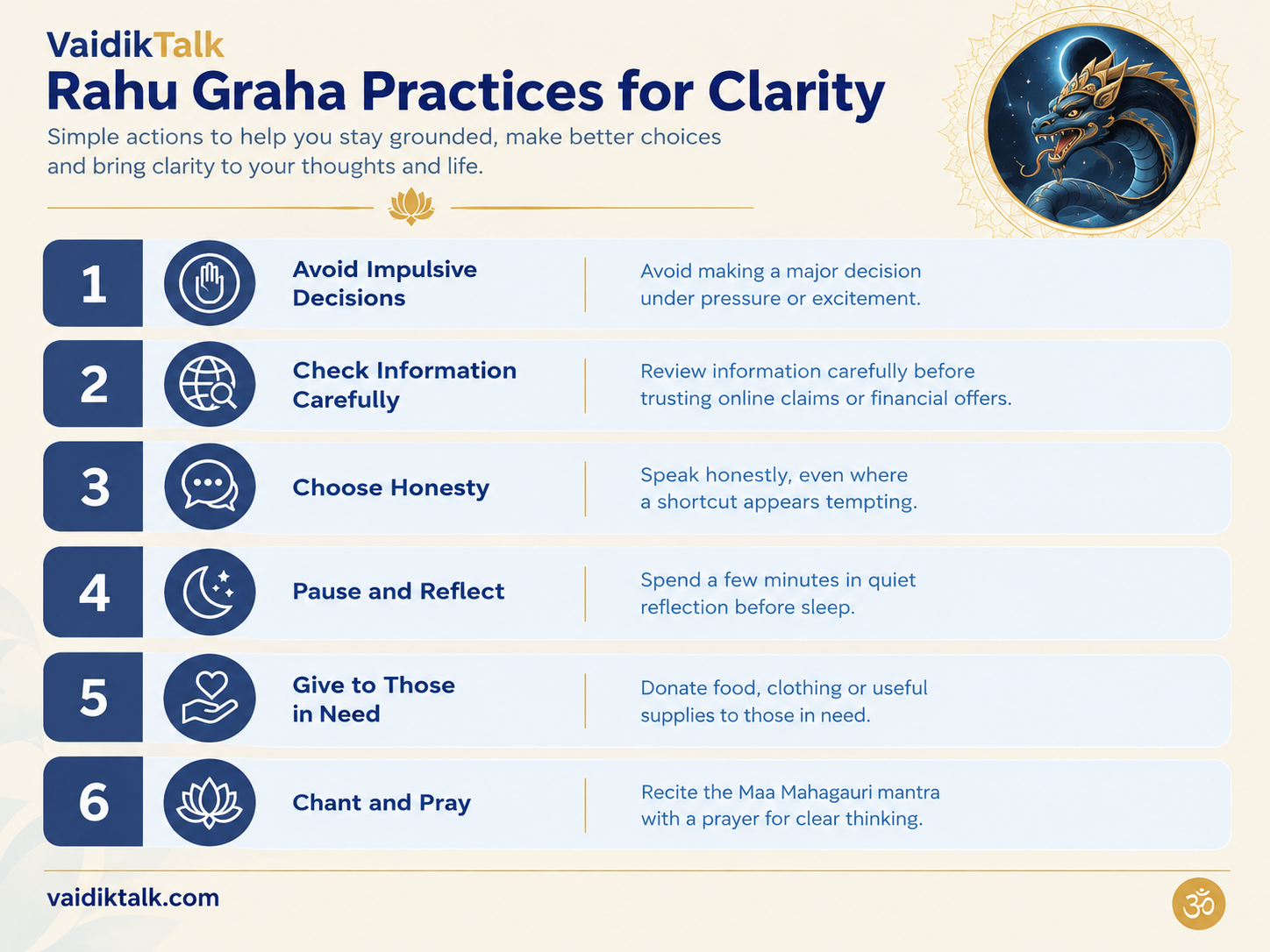
- Avoid making a major decision under pressure or excitement.
- Review information carefully before trusting online claims or financial offers.
- Speak honestly, even where a shortcut appears tempting.
- Spend a few minutes in quiet reflection before sleep.
- Donate food, clothing or useful supplies to those in need.
- Recite the Maa Mahagauri mantra with a prayer for clear thinking.
Some traditions associate dark blue, smoky tones, coconut or charitable acts with Rahu-related worship. These practices should be viewed as faith-based reminders to live more consciously, rather than as fixed assurances about outcomes.
For a regular chanting practice, devotees may explore Rudraksha malas and spiritual prayer products at VaidikTalk Store. A mala can support a quiet daily routine built around attention, prayer and self-reflection.
Maa Mahagauri’s Lesson for Rahu Periods
In Jyotish, a Rahu period may be described as a time of unusual ambition, shifting circumstances or heightened desire. Such a period does not determine a person’s entire future. Choices, practical planning, support systems and personal conduct remain meaningful.
Maa Mahagauri offers a helpful spiritual response: seek clarity before action. A person facing career uncertainty can gather information and develop skills. Someone facing relationship confusion can communicate honestly and set respectful boundaries. Someone concerned about finances can create a budget and seek qualified financial advice.
This approach builds on the ethical wisdom represented by Maa Katyayani and Guru Graha. It also follows the courage of Maa Kalaratri, who represents the strength to face fear rather than avoid it.
Seek Personalised Guidance
Maa Mahagauri and Rahu Graha offer a powerful Navratri Day 8 message: purification begins with honest awareness, and clarity grows through disciplined choices. A complete Kundli can offer individual context for Rahu Graha, career direction, relationships, education and personal growth.
For personal insight into Rahu Graha, a Kundli or Navratri worship, devotees may contact VaidikTalk for astrology guidance. VaidikTalk connects users with astrologers for Vedic astrology, palmistry, numerology, tarot and related spiritual consultations.
Frequently Asked Questions (FAQs)
Who is Maa Mahagauri?
Maa Mahagauri is the eighth form of Navadurga, worshipped on Navratri Day 8.
What is the Maa Mahagauri mantra?
A common Maa Mahagauri mantra is “Om Devi Mahagauryai Namah.”
What is offered during Navratri Day 8 puja vidhi?
Coconut, fruits, flowers, sweets, incense and a diya are commonly offered according to family tradition.
Why is Maa Mahagauri linked with Rahu Graha?
The connection is symbolic, joining Maa Mahagauri’s purity and clarity with Rahu Graha’s themes of confusion, desire and unexpected change.
Which colour is associated with Maa Mahagauri?
White is commonly associated with Maa Mahagauri and represents peace, purity and inner calm.