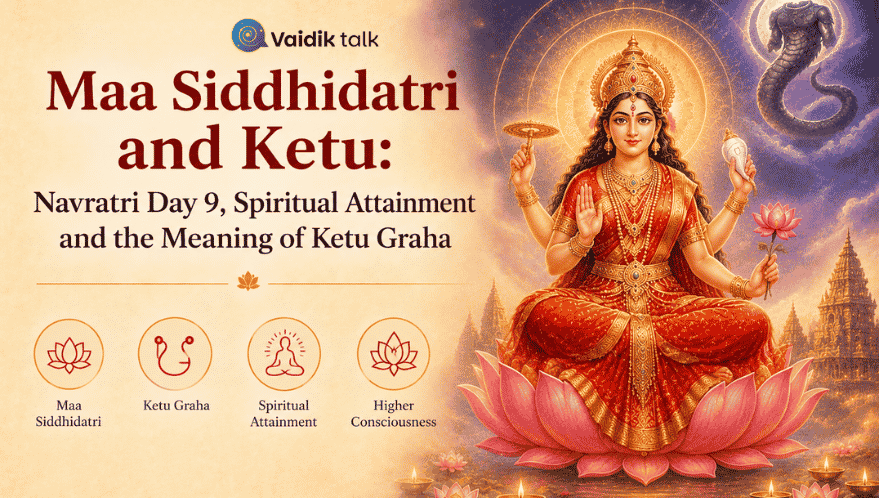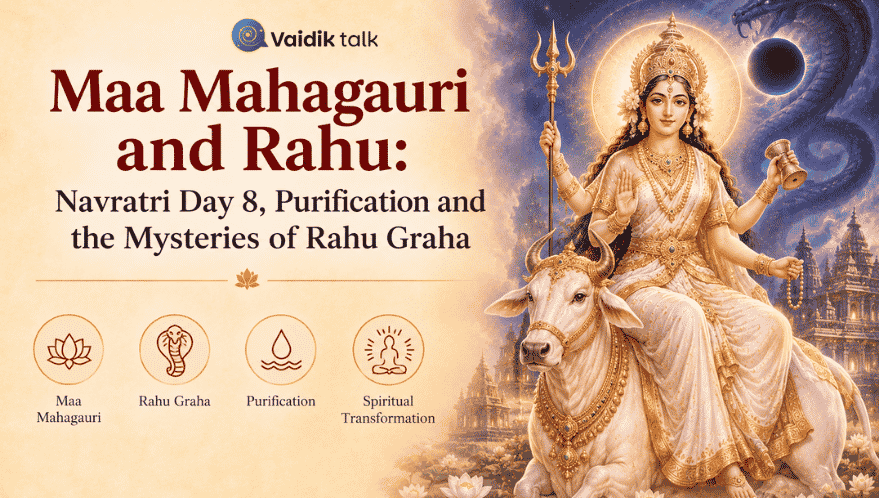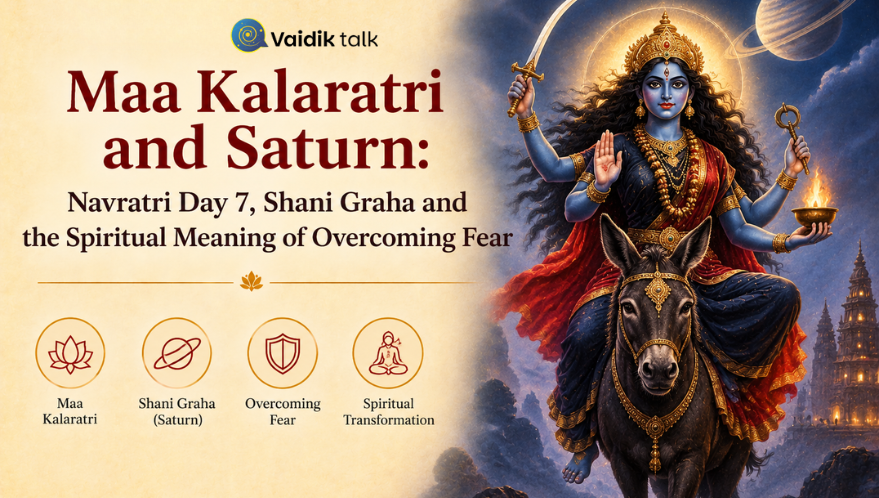
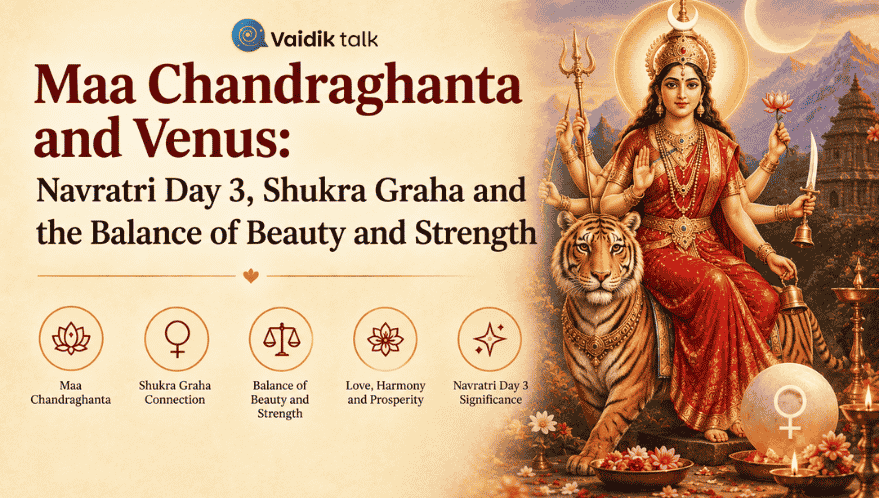
Navratri honours nine forms of Maa Durga across nine sacred nights, with each form representing a distinct spiritual quality. The third day is devoted to Maa Chandraghanta, the third manifestation of Navadurga, who represents courage, alertness, protection and calm strength. The wider festival celebrates the divine feminine and the victory of dharma over harmful forces. Incredible India’s overview of Navratri identifies Maa Chandraghanta among the nine revered forms of Durga.
The name Maa Chandraghanta comes from the crescent moon, shaped like a bell or ghanta, described on her forehead. Her traditional form presents a powerful image: a goddess ready to protect devotees, yet deeply composed. This blend of grace and firmness offers a meaningful connection with Shukra Graha, or Venus, which is associated in Jyotish with refinement, relationships, beauty, comforts and artistic sensitivity.
Those seeking a foundation in planetary symbolism may begin with this guide to Vedic astrology and Jyotish. The connection between Maa Chandraghanta and Venus is best understood as a spiritual reflection: beauty has greater meaning when it is joined by discipline, confidence and ethical strength.
Maa Chandraghanta: The Third Form of Navadurga
Maa Chandraghanta is worshipped on the third day of Navratri. Indian cultural sources describe this day as one devoted to courage, balance and the ability to overcome darkness with a calm mind. Incredible India’s Navratri Utsav page associates Day 3 with Maa Chandraghanta and the qualities of courage and balance.
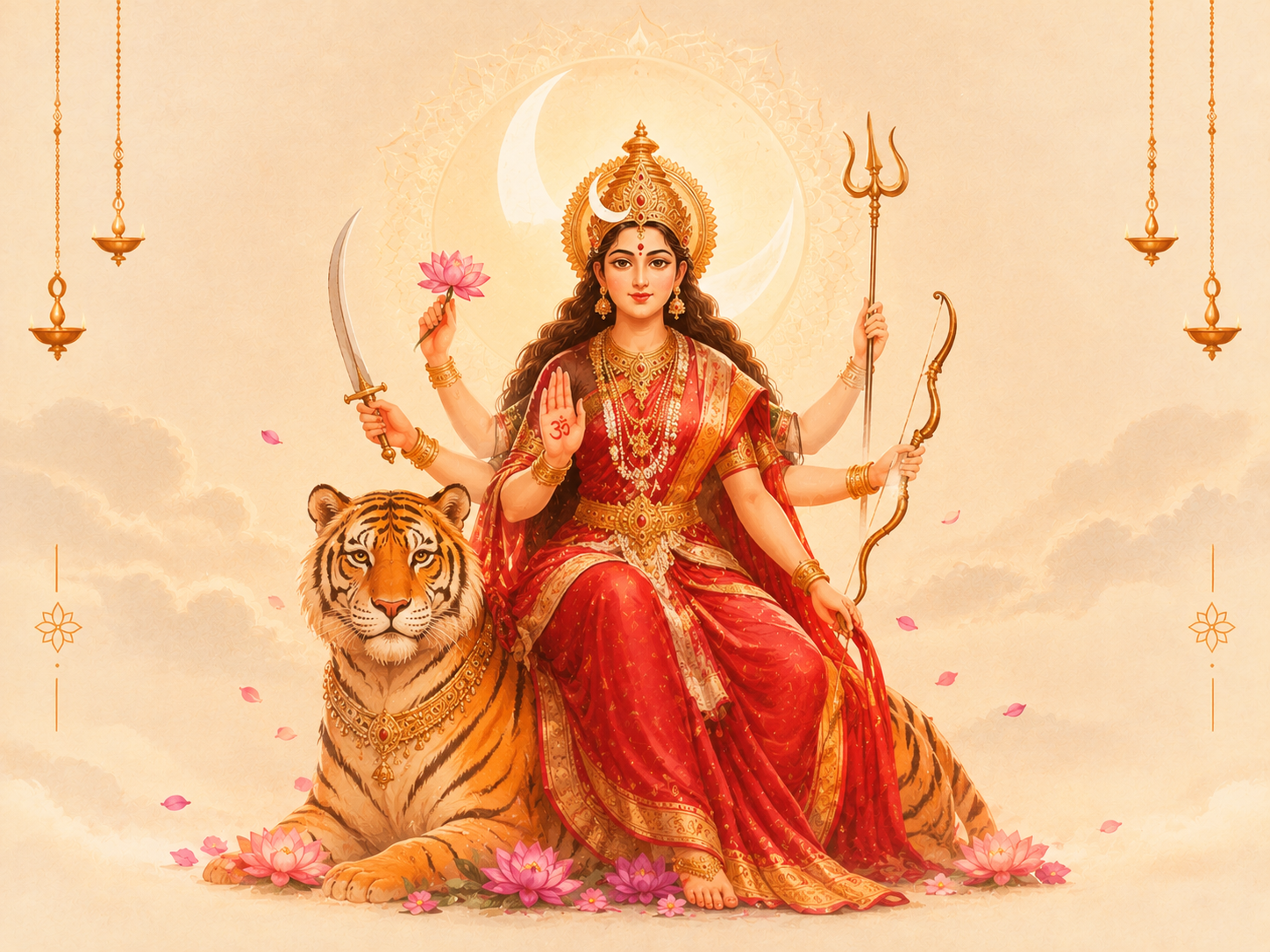
Her image is commonly described with ten arms, weapons that represent readiness to confront injustice, and a lion or tiger as her vehicle. Yet her presence is not limited to force. The bell-shaped moon on her forehead carries the symbolic idea of awakened awareness. It suggests that a devotee can remain peaceful without becoming passive.
This message adds depth to the meaning and spiritual importance of the nine nights of Navratri. Navratri is not simply a sequence of rituals. It gives devotees nine opportunities to reflect on qualities that support a balanced life.
Maa Chandraghanta’s worship follows the devotion offered to Maa Shailputri on the first day. Readers can understand that earlier stage through Maa Shailputri and the Moon connection. Together, these forms encourage stability of mind, courage of heart and greater spiritual awareness.
Shukra Graha and the Meaning of Venus
In Vedic astrology, Shukra Graha is the Sanskrit name for Venus. Shukra is traditionally linked with love, marriage, beauty, music, art, pleasure, luxury and social harmony. A balanced Venus is often interpreted as a preference for kindness, tasteful expression, healthy relationships and appreciation for beauty without attachment.
Venus is the second planet from the Sun and is close to Earth in size, with a diameter of about 12,104 kilometres. NASA’s Venus overview notes that Venus is similar in size to Earth, although its physical environment is dramatically different. In Jyotish, however, Shukra Graha is interpreted symbolically rather than through physical astronomy alone.
The spiritual lesson of Maa Chandraghanta provides a useful counterweight to the softer symbolism of Venus. Beauty without self-respect can become dependence. Comfort without discipline can become excessive. Attraction without discernment can create emotional confusion. Maa Chandraghanta represents the courage needed to keep Venusian qualities dignified and grounded.
This perspective can also help readers think carefully about spiritual objects and expectations. For example, this article on the benefits of Rudraksha separates traditional beliefs from claims that require personal reflection and responsible choice.
Beauty and Strength in Balance
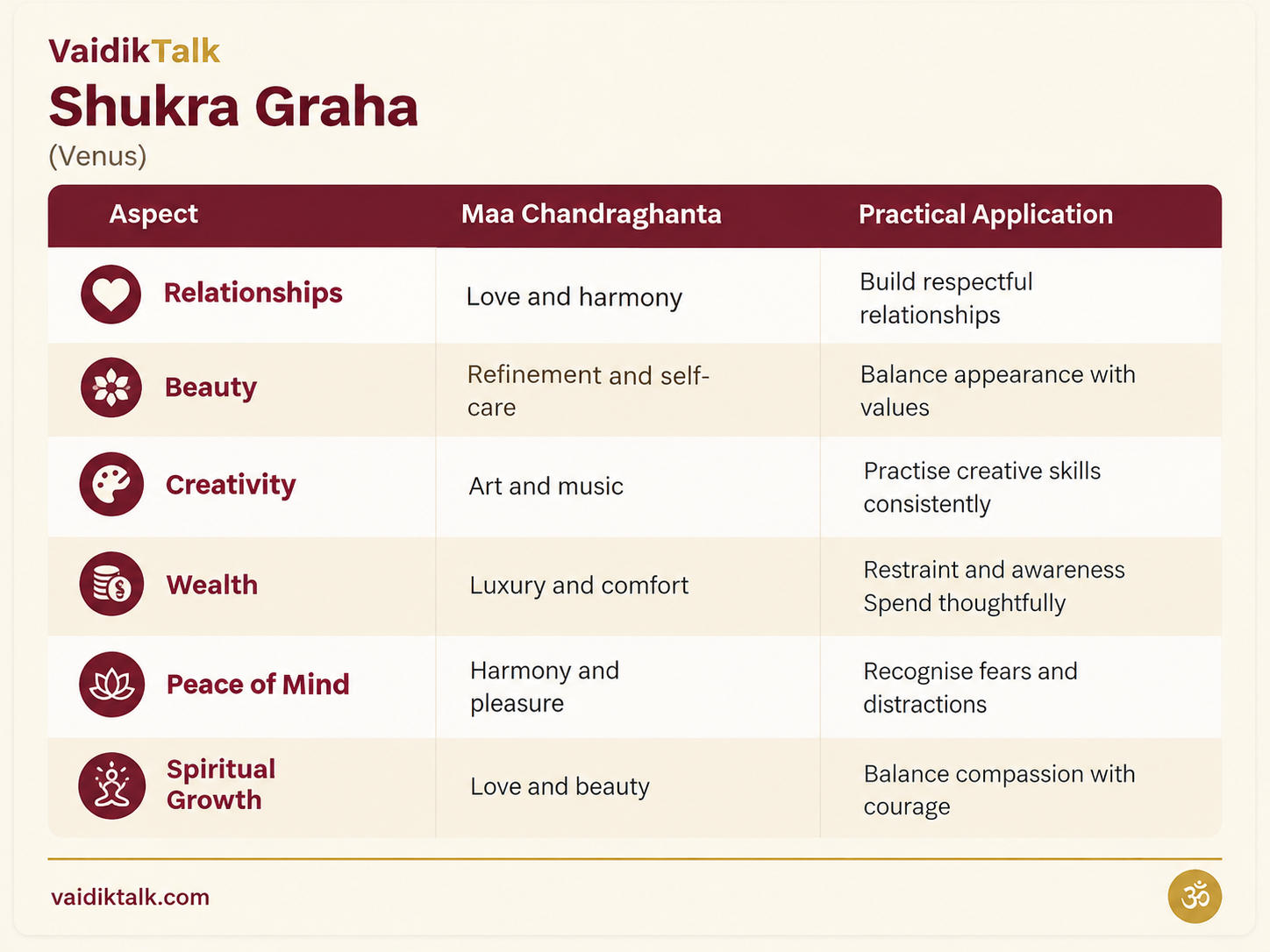
The union of Maa Chandraghanta’s symbolism with Shukra Graha can guide a person in several areas of life:
- Relationships: Venus relates to affection and bonding, while Maa Chandraghanta represents healthy boundaries and emotional courage.
- Personal appearance: Shukra supports refinement and self-care, while the goddess reminds devotees that confidence begins with inner values.
- Creative work: Venus is linked to art, music and aesthetics. Maa Chandraghanta brings the perseverance needed to practise a craft consistently.
- Financial choices: Venus may indicate a liking for comforts and valuable possessions. Courage and restraint can help a person spend with awareness.
- Peace of mind: The goddess’s bell symbolism can be viewed as a call to become alert to fear, distraction and harmful influences.
This is also relevant for those considering crystals or gemstones for symbolic support. A thoughtful choice is more valuable than buying from impulse or fear. Readers comparing prosperity-related stones can explore Pyrite vs Citrine: which wealth stone should you wear?. For a wearable symbol of confidence, the Tiger Eye Strength Pencil Pendant is presented by VaidikTalk Store as a strength-focused spiritual accessory.
Navratri Day 3 Puja Vidhi
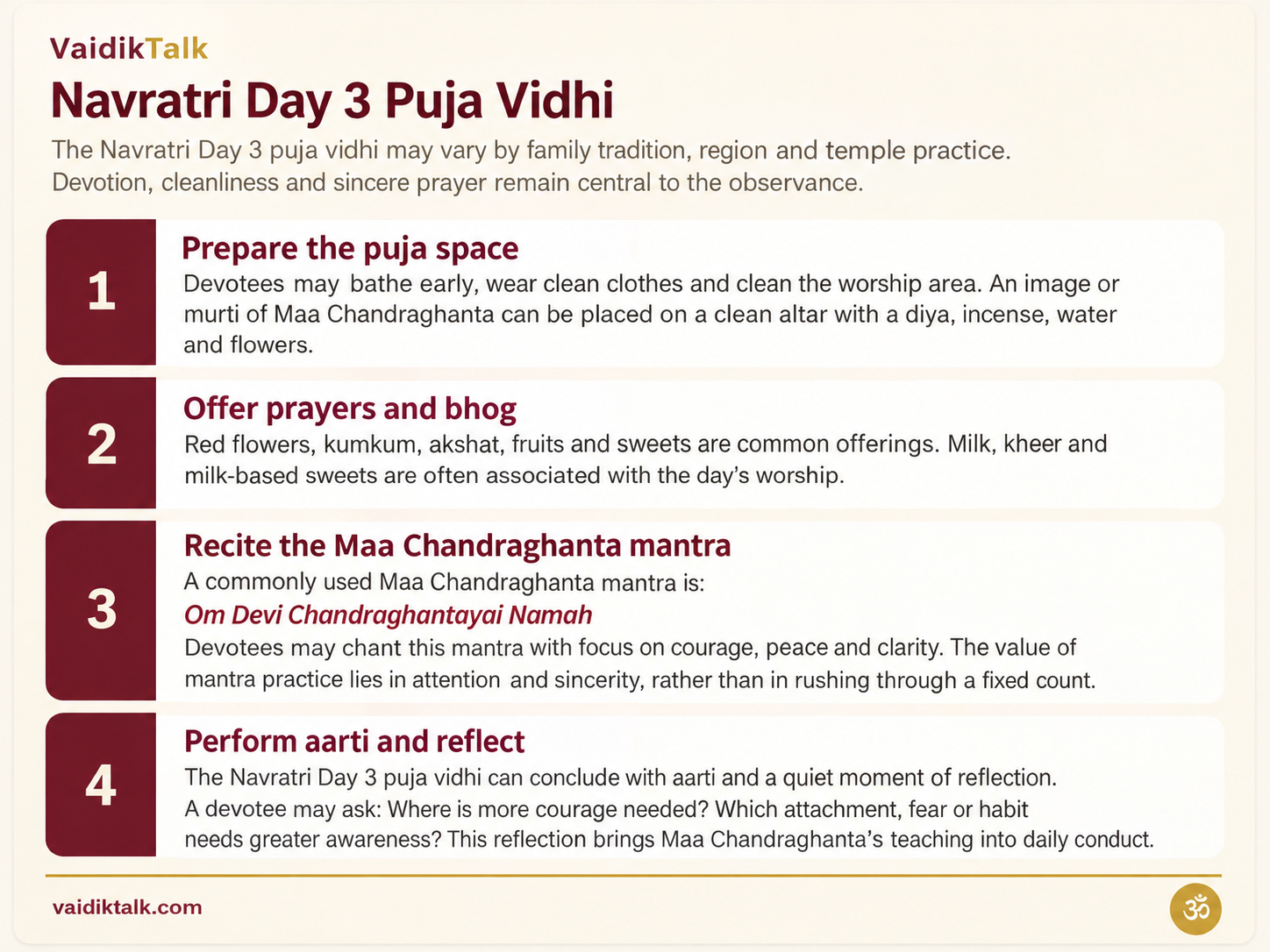
The Navratri Day 3 puja vidhi may vary by family tradition, region and temple practice. Devotion, cleanliness and sincere prayer remain central to the observance.
Step 1: Prepare the puja space
Devotees may bathe early, wear clean clothes and clean the worship area. An image or murti of Maa Chandraghanta can be placed on a clean altar with a diya, incense, water and flowers.
Step 2: Offer prayers and bhog
Red flowers, kumkum, akshat, fruits and sweets are common offerings. Milk, kheer and milk-based sweets are often associated with the day’s worship. Reports on Navratri Day 3 also describe the offering of milk and kheer to Maa Chandraghanta. Moneycontrol’s Navratri Day 3 coverage outlines these customary offerings and prayers.
Step 3: Recite the Maa Chandraghanta mantra
A commonly used Maa Chandraghanta mantra is:
Om Devi Chandraghantayai Namah {Om Devi Chandraghantayai Namah} Om Devi Chandraghantayai Namah
Devotees may chant this Maa Chandraghanta mantra with focus on courage, peace and clarity. The value of mantra practice lies in attention and sincerity, rather than in rushing through a fixed count.
Step 4: Perform aarti and reflect
The Navratri Day 3 puja vidhi can conclude with aarti and a quiet moment of reflection. A devotee may ask: Where is more courage needed? Which attachment, fear or habit needs greater awareness? This reflection brings Maa Chandraghanta’s teaching into daily conduct.
Venus Remedies Through Awareness
Traditional Jyotish remedies for Shukra often include prayer, acts of kindness, cleanliness, respectful conduct in relationships and appreciation for art. A devotee may use Friday worship, white flowers, charitable service or personal discipline as reminders of Venusian harmony.
However, remedies are best approached as spiritual practices, not promises of a fixed result. A personal birth chart includes many factors, including the placement, dignity and planetary associations of Shukra Graha. Concerns related to difficult planetary combinations also deserve careful, personalised discussion rather than fear-driven assumptions. This explainer on Kaal Sarp Dosh, its causes, effects and remedies offers a useful starting point for understanding traditional interpretations.
For those who wish to add a devotional object to their prayer space, the Brass Meru Shree Yantra is available through VaidikTalk Store. It may serve as a visual focus during meditation or daily prayer.
A Devotion Rooted in Dignity
Maa Chandraghanta teaches that tenderness and courage can exist together. Shukra Graha points toward beauty, love and harmony; the goddess reminds devotees to hold these qualities with clarity, self-respect and steadiness. This is the deeper balance of Navratri Day 3.
Devotees seeking guidance on Maa Chandraghanta, a personal Kundli or Shukra Graha may contact VaidikTalk’s astrology guidance team for a private consultation.
FAQs
Who is Maa Chandraghanta?
Maa Chandraghanta is the third form of Maa Durga worshipped during Navratri.
What is the Maa Chandraghanta mantra?
A widely recited Maa Chandraghanta mantra is “Om Devi Chandraghantayai Namah.”
What is offered in Navratri Day 3 puja vidhi?
Devotees commonly offer flowers, fruits, milk, kheer and sweets.
How is Maa Chandraghanta related to Shukra Graha?
The connection is symbolic, linking Venusian beauty and harmony with the goddess’s courage, dignity and inner strength.
Which colour is associated with Maa Chandraghanta?
Regional traditions vary, though red is often associated with strength, energy and courage on Navratri Day 3.