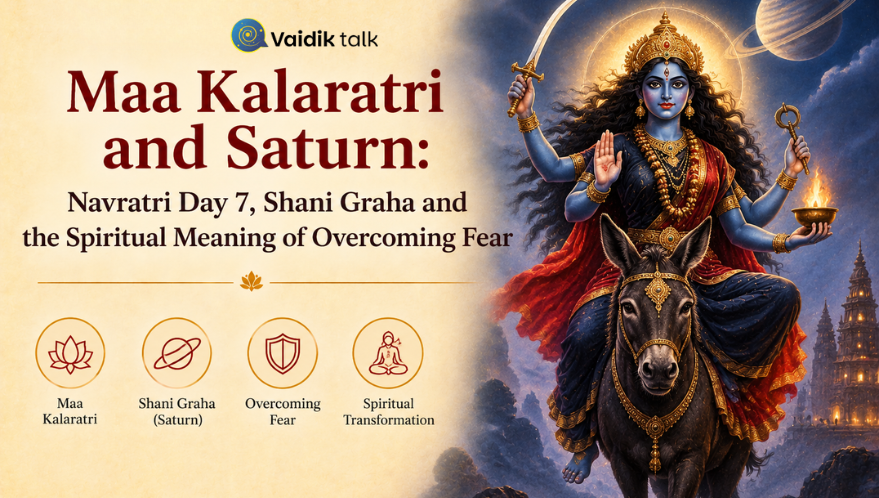
Navratri Day 7 is dedicated to Maa Kalaratri, the seventh form of Navadurga. Her fierce appearance represents the removal of fear, ignorance and harmful influences. Though her form may appear intense, Maa Kalaratri is revered as a compassionate protector who grants courage and inner peace to devotees.
The nine sacred nights of Navratri honour distinct forms of Maa Durga, each representing a stage of spiritual growth. This blog is an extension to understand Navratri’s meaning, significance and the nine nights of Maa Durga. It explains how devotion during the festival can encourage discipline, courage, wisdom and self-reflection.
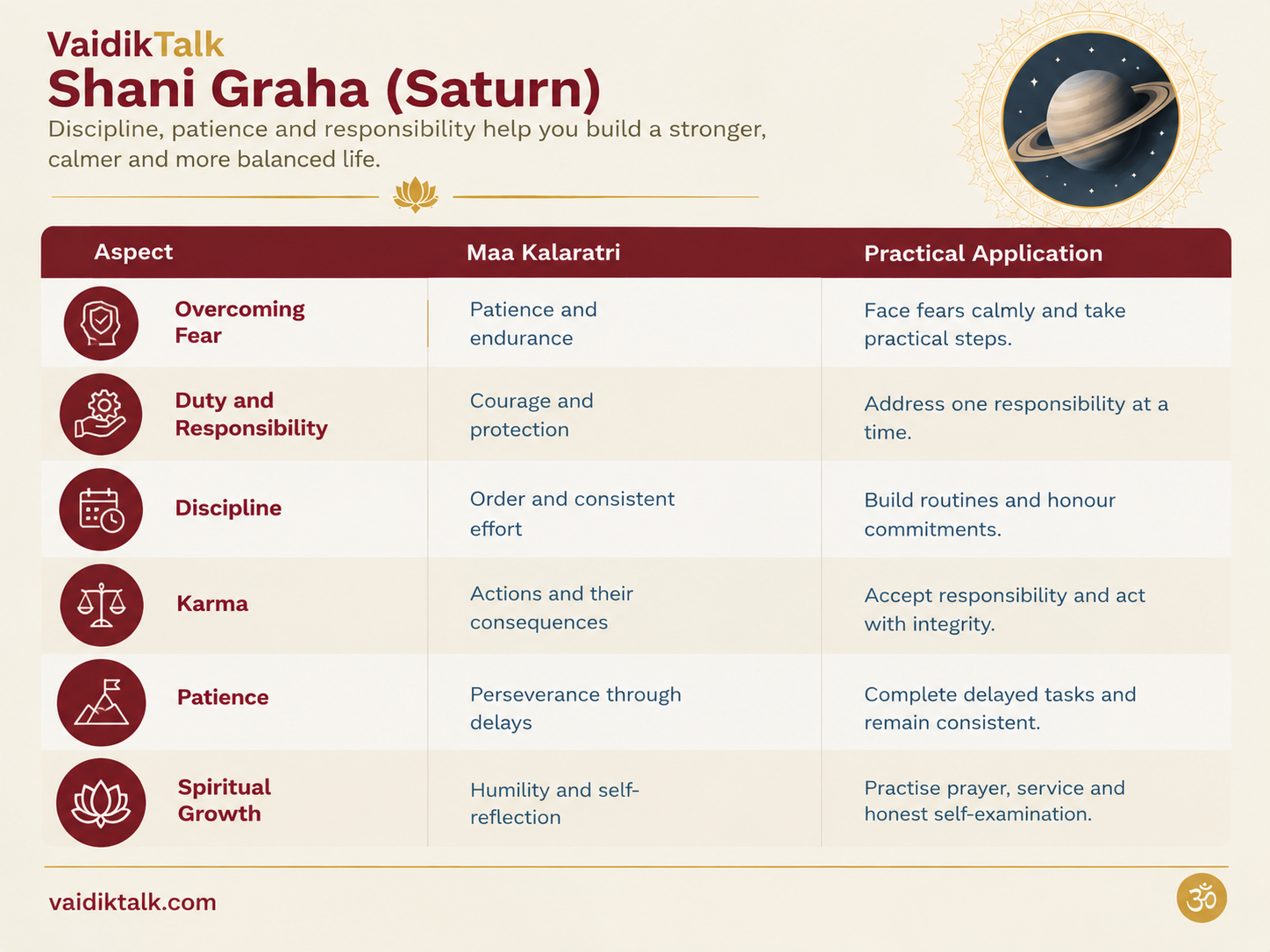
Maa Kalaratri is symbolically associated with Shani Graha, or Saturn. In Vedic astrology, Shani Graha is linked with responsibility, patience, discipline, justice, delay and the lessons gained through effort. Maa Kalaratri’s fear-dispelling form reflects the strength needed to face difficult truths without losing faith or composure.
Who Is Maa Kalaratri?
Maa Kalaratri is worshipped on the seventh day of Navratri. Her name combines kala, associated with time or darkness, and ratri, meaning night. Her form is understood as the divine force that removes darkness from the mind and protects devotees from fear.
Traditional depictions show Maa Kalaratri with a dark complexion, flowing hair and three radiant eyes. She is usually shown riding a donkey and holding a sword and iron hook, while her other hands offer protection and blessings. Her appearance symbolises fearlessness rather than danger.
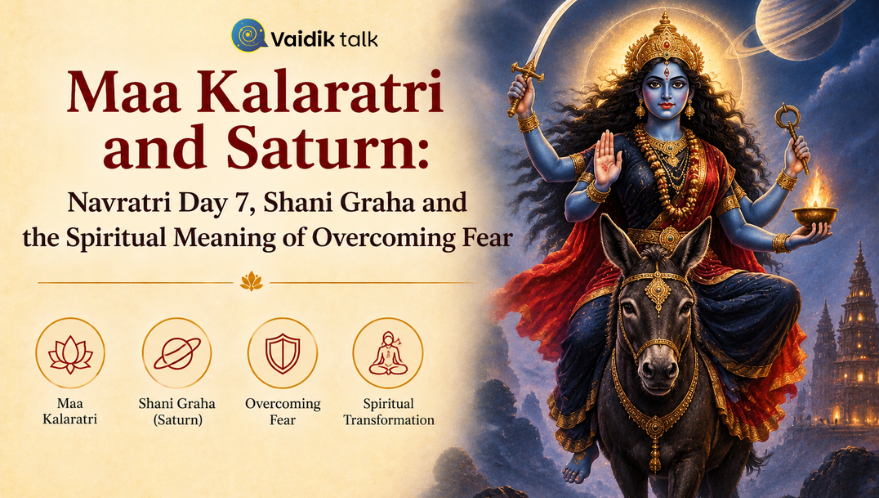
The symbolic link between Maa Kalaratri and Shani Graha centres on facing hardship with awareness. Saturn is not simply a symbol of difficulty. It is also associated with maturity, humility, boundaries, perseverance and responsible action. Maa Kalaratri’s presence reminds devotees that a difficult period can be approached with courage rather than panic.
Saturn is the sixth planet from the Sun and the second-largest planet in the solar system. NASA’s Saturn facts state that Saturn has a diameter of about 120,500 kilometres and takes around 29.4 Earth years to complete one orbit around the Sun. Its famous rings are made largely of ice particles, rocky debris and dust.
The long Saturnian orbit can serve as a symbolic reminder that meaningful progress often requires time. In Jyotish, personal interpretation depends on the complete Kundli, including signs, houses, aspects, conjunctions and planetary periods. Many people are also interested in knowing what Is Vedic Astrology and its practices.
The Spiritual Meaning of Overcoming Fear
Maa Kalaratri’s worship offers a practical lesson: fear becomes heavier when it is ignored. Facing it with clear thought, prayer and appropriate action can make it more manageable.
Fear and Responsibility
Shani Graha is traditionally associated with duty. Fear may arise when responsibilities feel too large, such as financial pressures, family concerns, career uncertainty or health worries. Maa Kalaratri represents the courage to address one small responsibility at a time.
A devotee may begin by identifying the exact fear rather than treating it as a vague feeling. The next step can be practical: speak to a trusted person, gather accurate information, seek professional support or make a realistic plan.
Discipline as Inner Protection
Discipline can support confidence. A steady daily routine, regular study, careful spending, truthful communication and respect for commitments may reduce the confusion that feeds anxiety. These actions reflect Shani Graha’s association with order and accountability.
The Day 4 teaching of Maa Kushmanda and Surya Graha adds vitality and purpose to this discipline. The Day 5 symbolism of Maa Skandamata and Budh Graha adds thoughtful communication and wise guidance.
Courage Without Recklessness
Maa Kalaratri’s strength does not ask devotees to deny risk or act impulsively. It encourages calm, thoughtful courage. This may involve seeking medical help for health concerns, legal advice for a legal issue, financial guidance for debt, or counselling for persistent emotional distress.
The message is simple: spiritual practice can support emotional steadiness, while practical support remains valuable in difficult situations.
Navratri Day 7 Puja Vidhi
The Navratri Day 7 puja vidhi differs across households, regions and temple traditions. Devotion, cleanliness and respectful intent remain central.
Prepare the Puja Space
Devotees may bathe and wear clean clothes before beginning the Navratri Day 7 puja vidhi. A clean altar may be prepared with an image or murti of Maa Kalaratri. A diya, incense, flowers, kumkum, akshat, water and fruits can be placed before the deity.
Dark blue is commonly associated with Maa Kalaratri. The colour is often viewed as a reminder of depth, protection and inner steadiness. Devotees may wear dark blue clothing or use suitable flowers according to family tradition.
Offer Bhog and Prayer
Jaggery is commonly offered to Maa Kalaratri. Some devotees also offer fruits, sweets, sesame-based preparations and satvik food. The offering may be made with gratitude and an intention to overcome fear, confusion or harmful habits.
During the Navratri Day 7 puja vidhi, devotees may pray for protection, patience and the strength to face difficult situations. A diya can be lit as a symbol of light within darkness.
Recite the Maa Kalaratri Mantra
A widely used Maa Kalaratri mantra is:
Om Devi Kalaratryai Namah
The Maa Kalaratri mantra may be chanted with focus on courage, peace and self-control. Some devotees use a mala and chant 108 repetitions, while others follow the practice taught by their family or spiritual teacher.
A traditional verse associated with Maa Kalaratri is:
Ekaveni Japakarnapura Nagna Kharasthita
Lamboshthi Karnikakarni Tailabhyaktasharirani
The Navratri Day 7 puja vidhi can conclude with aarti and prasad shared among family members.
Shani Graha Practices for Patience
Devotees may use Navratri Day 7 as an opportunity to reflect on patience, service and responsibility. These practices can be simple and sincere.
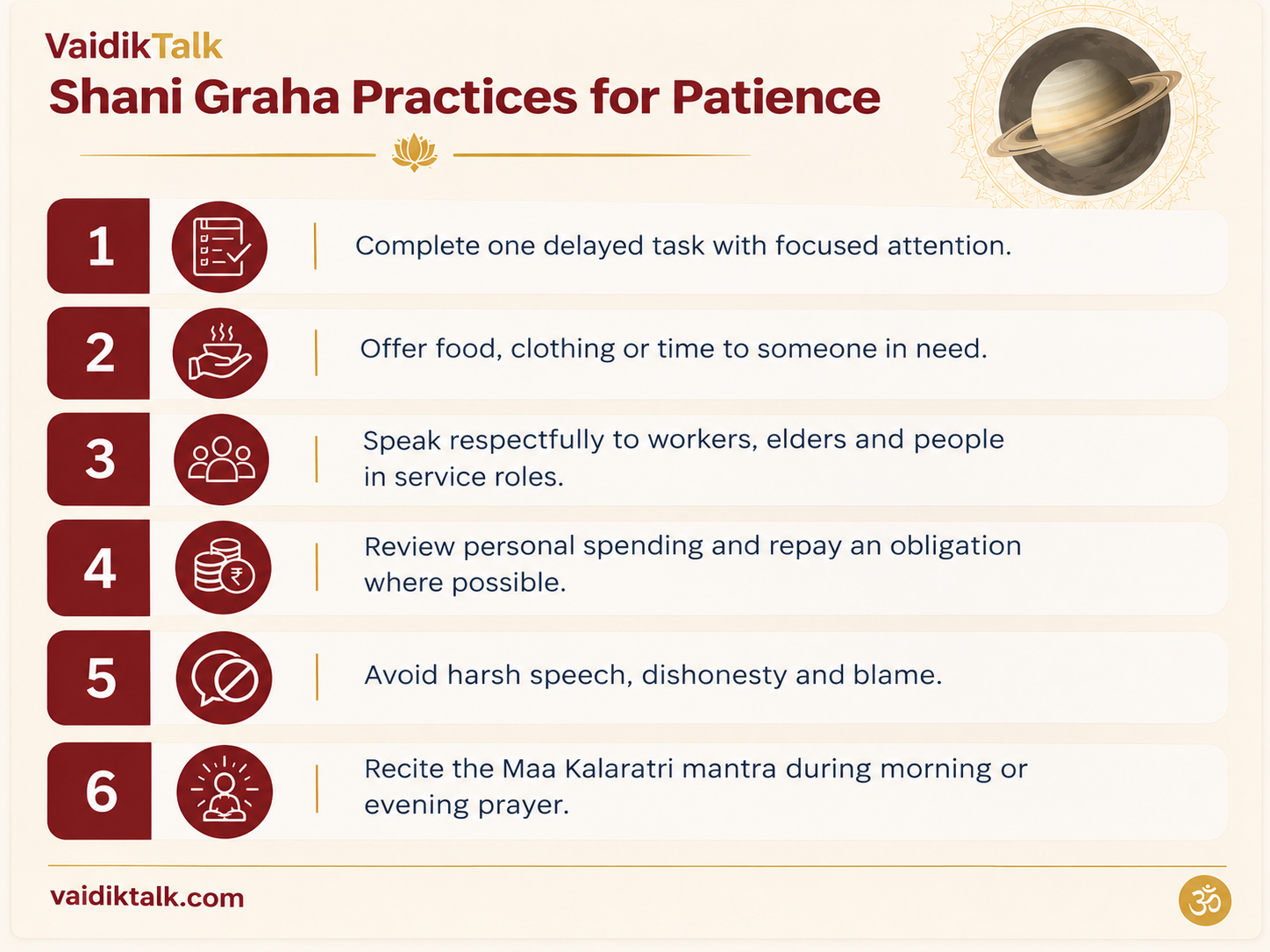
- Complete one delayed task with focused attention.
- Offer food, clothing or time to someone in need.
- Speak respectfully to workers, elders and people in service roles.
- Review personal spending and repay an obligation where possible.
- Avoid harsh speech, dishonesty and blame.
- Recite the Maa Kalaratri mantra during morning or evening prayer.
Saturday is traditionally associated with Shani Graha. Some devotees offer sesame, oil, black urad or charitable service as part of their faith practice. These acts can be treated as reminders of humility and responsibility rather than as fixed assurances about results.
For a dedicated meditation space, devotees may consider a Shani Yantra and spiritual products from VaidikTalk Store. A prayer object can serve as a daily reminder to sit quietly, reflect on conduct and commit to steady effort.
Maa Kalaratri’s Teaching on Karma
Karma is often discussed with fear, but Maa Kalaratri’s form offers a more constructive perspective. Actions have consequences, and honest self-examination can support better choices. Shani Graha symbolises the patience required to accept responsibility and correct harmful patterns.
A person does not need to interpret every setback as punishment. Many life challenges arise from circumstances, uncertainty or ordinary human limitations. The useful response is to learn, seek help where needed and continue acting with integrity.
The sixth-day teaching of Maa Katyayani and Guru Graha complements this message. Guru Graha represents guidance and ethical wisdom, while Maa Kalaratri represents the courage to put that wisdom into action during difficult periods.
Seek Personalised Guidance
Maa Kalaratri and Shani Graha carry a powerful Navratri Day 7 message: fear can be met with patience, clarity, sincere prayer and responsible action. A complete Kundli may offer individual context for Shani Graha, career, health, relationships and long-term responsibilities.
For personal guidance on Shani Graha, a Kundli or Navratri worship, devotees may contact VaidikTalk for astrology guidance. VaidikTalk connects users with astrologers for Vedic astrology, palmistry, numerology, tarot and related spiritual consultations.
Frequently Asked Questions (FAQs)
Who is Maa Kalaratri?
Maa Kalaratri is the seventh form of Navadurga, worshipped on Navratri Day 7.
What is the Maa Kalaratri mantra?
A common Maa Kalaratri mantra is “Om Devi Kalaratryai Namah.”
What is offered during Navratri Day 7 puja vidhi?
Jaggery, fruits, sweets, flowers, incense and a diya are commonly offered according to family tradition.
Why is Maa Kalaratri linked with Shani Graha?
The connection is symbolic, joining Maa Kalaratri’s fear-dispelling strength with Shani Graha’s themes of discipline, patience and responsibility.
Which colour is associated with Maa Kalaratri?
Dark blue is commonly associated with Maa Kalaratri and represents steadiness, protection and depth.