Navratri Day 6 is dedicated to Maa Katyayani, the sixth form of Navadurga. She is revered as a powerful embodiment of courage, righteousness and divine protection. Her worship inspires devotees to face injustice with conviction while seeking wisdom to choose the right path.
The nine nights of Navratri honour nine forms of Maa Durga, with each form offering a distinct spiritual teaching. This guide to Navratri’s meaning, significance and the nine nights of Maa Durga explores the devotional progression from stability and discipline to courage, wisdom and spiritual awareness.
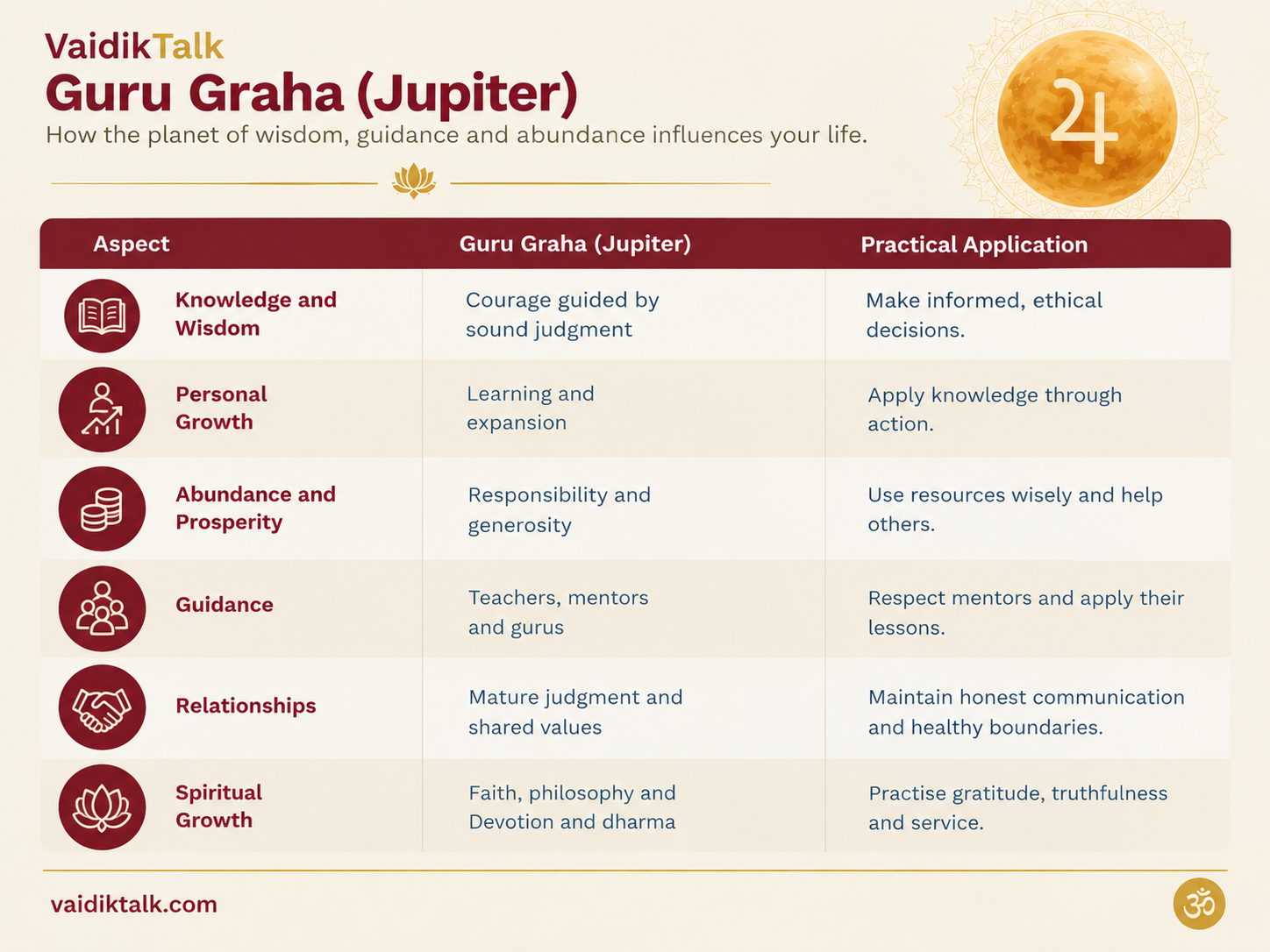
Maa Katyayani is symbolically associated with Guru Graha, or Jupiter. In Vedic astrology, Guru Graha is connected with knowledge, ethics, expansion, teachers, faith, children, prosperity and sound judgment. Maa Katyayani’s fierce commitment to dharma complements Jupiter’s association with higher learning and principled living.
Who Is Maa Katyayani?
Maa Katyayani is traditionally described as the daughter of sage Katyayana, from whom she receives her name. According to devotional tradition, the gods invoked the combined divine energy of Brahma, Vishnu and Mahesh to create a form of Durga capable of defeating the demon Mahishasura. Maa Katyayani appeared as that powerful force of protection.
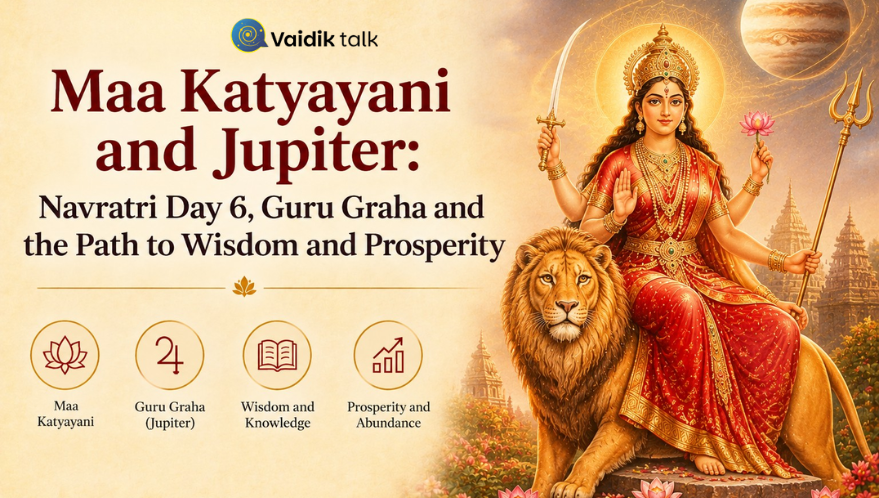
She is commonly depicted riding a lion and carrying four arms. Her upper hands hold a sword and lotus, while the lower hands display protective and blessing gestures. The lion represents courage, while the sword symbolises the strength to cut through fear, confusion and harmful conduct.
Maa Katyayani is worshipped by devotees seeking inner strength, clarity in relationships and protection from negative influences. Her form is strong, but its purpose is restoration of balance and dharma. She represents the courage to stand for truth while remaining guided by wisdom.
The Day 6 worship follows the earlier forms of Navadurga. Devotees can revisit Maa Shailputri and Chandra Graha for Day 1’s message of emotional steadiness. The role of discipline and courage can be explored through Maa Brahmacharini and Mangal Graha, while Day 3’s themes of harmony and strength appear in Maa Chandraghanta and Shukra Graha.
Maa Katyayani and Guru Graha
Guru Graha, also known as Brihaspati, is the Sanskrit name for Jupiter. In Jyotish, Guru is seen as the teacher among the grahas. Its symbolism includes education, spiritual guidance, morality, generosity, law, philosophy and meaningful growth.
The link between Maa Katyayani and Guru Graha is devotional and symbolic. Maa Katyayani represents the power to defend what is right. Guru Graha represents the discrimination needed to recognise what is right. Together, they suggest that courage is most valuable when it is guided by knowledge, humility and ethical responsibility.
Alt text - Guru graha
Jupiter is the largest planet in the solar system. According to NASA’s Jupiter facts, Jupiter has a diameter of about 143,000 kilometres and has more than 90 known moons. NASA also notes that Jupiter completes one orbit around the Sun in about 12 Earth years. These figures offer a useful astronomical context for the planet that Jyotish associates with expansion and broad perspective.
For a clearer introduction to signs, houses and planetary meanings, readers may refer to What Is Vedic Astrology. A qualified reading of Guru Graha considers the complete Kundli, including house placement, sign, aspects, conjunctions and dasha periods.
Wisdom and Prosperity Through Dharma
Maa Katyayani’s strength does not point toward anger for its own sake. It points toward disciplined courage that protects truth and fairness. Guru Graha adds an important idea: prosperity has greater meaning when it arises through learning, service, honest effort and good judgment.
Knowledge That Leads to Action
Jupiter represents wisdom, but wisdom must appear in conduct. Maa Katyayani encourages devotees to apply what they know. This may mean choosing honesty over convenience, speaking against unfairness respectfully, or standing by a responsible decision even when it is difficult.
Prosperity With Responsibility
Guru Graha is traditionally linked with abundance and growth. Yet prosperity is broader than money. It can include supportive relationships, useful skills, good health practices, education, peace of mind and the ability to help others. Maa Katyayani’s symbolism reminds devotees to use resources with gratitude and responsibility.
Guidance From Teachers
Jupiter is connected with teachers, mentors and gurus. Navratri Day 6 can encourage devotees to appreciate those who have offered useful guidance. A teacher’s wisdom becomes valuable when a student listens carefully, asks sincere questions and applies the learning with discipline.
For devotees seeking a traditional focus object during prayer, a Brass Guru Yantra from VaidikTalk Store may be used as a visual reminder of learning, clarity and respectful guidance. Such items carry devotional value, while personal growth depends on sincere practice and everyday conduct.
Navratri Day 6 Puja Vidhi
The Navratri Day 6 puja vidhi varies by family tradition, temple customs and regional practice. Cleanliness, devotion and respectful intent remain at the centre of worship.
Prepare the Puja Space
Devotees may bathe, wear clean clothing and arrange a clean altar for Maa Katyayani. An image or murti of the goddess may be placed on a fresh cloth. A diya, incense, flowers, kumkum, akshat, fruits and water can be placed before the deity.
Red is commonly associated with Maa Katyayani because it reflects courage, energy and devotion. Devotees may wear red attire or offer red flowers where this aligns with household tradition.
Offer Bhog and Prayer
Honey is widely associated with offerings to Maa Katyayani in Navratri traditions. Devotees may also offer fruits, sweets, milk-based preparations and satvik food. Bhog can be prepared with cleanliness and offered with gratitude.
During the Navratri Day 6 puja vidhi, devotees may pray for wisdom, protection, confidence and the ability to choose ethical action. Students may seek focus in their studies, while families may seek harmony and mutual respect.
Recite the Maa Katyayani Mantra
A commonly recited Maa Katyayani mantra is:
Om Devi Katyayanyai Namah
The Maa Katyayani mantra may be chanted with attention to courage, discernment and inner strength. Some devotees chant the mantra 108 times using a mala, while others follow a count prescribed by their family tradition or spiritual guide.
A traditional verse associated with Maa Katyayani is:
Chandrahasojjwalakara Shardulavaravahana
Katyayani Shubham Dadyad Devi Danavaghatini
The Navratri Day 6 puja vidhi can conclude with aarti, followed by the sharing of prasad with family members and guests.
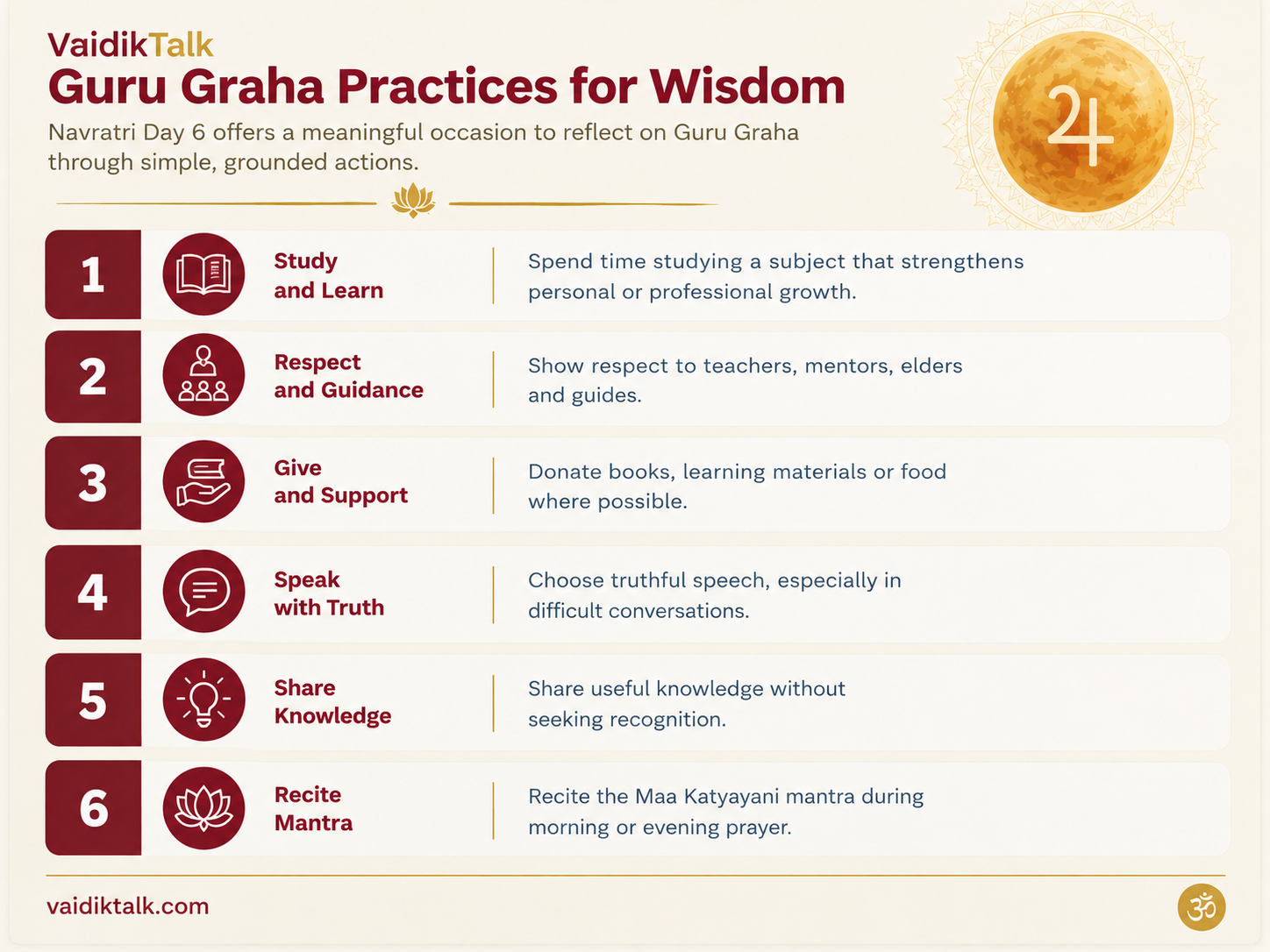
uru Graha Practices for Wisdom
Navratri Day 6 offers a meaningful occasion to reflect on Guru Graha through simple, grounded actions.
- Spend time studying a subject that strengthens personal or professional growth.
- Show respect to teachers, mentors, elders and guides.
- Donate books, learning materials or food where possible.
- Choose truthful speech, especially in difficult conversations.
- Share useful knowledge without seeking recognition.
- Recite the Maa Katyayani mantra during morning or evening prayer.
Thursday is traditionally associated with Guru Graha. Some devotees use yellow flowers, yellow foods or charitable acts on Thursdays as expressions of faith. These practices are reminders of generosity and learning, rather than fixed promises about outcomes.
Devotees who prefer a mala for mantra practice may browse Rudraksha and spiritual prayer items at VaidikTalk Store. A regular chanting practice can help set aside time for reflection, gratitude and better decision-making.
Maa Katyayani’s Guidance for Relationships
Maa Katyayani is frequently remembered in devotional traditions related to marriage and relationship harmony. Her deeper teaching, however, is self-respect. A healthy relationship benefits from honesty, communication, mutual regard and the courage to recognise harmful patterns.
Guru Graha adds the value of mature judgment. Before making important relationship decisions, a person can reflect on shared values, trust, respectful behaviour and long-term compatibility. Prayer can support inner clarity, while practical conversations and informed choices remain important.
Maa Katyayani’s lion teaches that gentleness does not mean accepting mistreatment. Devotees can seek harmony while keeping personal boundaries. This balance of compassion and courage reflects the spirit of Navratri Day 6.
Seek Personalised Guidance
Maa Katyayani and Guru Graha offer a meaningful Day 6 message: wisdom should strengthen courage, and prosperity should be connected with ethical conduct. Devotees who seek individual insight into Guru Graha, education, marriage, career or a Kundli may contact VaidikTalk for astrology guidance.
VaidikTalk connects users with astrologers for Vedic astrology, palmistry, numerology, tarot and related spiritual consultations.
Frequently Asked Questions (FAQs)
Who is Maa Katyayani?
Maa Katyayani is the sixth form of Navadurga, worshipped on the sixth day of Navratri.
What is the Maa Katyayani mantra?
A common Maa Katyayani mantra is “Om Devi Katyayanyai Namah.”
What is offered during Navratri Day 6 puja vidhi?
Honey, fruits, flowers, sweets, incense and a diya are commonly offered, depending on family tradition.
Why is Maa Katyayani connected with Guru Graha?
The connection is symbolic, joining Maa Katyayani’s righteous strength with Guru Graha’s themes of wisdom, ethics and prosperity.
Which colour is associated with Maa Katyayani?
Red is commonly associated with Maa Katyayani and represents courage, devotion and spiritual strength.