Navratri is the nine night festival of the Divine Mother, and Sharad Navratri 2026 begins today, Sunday, October 11, with Ghatasthapana and closes with Vijayadashami on Tuesday, October 20. This general Navratri guide explains what the name means, why is Navratri celebrated, the Navratri significance behind each of the nine nights, and how many readers connect the nine forms of Durga with the nine planets covered in Vaidik Talk's guide on what is Vedic astrology. Exact muhurat timings shift from city to city, so a local panchang is the safest reference for the day.
Navratri Meaning: What the Name Says
The word comes from two Sanskrit roots, nava meaning nine and ratri meaning night. According to Drik Panchang's overview of Navratri, the festival is observed for nine nights and ten days, with the nine forms of Goddess Durga worshipped in a fixed order. Sharad Navratri begins on the first lunar day of the bright half of the month of Ashvin and concludes with Vijayadashami. The same source notes that the Mahakala Samhita counts four Navratris in a year, although the exact list varies between traditions, and Chaitra and Sharad are the two most widely observed.
Why Is Navratri Celebrated?
The Story of Durga and Mahishasura
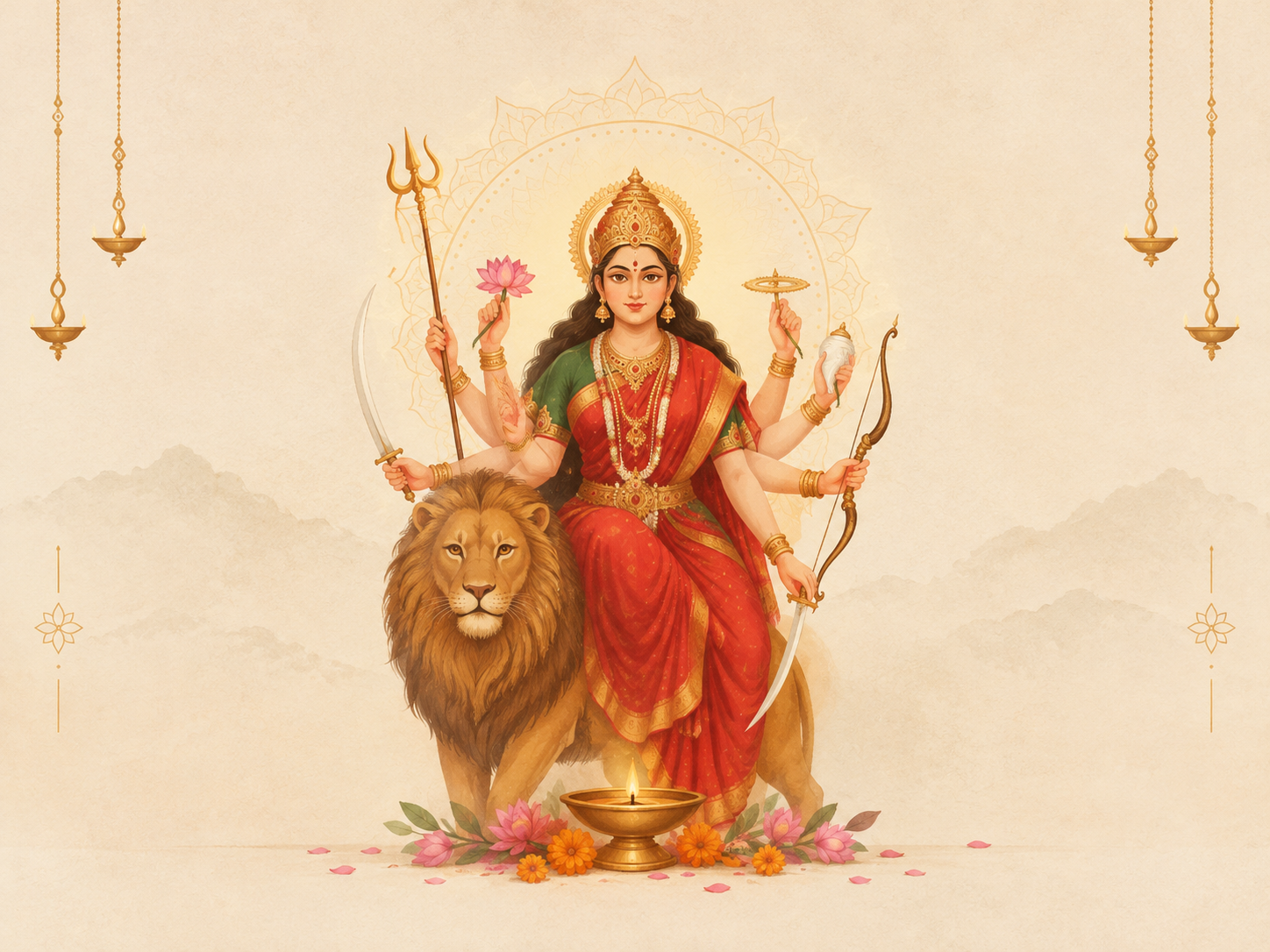
The most widely told answer to why is Navratri celebrated comes from the Devi Mahatmya, the text recited as the Durga Saptashati. It describes the buffalo demon Mahishasura, who defeated the gods, and the goddess Durga, who took form from the combined energies of the gods and fought him through nine nights. On the tenth day she defeated him, which is why the festival closes with Vijayadashami, the day of victory. Versions differ in detail from one region and text to another, but the central message of good overcoming evil stays consistent.
The Tradition Linked to Rama
A second tradition, especially strong in northern India, says that Rama worshipped Durga before his battle with Ravana, and that Dussehra marks his victory. Both accounts can sit side by side, since many communities honor the Goddess during the nine nights and celebrate Rama's victory on the tenth day.
Navratri Significance: The Nine Forms of Durga
The Navratri significance is built around the Navadurga, the nine forms worshipped one per day. A verse traditionally attributed to the Devi Kavacha names them in order, from Shailputri on the first day to Siddhidatri on the ninth. Many astrology readers also pair each form with a graha. That pairing is a popular astrological reading, not something stated in the scriptures that name the nine forms, and sources vary, so it is best treated as a symbolic lens rather than a rule.
The Nine Forms at a Glance
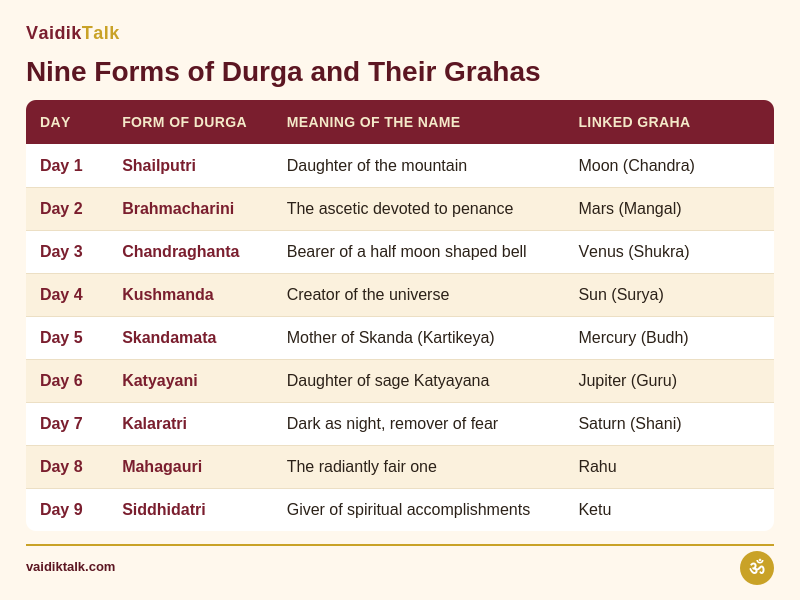
The same nine fold pattern appears elsewhere in Vedic thought. In numerology, each number from one to nine is linked with a planet, a link explained in Vaidik Talk's guide on what is numerology, which is one reason the nine nights and nine planets are so often read together.
The pairings also give readers a practical way to reflect on their own charts. The second night's link with Mars connects naturally to questions covered in Vaidik Talk's guide on what is Manglik Dosh, the seventh night's link with Saturn to the long Saturn transit explained in the guide on what is Sade Sati, and the final two nights, linked with Rahu and Ketu, to the pattern described in the guide on what is Kaal Sarp Dosh. Each of these is a separate chart based topic, and the festival pairing simply offers a reflective frame around it.
The Spiritual Importance of the Nine Nights
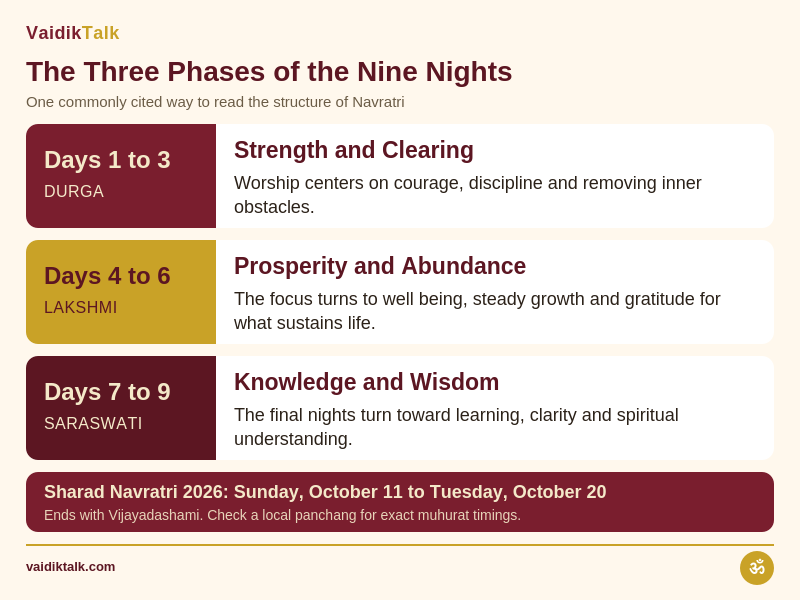
A commonly cited framework divides the nine nights into three sets of three, dedicated to Durga, Lakshmi and Saraswati in turn, as described by the Isha Foundation. The first set is associated with strength and clearing away obstacles, the second with prosperity, and the third with knowledge. Readers who want to mark the prosperity phase with a ritual can look at Vaidik Talk's Dhan Laxmi Puja. Common observances include Ghatasthapana on the first day, daily worship, recitation of the Durga Saptashati, and fasting. Fasting is a personal choice, and anyone with a medical condition should adapt it on a doctor's advice.
Garba and the Cultural Side of Navratri
Navratri is also a cultural festival. On December 6, 2023, UNESCO inscribed Garba of Gujarat on its Representative List of the Intangible Cultural Heritage of Humanity, which the Press Information Bureau reported as the 15th element from India to join the list. UN India notes that Garba is a ritualistic and devotional dance particularly celebrated for nine days during Navaratri.
Getting Started
Anyone who wants to see which planets are strongest in their own chart can generate it with Vaidik Talk's Kundli Generation tool, and those with questions can follow the steps in the guide on how to talk to an astrologer online. The nine mukhi Rudraksha is traditionally associated with Goddess Durga, and Vaidik Talk's Rudraksha collection is the place to check current availability.
Getting the Right Guidance
Navratri works best as a time of reflection and steady practice, whether it is observed with a full fast or a simple daily prayer. Anyone with questions about how the nine forms relate to their own chart can reach out through the Contact Us page, and the team will point them to the right guidance.
Frequently Asked Questions
Why is Navratri celebrated for nine nights?
It marks the nine night battle in which Durga defeated Mahishasura, followed by the victory celebrated on the tenth day.
How many Navratris are there in a year?
Four are commonly counted, though Chaitra and Sharad are the two most widely observed.
When does Sharad Navratri 2026 start and end?
It begins on Sunday, October 11, and Vijayadashami falls on Tuesday, October 20.
Is the link between each form and a planet found in the scriptures?
No, it is a popular astrological reading, so it is best treated as a symbolic lens.
Does everyone have to fast during Navratri?
No, fasting is a personal choice, and anyone with a health condition should adapt it with medical advice.