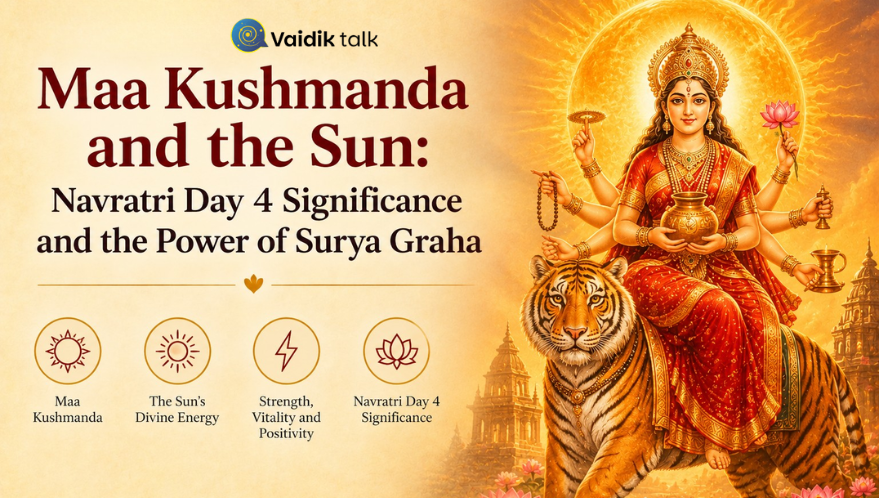
Navratri Day 4 is dedicated to Maa Kushmanda, the fourth form of Navadurga. She is revered as the divine source of creative energy, vitality and light. In devotional tradition, Maa Kushmanda is believed to have brought life and illumination into the cosmic darkness through her gentle smile. Her worship offers devotees a spiritual reminder that hope, effort and inner confidence can brighten difficult phases of life.
The nine nights of Navratri honour distinct forms of Maa Durga, with each form reflecting a spiritual value. Maa Kushmanda represents creative force and radiant energy, making her symbolism closely associated with Surya Graha, or the Sun. Readers can understand the wider importance of the festival through this guide on Navratri’s meaning, significance and the nine forms of Maa Durga.
In Jyotish, Surya Graha represents identity, confidence, authority, health, purpose and leadership. The association of Maa Kushmanda with Surya Graha is a spiritual interpretation that connects her life-giving form with the Sun’s role as the source of light and energy for Earth.
Maa Kushmanda: The Fourth Form of Navadurga
The name Kushmanda is traditionally explained through three Sanskrit ideas: ku for small, ushma for warmth or energy, and anda for the cosmic egg. Thus, Maa Kushmanda is associated with the energy believed to have brought the universe into manifestation.
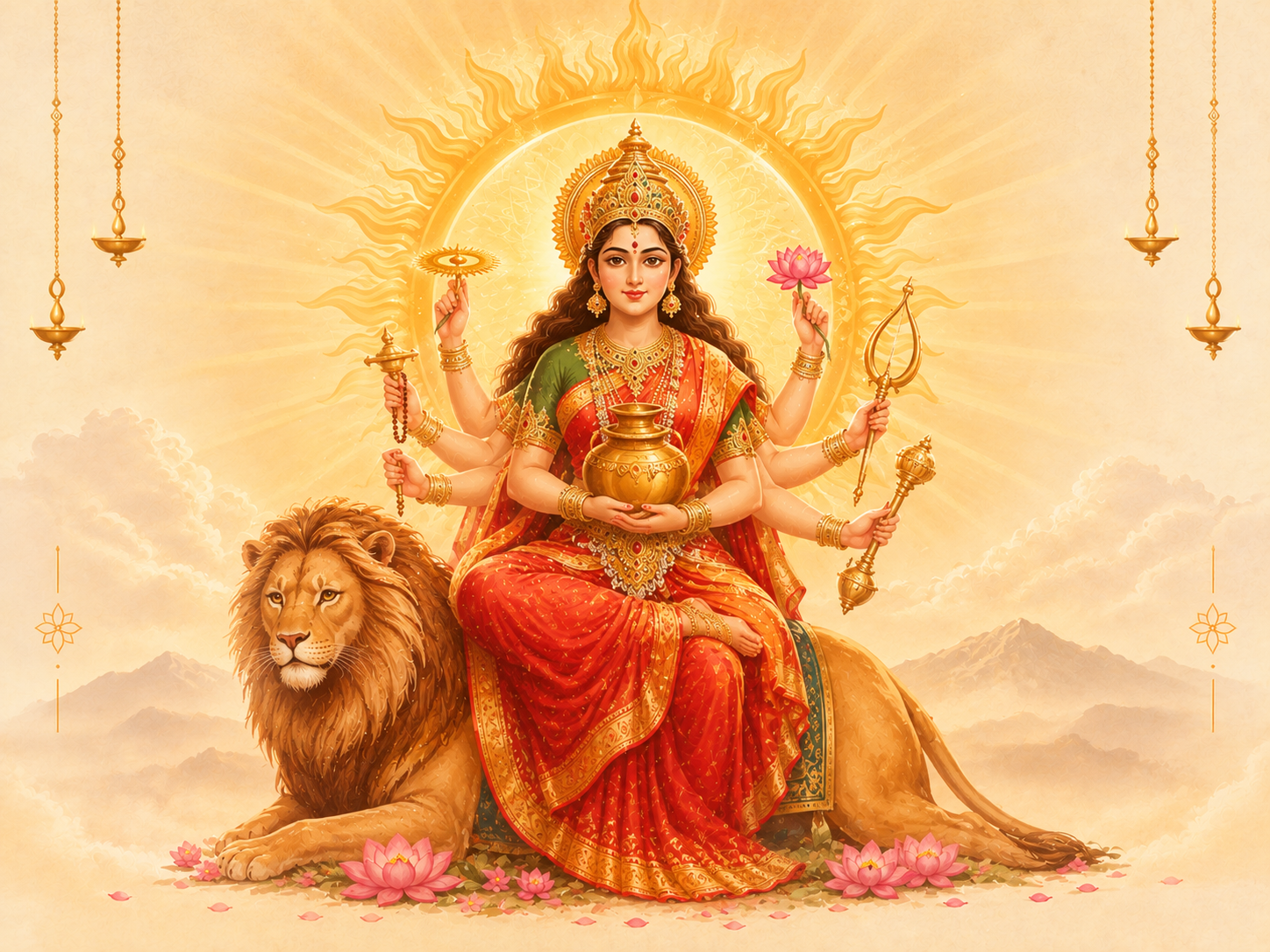
Maa Kushmanda is commonly depicted with eight arms, which is why she is also known as Ashtabhuja Devi. Her hands may hold a lotus, kamandalu, bow, arrow, chakra, gada, a pot of nectar and a rosary. Each object represents a quality such as spiritual focus, protection, courage, abundance and disciplined action.
She is usually shown seated on a lion, expressing strength and fearlessness. At the same time, her calm expression represents warmth and compassion. This combination makes Maa Kushmanda’s form meaningful for devotees who seek strength without aggression and confidence without ego.
The worship of Maa Kushmanda follows the first three forms of Navadurga. Maa Shailputri represents grounded devotion and the connection with Chandra Graha, explained in this article on Maa Shailputri and the Moon. Maa Brahmacharini represents discipline and the focused courage associated with Mars, explored in Maa Brahmacharini and Mangal Graha. Maa Chandraghanta represents the balance of beauty and courage, discussed in Maa Chandraghanta and Venus.
Maa Kushmanda and Surya Graha
Surya Graha occupies a central place in Vedic astrology. It represents the self, father figures, leadership, reputation, willpower and the capacity to act with purpose. A strong Sun in a birth chart is traditionally associated with confidence, visibility and personal direction, while a challenged Sun may be interpreted through concerns about self-expression, authority or vitality.
The Sun is also physically central to the solar system. According to NASA’s Sun facts, the Sun contains about 99.8 percent of the total mass of the solar system and has a diameter of around 1.4 million kilometres. Its energy reaches Earth as sunlight, supporting weather patterns, plant growth and many natural cycles.
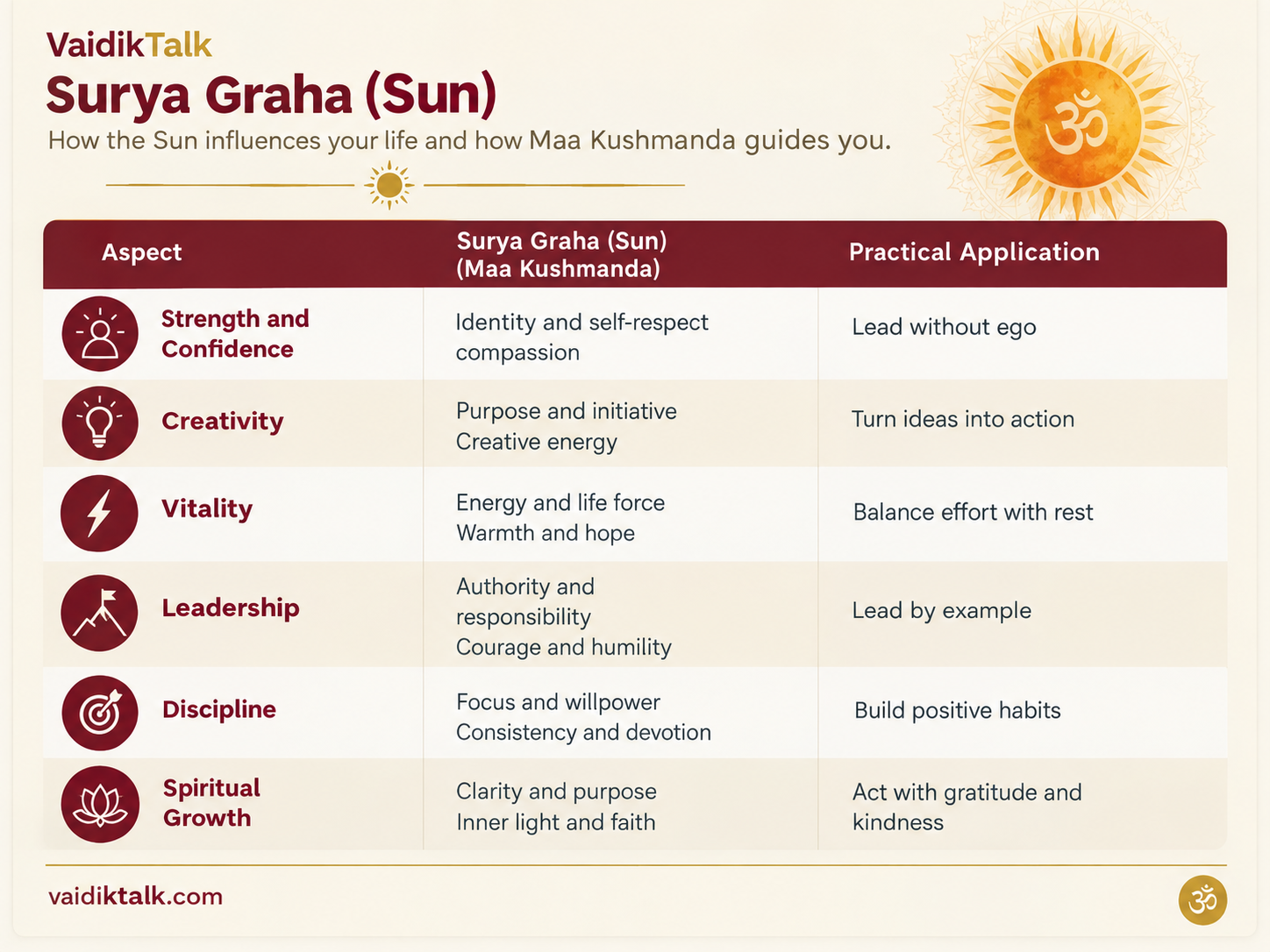
For devotees, this scientific reality can sit alongside spiritual reflection. Maa Kushmanda represents the inner light that encourages action, clarity and hopeful thinking. Surya Graha represents the force of confidence and identity in Jyotish. Together, they suggest that personal power is most meaningful when joined with humility, responsibility and compassion.
A beginner who wishes to learn the role of grahas in a Kundli can read What Is Vedic Astrology? A Beginner’s Guide to Jyotish. A complete chart considers many placements, signs, houses, aspects and planetary periods, so one graha should not be viewed alone.
The Spiritual Meaning of Sun Energy
Maa Kushmanda’s connection with the Sun can inspire devotees to consider how they use their energy each day. Sun energy does not only refer to physical heat or daylight. In spiritual practice, it can represent the readiness to act, the confidence to speak truthfully and the ability to remain focused on meaningful work.
Confidence Without Ego
Surya Graha is linked with self-respect and leadership. Yet its higher expression is not domination. Maa Kushmanda’s compassionate image reminds devotees that confidence can remain gentle. A person may lead through good examples, sincerity and steady effort.
Creativity With Discipline
Maa Kushmanda is associated with creation. Creative work, study, business ideas and service projects need enthusiasm, but they also need regular discipline. Devotees may use Navratri Day 4 to identify one task that deserves consistent effort.
Vitality With Balance
The Sun sustains life on Earth, but too much heat can be harmful. In the same way, ambition needs rest, kindness and self-awareness. Maa Kushmanda’s symbolism encourages balance between active effort and peaceful reflection.
For a devotional item that may support a focused meditation routine, devotees can explore the Brass Surya Yantra available through VaidikTalk Store. It can be placed in a clean prayer space as a reminder of Surya Graha’s qualities of focus, clarity and self-discipline.
Navratri Day 4 Puja Vidhi
The Navratri Day 4 puja vidhi differs across regions and family traditions. The heart of the worship is sincere devotion, a clean prayer space and respectful conduct.
Prepare the Altar
Devotees may begin the Navratri Day 4 puja vidhi after bathing and wearing clean clothes. An image or murti of Maa Kushmanda may be placed on a clean altar. A diya, incense, water vessel, flowers, kumkum, akshat and fruits may be arranged for worship
Orange is commonly linked with Maa Kushmanda because it represents warmth, enthusiasm and radiant energy. Devotees may wear orange clothing or offer orange flowers if this suits their family custom.
Offer Bhog and Prayers
Malpua is widely associated with offerings to Maa Kushmanda in several Navratri traditions. Fruits, sweets and seasonal foods may also be offered with devotion. Offerings should be prepared and presented with cleanliness and respect.
Devotees may light a diya and offer flowers, incense and prayers. The act of worship can include gratitude for health, food, sunlight, family support and the ability to work toward worthy goals.
Recite the Maa Kushmanda Mantra
A commonly recited Maa Kushmanda mantra is:
Om Devi Kushmandayai Namah
The Maa Kushmanda mantra may be chanted with a calm mind. Some devotees chant it 108 times with a mala, while others choose a count that fits their daily prayer practice. The focus should remain on attention, respect and personal reflection rather than a fixed number alone.
Another traditional verse associated with Maa Kushmanda is:
Ya Devi Sarvabhuteshu Maa Kushmanda Rupena Samsthita
Namastasyai Namastasyai Namastasyai Namo Namah
The Navratri Day 4 puja vidhi may conclude with aarti and the sharing of prasad among family members.
Simple Surya Graha Practices
Devotees who wish to reflect on Surya Graha during Navratri Day 4 may adopt simple practices that support discipline and gratitude.

- Offer water to the rising Sun in the morning, where this is part of family tradition.
- Spend a few quiet minutes in sunlight, while following ordinary health and sun-safety guidance.
- Practise respectful speech with parents, teachers and mentors.
- Begin an unfinished responsibility with steady effort.
- Recite the Maa Kushmanda mantra during daily prayer.
- Choose service, charity or helpful action without expecting recognition.
A Surya-related practice is more meaningful when it supports better conduct. A remedy should not become a substitute for medical care, professional advice or practical effort.
For devotees interested in a wearable spiritual item, the Seven Mukhi Rudraksha Bracelet can be explored as a personal prayer accessory. Spiritual products carry traditional significance, while their meaning becomes more personal through regular prayer and ethical conduct.
Maa Kushmanda’s Lesson for Daily Life
Maa Kushmanda represents the ability to bring light into one’s own thoughts and actions. Her worship on Navratri Day 4 encourages devotees to move away from hopelessness, laziness and fear. It asks them to recognise the strength already present within them and apply it responsibly.
The Sun rises each day without seeking applause. This can be a powerful lesson for work, relationships and spiritual discipline. Regular effort, honest intention and respectful behaviour can create a more meaningful life than outward display alone.
Maa Kushmanda also teaches that creative energy needs direction. A person may have talent, desire and ambition, yet these qualities become fruitful through consistent action. Surya Graha represents this aspect of purpose: the willingness to stand upright, take responsibility and keep moving toward a worthy goal.
Seek Personalised Guidance
Maa Kushmanda and Surya Graha offer a meaningful spiritual theme for Navratri Day 4: radiant strength guided by compassion. Devotees seeking personal insight into Surya Graha, a Kundli or Navratri worship can contact VaidikTalk for astrology guidance. VaidikTalk offers consultations with astrologers in Vedic astrology, palmistry, numerology, tarot and related traditions.
Frequently Asked Questions (FAQs)
Who is Maa Kushmanda?
Maa Kushmanda is the fourth form of Navadurga worshipped on Navratri Day 4.
What is the Maa Kushmanda mantra?
A common Maa Kushmanda mantra is “Om Devi Kushmandayai Namah.”
What is offered during Navratri Day 4 puja vidhi?
Malpua, fruits, sweets, flowers, incense and a diya are commonly offered, subject to family tradition.
Why is Maa Kushmanda connected with Surya Graha?
Her association with cosmic creation, warmth and radiance creates a symbolic connection with the Sun’s life-giving energy.
Which colour is associated with Maa Kushmanda?
Orange is commonly associated with Maa Kushmanda because it represents energy, warmth and enthusiasm