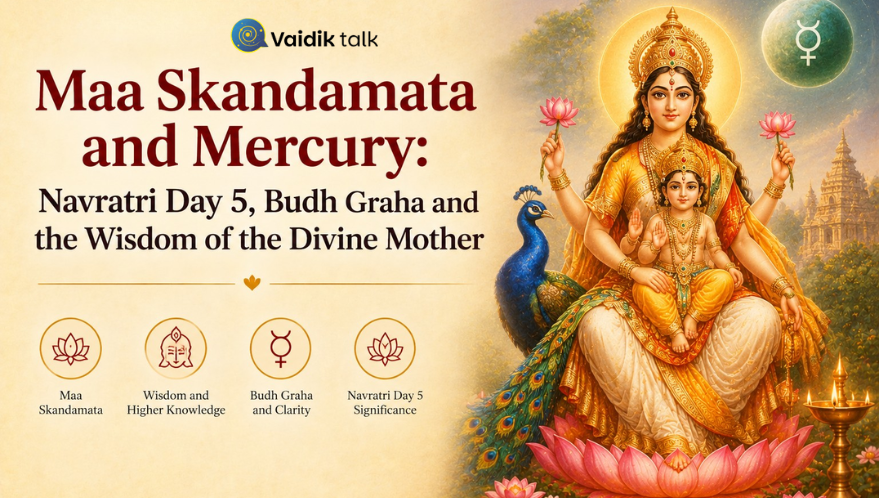
Navratri Day 5 is devoted to Maa Skandamata, the fifth form of Navadurga. She is worshipped as the mother of Lord Skanda, also known as Kartikeya or Murugan, who is traditionally regarded as the commander of the divine forces. Her form represents maternal wisdom, affectionate protection, courage and the power of right guidance.
The nine days of Navratri honour nine forms of Maa Durga, each carrying a distinct spiritual teaching. This article is for people to understand Navratri’s meaning and comprehend the nine nights of Maa Durga as to how the festival invites devotees to reflect on devotion, discipline, courage and inner growth.
Maa Skandamata is often linked symbolically with Budh Graha, or Mercury. In Vedic astrology, Budh Graha is associated with intellect, communication, learning, reasoning, writing and practical judgment. Maa Skandamata’s maternal form reflects the wisdom that guides, teaches and protects with patience. Together, these symbols encourage thoughtful speech, clear understanding and responsible use of knowledge.
Who Is Maa Skandamata?
Maa Skandamata is the mother of Skanda, a revered name for Lord Kartikeya. Her name combines “Skanda” and “Mata,” meaning the mother of Skanda. Devotees worship her on the fifth day of Sharad Navratri and Chaitra Navratri.
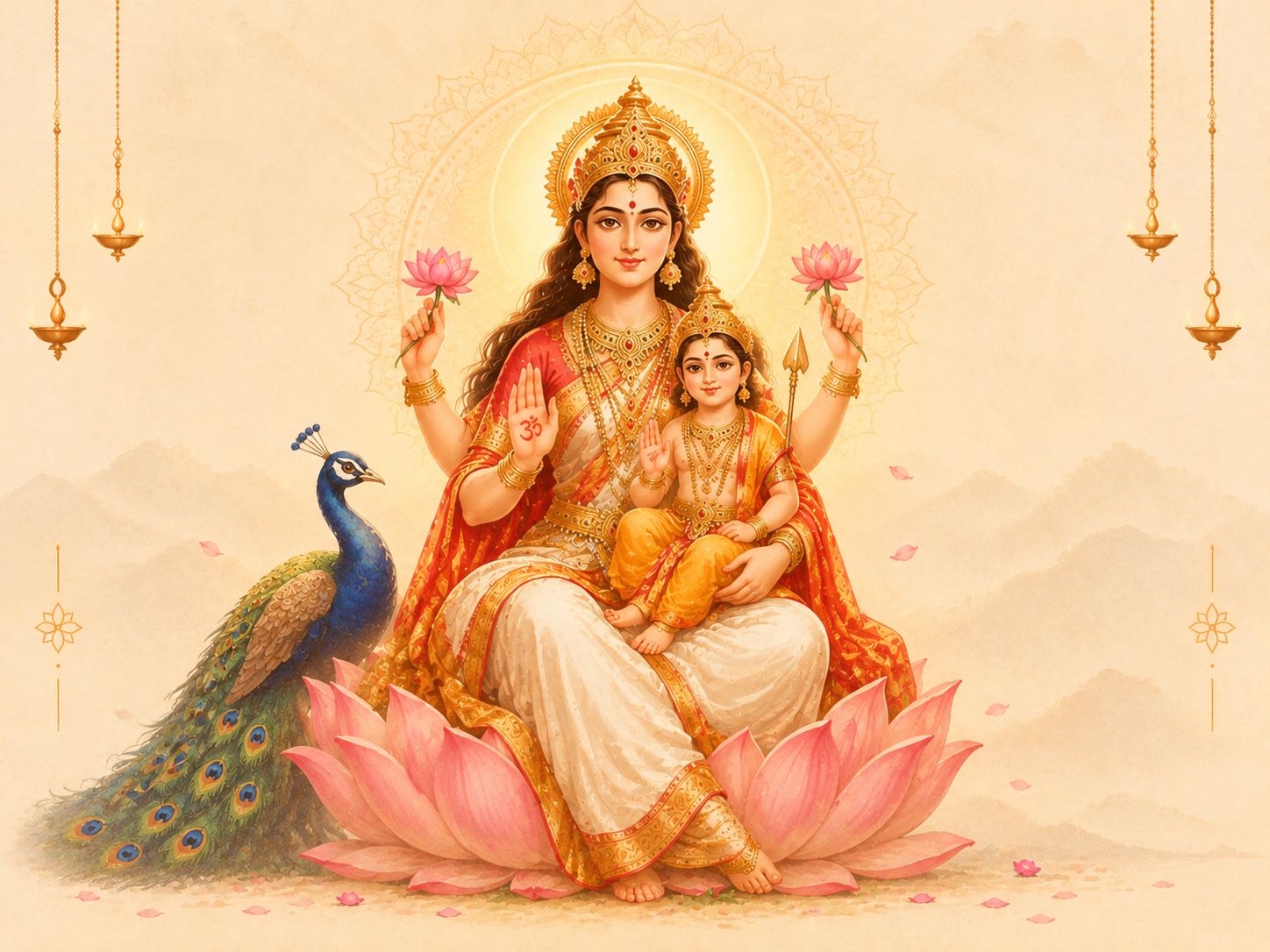
Traditional depictions show Maa Skandamata seated on a lotus, holding infant Skanda in her lap. She is generally portrayed with four arms. Two hands hold lotus flowers, one hand supports Lord Skanda, and one hand offers the varada mudra, which represents blessings and protection. Because of her lotus seat, she is also called Padmasana Devi.
Her lion vehicle symbolises courage, while the child in her lap expresses maternal love and protection. This image carries an important spiritual message: gentleness and strength can stand together. Maa Skandamata is nurturing, but she is also a form of Durga, the divine force that protects dharma.
The fifth day builds on the earlier Navratri forms. Devotees may revisit Maa Shailputri and Chandra Graha to understand the Day 1 symbolism of stability and emotional grounding. Day 2’s focus on discipline can be explored through Maa Brahmacharini and Mangal Graha. Day 3’s balance between beauty and courage is described in Maa Chandraghanta and Shukra Graha.
Maa Skandamata and Budh Graha
Budh Graha is the Sanskrit name for Mercury. In Jyotish, Budh is associated with intelligence, speech, observation, memory, commerce, mathematics and adaptability. The condition of Budh in a birth chart is traditionally examined alongside its house, sign, planetary associations and dasha periods.
Maa Skandamata’s association with Budh Graha is devotional and symbolic. A mother guides a child through learning, behaviour and emotional development. In the same spirit, Budh represents the ability to listen, understand, ask useful questions and communicate thoughtfully.
Mercury is also a remarkable planet in astronomy. According to NASA’s Mercury facts, Mercury is the closest planet to the Sun and completes one orbit in about 88 Earth days. NASA also reports that Mercury has a diameter of about 4,880 kilometres, making it the smallest planet in the solar system.
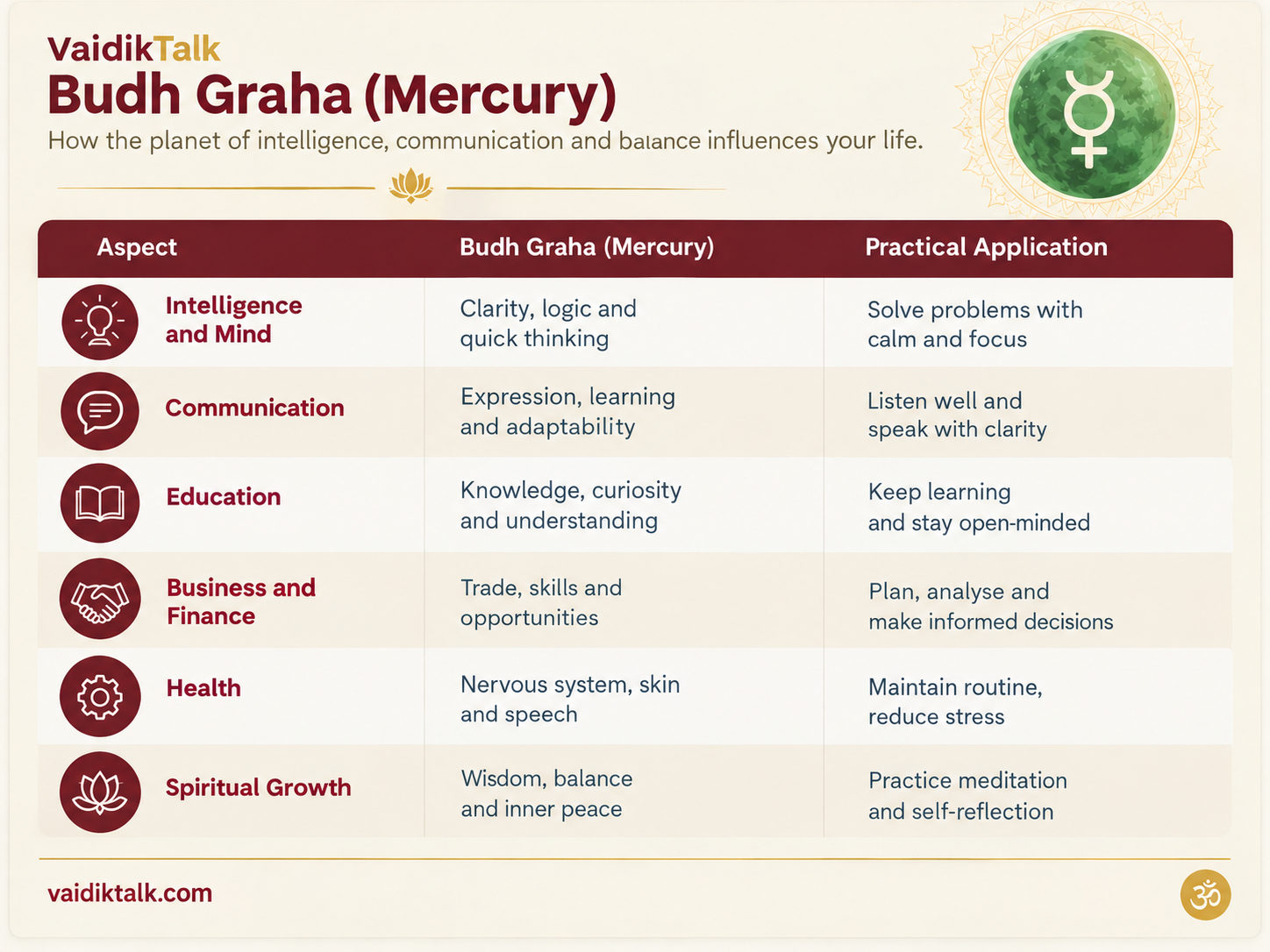
These facts offer a useful reflection for devotees. Mercury moves quickly around the Sun, and Budh Graha is traditionally connected with a quick mind. Yet quick thinking has value only when joined with discernment. Maa Skandamata represents the patient, caring wisdom that can guide intelligence toward kind and responsible action.
For a broader understanding of grahas, houses and Kundli interpretation, readers can explore What Is Vedic Astrology? A Beginner’s Guide to Jyotish. A personal Kundli contains many interconnected elements, so Budh Graha should be understood within the full chart rather than through a single placement.
Wisdom of the Divine Mother
Maa Skandamata’s form teaches that wisdom is more than collecting information. It includes the ability to care, guide and use knowledge for a constructive purpose. Her symbolism can be reflected in everyday choices.
Thoughtful Communication
Budh Graha is associated with speech and communication. Maa Skandamata inspires devotees to speak with care, listen fully and avoid words that create avoidable hurt. A clear message can be firm without becoming harsh.
Learning With Humility
Knowledge grows through questions, study and correction. Maa Skandamata’s maternal energy suggests that learning requires patience. A student, professional or business owner can benefit from admitting what is not yet known and seeking reliable guidance.
Guidance for Children
As the mother of Skanda, Maa Skandamata is especially meaningful for parents, teachers and caregivers. Her worship can inspire adults to guide children with discipline, attention and compassion. Wisdom is passed forward through conduct as much as instruction.
Courage in Decisions
Budh Graha represents analysis, but analysis alone may lead to overthinking. Maa Skandamata’s lion reminds devotees that clear thought must be followed by appropriate action. A well-considered decision needs courage to become real.
A Green Aventurine Bracelet may be considered as a personal meditation accessory for those seeking a visual reminder of calm decision-making and growth. Spiritual products carry cultural and devotional value, while real clarity grows through reflection, good conduct and practical effort.
Navratri Day 5 Puja Vidhi
The Navratri Day 5 puja vidhi varies among families, regions and temple traditions. Devotees may follow their family’s established practice while keeping sincerity and cleanliness at the centre of worship.
Prepare the Prayer Space
The Navratri Day 5 puja vidhi may begin after bathing and wearing clean clothes. Devotees can clean the altar and place an image or murti of Maa Skandamata on a fresh cloth. A diya, incense, flowers, kumkum, akshat, water and fruits may be arranged nearby.
Yellow is widely associated with Maa Skandamata. The colour is linked with warmth, wisdom and positivity. Devotees may wear yellow clothing or offer yellow flowers where this is suitable for their family tradition.
Offer Bhog and Prayers
Bananas are commonly offered to Maa Skandamata. Other fruits, sweets, milk-based preparations and satvik food may also be offered. The bhog is traditionally prepared with cleanliness and presented with devotion.
During the Navratri Day 5 puja vidhi, devotees may light a diya, offer flowers and pray for wisdom, family harmony and the ability to make good decisions. Parents may also pray for the well-being, education and character of their children.
Recite the Maa Skandamata Mantra
A commonly recited Maa Skandamata mantra is:
Om Devi Skandamatayai Namah
The Maa Skandamata mantra can be chanted quietly while focusing on patience, right speech and loving guidance. Some devotees chant the mantra 108 times using a mala, while others choose a number that fits their daily worship.
Another traditional verse is:
Simhasanagata Nityam Padmashritakaradvaya
Shubhadastu Sada Devi Skandamata Yashaswini
After prayer, devotees may perform aarti and share prasad with family members.
Budh Graha Practices for Clear Thinking
Devotees who reflect on Budh Graha during Navratri Day 5 may include simple habits that support calm and responsible thinking.
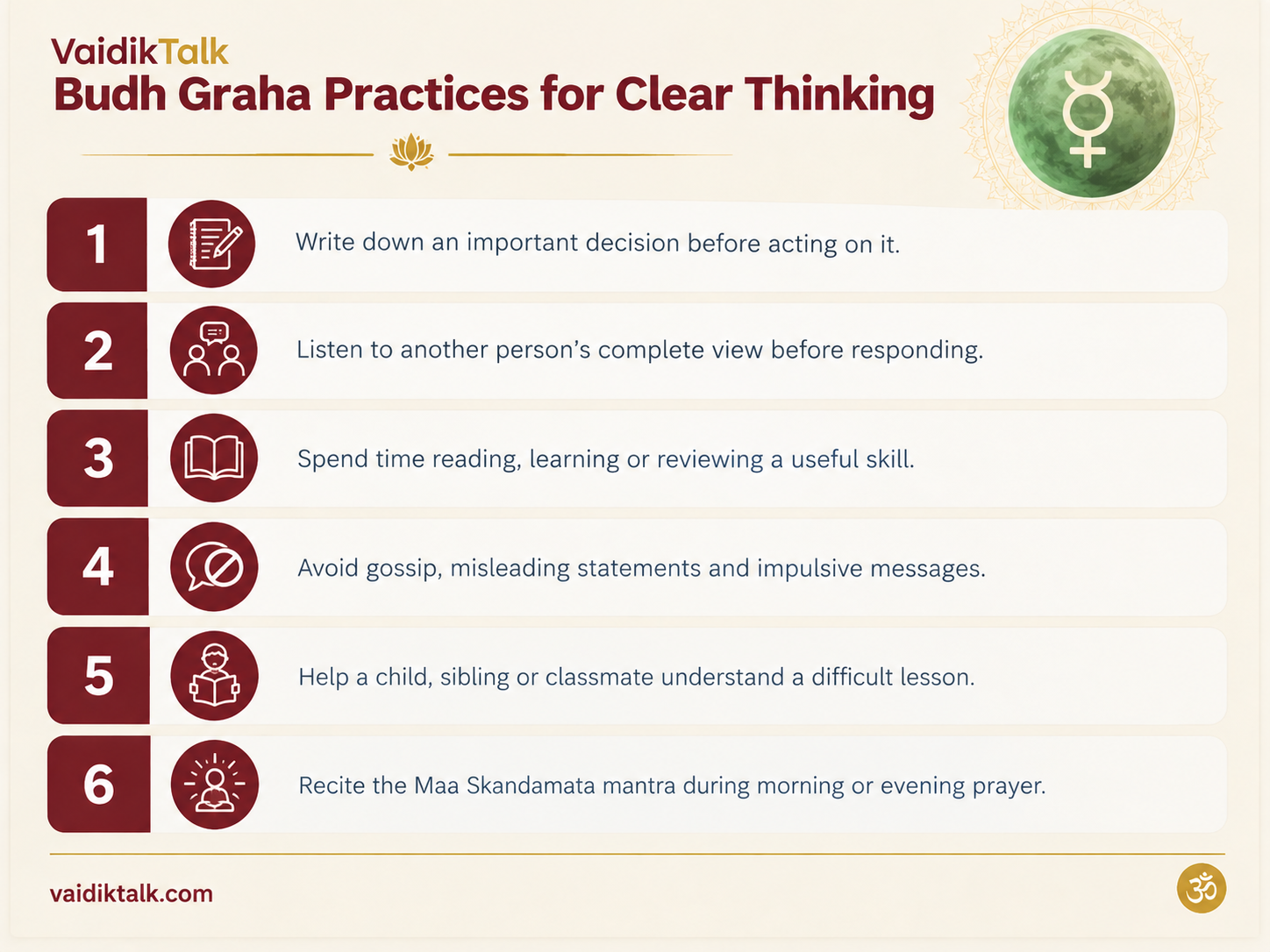
- Write down an important decision before acting on it.
- Listen to another person’s complete view before responding.
- Spend time reading, learning or reviewing a useful skill.
- Avoid gossip, misleading statements and impulsive messages.
- Help a child, sibling or classmate understand a difficult lesson.
- Recite the Maa Skandamata mantra during morning or evening prayer.
Wednesday is traditionally associated with Budh Graha. Some devotees choose green clothing, green moong or charitable acts on Wednesdays as part of their faith practice. Such actions may serve as reminders of generosity and self-discipline, rather than fixed assurances about outcomes.
For devotees who use a mala during mantra practice, the Rudraksha products at VaidikTalk Store offer options that can support a regular prayer routine. The item itself can become a helpful cue for sitting quietly, chanting with attention and reflecting on the day’s intention.
Maa Skandamata’s Message for Families
Maa Skandamata represents the strength of a mother who prepares a child to face life with wisdom and courage. Her message applies beyond parenthood. A mentor who teaches patiently, a sibling who offers thoughtful advice, or a friend who speaks truth with care can reflect this form of guidance.
Budh Graha adds the importance of communication. Families benefit when members speak honestly, listen closely and allow space for different views. The goal is not to win every conversation. The goal is to create understanding and mutual respect.
Maa Skandamata also encourages devotees to observe the connection between thoughts and words. Thoughts shape language, and language affects relationships. A brief pause before speaking can prevent conflict and create room for better choices.
Seek Personalised Guidance
Maa Skandamata and Budh Graha present a meaningful Navratri Day 5 theme: wisdom that is compassionate, clear and courageous. A personal horoscope may offer deeper context about Budh Graha, education, communication and family matters.
For individual guidance on a Kundli, Budh Graha or Navratri worship, devotees may contact VaidikTalk’s astrology guidance team. VaidikTalk connects users with astrologers offering Vedic astrology, palmistry, numerology, tarot and related spiritual consultations.
FAQs
Who is Maa Skandamata?
Maa Skandamata is the fifth form of Navadurga and the mother of Lord Skanda or Kartikeya.
What is the Maa Skandamata mantra?
A common Maa Skandamata mantra is “Om Devi Skandamatayai Namah.”
What is offered during Navratri Day 5 puja vidhi?
Bananas, flowers, fruits, sweets, incense and a diya are commonly offered, based on family custom.
Why is Maa Skandamata connected with Budh Graha?
The connection is symbolic, relating her nurturing wisdom and guidance with Budh Graha’s themes of learning and communication.
Which colour is associated with Maa Skandamata?
Yellow is commonly associated with Maa Skandamata and represents warmth, wisdom and positive energy.