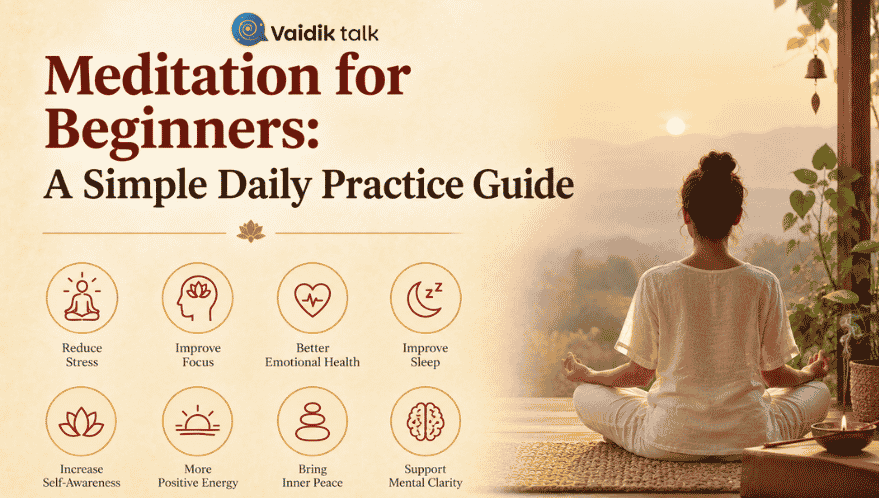
Meditation for beginners does not require a silent room, special clothing, or long sessions. It is a practice of gently bringing attention back to one point, such as the breath, a sound, a mantra, or sensations in the body. A few quiet minutes each day can help a person build awareness of thoughts, emotions, and physical tension.
For someone learning how to start meditating daily, the most helpful goal is consistency rather than perfection. Thoughts will arise during meditation. That is normal. The practice is not about stopping every thought. It is about noticing that attention has wandered and returning calmly to the chosen focus.
Mindfulness meditation has become a widely studied practice. The US National Center for Complementary and Integrative Health notes that meditation and mindfulness approaches may help some people with stress, anxiety, sleep problems, and quality of life, though results vary by person and condition. People looking for tips and understanding it better can go through the NCCIH overview of meditation and mindfulness.
What Is Meditation?
Meditation is a mental practice that trains attention and awareness. Some forms involve focusing on breathing. Others use a mantra, guided imagery, prayer, compassion, body awareness, or observation of thoughts.
Meditation has roots in many spiritual and philosophical traditions, including Hindu, Buddhist, Jain, Sikh, Christian, Islamic, and secular mindfulness practices. For many people, it is a spiritual discipline. For others, it is a practical habit for pausing and refocusing.
A beginner does not need to adopt a particular belief system to meditate. The practice can be adapted to a person’s faith, comfort level, daily schedule, and health needs.
Meditation Is Not About Emptying the Mind
A common misconception is that meditation requires a completely blank mind. In reality, thoughts, memories, worries, and plans may appear during every session. The key skill is recognising them without becoming carried away by them.
For example, a person may focus on breathing and suddenly begin thinking about work. Instead of judging that distraction, they can silently notice, “thinking,” and return attention to the next inhale. Repeating this process is part of the practice.
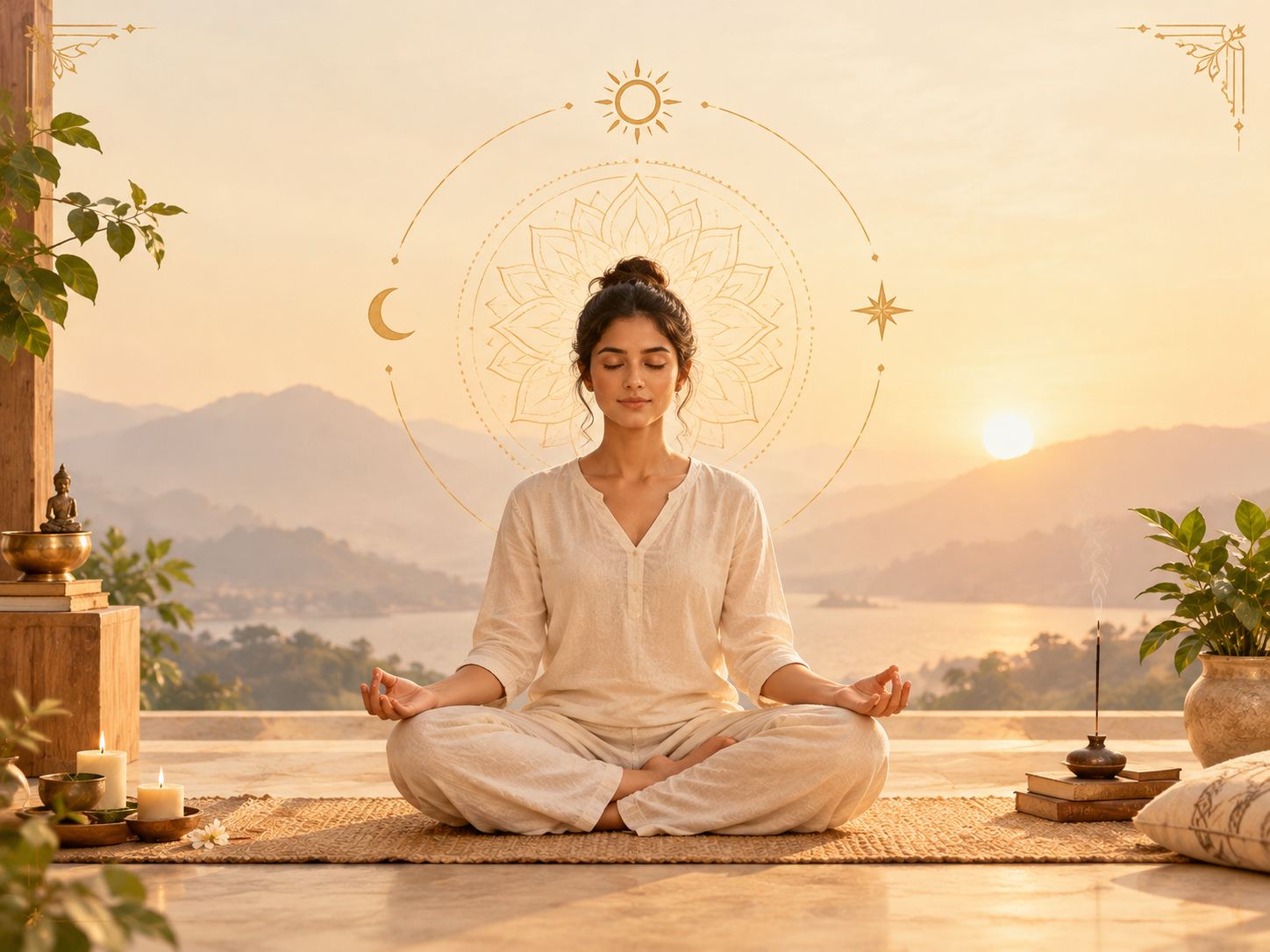
Why Start a Daily Meditation Practice?
A daily practice can create a short pause between external demands and automatic reactions. It may help a person notice stress patterns, sit with emotions more patiently, and bring greater attention to everyday activities.
A 2022 review published by the American Psychological Association discussed mindfulness-based approaches and their potential role in stress management. Meditation should be viewed as one supportive habit among many, alongside sleep, movement, nutritious food, social connection, and professional care where needed.
Benefits vary, but people may notice -
A greater awareness of thoughts and emotions.
A calmer response during stressful moments.
Improved focus during study or work.
A more intentional morning or evening routine.
A dedicated moment for prayer, gratitude, or reflection.
Meditation is not a replacement for therapy, medical treatment, medication, or emergency mental-health support. A person experiencing severe anxiety, depression, trauma symptoms, panic, or thoughts of self-harm should seek help from a qualified healthcare professional or local emergency service.
How to Start Meditating Daily
Learning how to start meditating daily begins with choosing a small time commitment. Five minutes is enough for a first session. A person can increase the duration slowly after the habit feels comfortable.
Choose a Regular Time
A consistent cue makes meditation easier to remember. Some people sit shortly after waking up. Others prefer a few minutes after lunch, before studying, or before sleep.
The time does not need to be identical every day. What matters is linking the practice to an existing routine, such as brushing teeth, making tea, closing a laptop, or preparing for bed.
Pick a Comfortable Place
A beginner can sit on a chair, cushion, sofa, or floor. The spine can be upright without becoming rigid. Hands may rest in the lap, on the knees, or wherever they feel natural.
The room does not need to be perfectly quiet. Everyday sounds can become part of the practice. If a sound occurs, a person can notice it and return to the breath.
Set a Short Timer
Starting with five minutes reduces pressure. A soft timer or meditation app can help a person avoid checking the clock. After one or two weeks, the session can increase to 10 minutes if it feels manageable.
Research on habit formation suggests that consistency matters more than chasing a specific number of days. A study published in the European Journal of Social Psychology found that automaticity for health-related behaviours varied widely, with an average of 66 days in the study sample. A daily meditation routine can therefore be built patiently, one session at a time.
A Five-Minute Breath Meditation
Breath awareness is one of the easiest simple meditation techniques for beginners. It needs no equipment and can be practiced almost anywhere.
Step 1: Sit Comfortably
Sit in a stable position. A person may close their eyes or lower their gaze toward the floor. There is no need to force the body into a difficult posture.
Step 2: Notice the Breath
Bring attention to the natural breath. Notice the feeling of air moving at the nostrils, the chest rising and falling, or the belly expanding and releasing.
The person does not need to make the breath deep or slow. Natural breathing is enough.
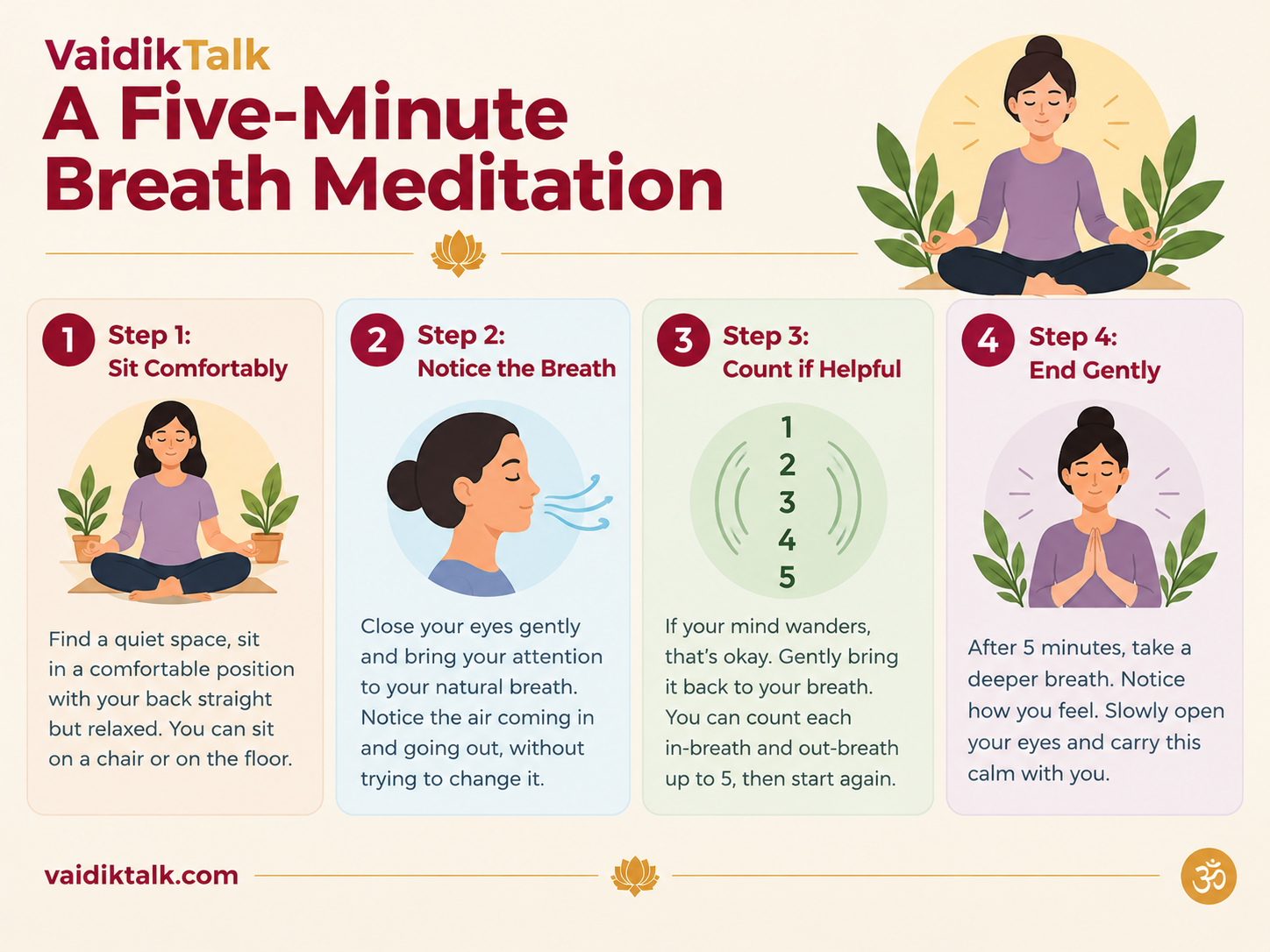
Step 3: Count if Helpful
A beginner can count one on the inhale and two on the exhale, continuing until ten. After ten, they can return to one.
If attention drifts, the person can begin again from one without frustration. Starting over is part of the method, not a mistake.
Step 4: End Gently
When the timer rings, take a moment to notice how the body feels. Open your eyes slowly and return to the next activity without rushing.
This practice can be repeated daily and adapted into longer sessions over time.
Simple Meditation Techniques to Try
Different people connect with different practices. These simple meditation techniques offer several starting points.
Body Scan Meditation
In a body scan, attention moves gradually through the body. A person may begin at the toes, then notice the feet, calves, knees, thighs, stomach, shoulders, hands, face, and jaw.
The purpose is not to remove discomfort. It is to observe physical sensations with patience. If tension is noticed in the shoulders, the person can relax them gently without forcing a result.
Mantra Meditation
A mantra is a repeated sound, word, or phrase. Some people use traditional Sanskrit mantras such as “Om.” Others choose a simple word such as “peace,” “calm,” or “present.”
A person can repeat the mantra silently with each breath. For those who prefer spiritual practice, a mantra may be linked with prayer or devotion.
Readers interested in spiritual symbolism may learn about Maa Siddhidatri and the meaning of Ketu Graha. Personal spiritual practices can complement meditation when they feel meaningful and respectful.
Walking Meditation
Walking meditation can help people who find sitting still difficult. The person walks slowly and pays attention to each step: lifting the foot, moving it forward, placing it down, and shifting weight.
This can be practiced in a quiet corridor, balcony, garden, or park. Safety comes first, so walking meditation should not be attempted near traffic, stairs, or other hazards.
Loving-Kindness Meditation
Loving-kindness meditation uses silent phrases of goodwill. A person may begin by wishing themselves peace and safety, then extend similar wishes toward loved ones, neutral people, and others.
For example, they may silently repeat: “May I be safe. May I be peaceful. May I be well.” The wording can be changed to suit personal beliefs.
This practice can be useful for people who are hard on themselves or who want to strengthen compassion in relationships.
Building a Meditation Space at Home
A meditation space does not need to be a separate room. A chair by a window, a quiet corner of the bedroom, or a clean spot on the floor can work well.
A person may include a cushion, light shawl, journal, prayer beads, framed image, or small diya holder. Any flame should be supervised and placed away from fabric, paper, or wood.
Some people prefer gemstones or spiritual objects as visual reminders of intention. Before purchasing gemstones, readers can explore the differences between emerald and peridot. They can also browse spiritual and meditation products at VaidikTalk Store.
The purpose of the space is to make the habit easier to begin. A clear and comfortable corner may remind the mind that it is time to pause.
Meditation and Vedic Reflection
Meditation has a meaningful place in many Indian spiritual traditions. It can be practiced alongside prayer, yoga, mantra recitation, breath awareness, or reflection on personal values.
If you are someone interested in going deep and have a wider context of Jyotish you can read what Vedic astrology means for beginners. Astrology and meditation serve different purposes. Astrology focuses on symbolic chart interpretation, while meditation develops awareness through regular attention practice.
A person interested in personal spiritual reflection may also explore what a Kundli is and how a birth chart is understood. A Kundli can be used as a reflective tool, while meditation creates direct space for observing thoughts and feelings in the present moment.
Numerology is another distinct symbolic practice. You can also explore numerology and learn how it explains traditional use of numbers for self-reflection.
Common Challenges for Beginners
A beginner may feel restless, sleepy, bored, distracted, or uncertain about whether they are doing it correctly. These experiences are common. Meditation is a skill that develops through repetition.
There Are Too Many Thoughts
Thoughts are expected. The person can label the experience as “thinking” and return to breathing, counting, or the mantra.
There Is No Time
A two-minute practice is still a practice. A person may meditate while seated before a meeting, after parking a vehicle, or before checking messages in the morning.
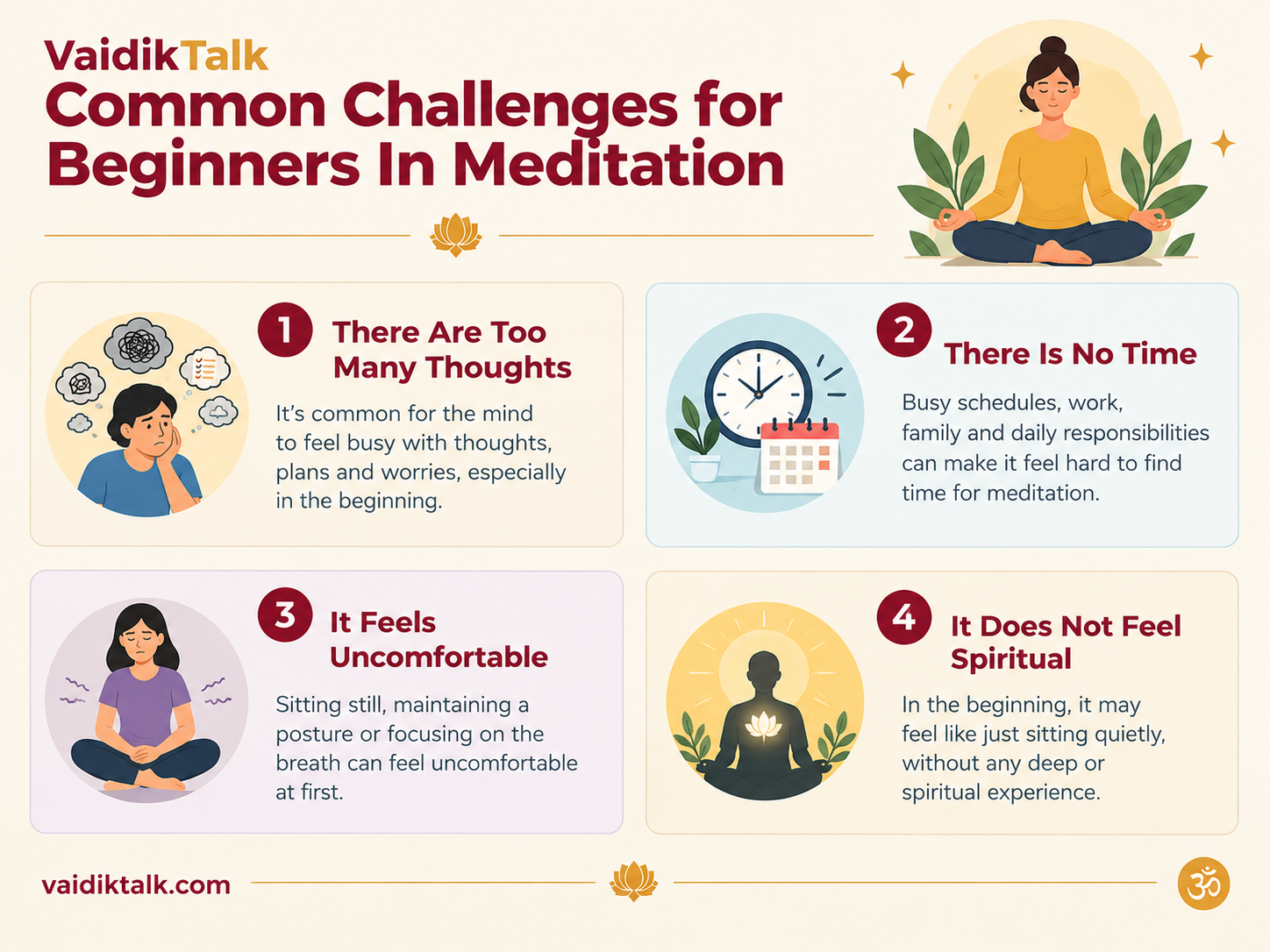
It Feels Uncomfortable
Physical discomfort can be adjusted by changing position, sitting on a chair, or using a cushion. Emotional discomfort may also arise. If meditation brings up distressing memories or intense anxiety, the person can pause and speak with a qualified mental-health professional.
It Does Not Feel Spiritual
Meditation does not need to feel mystical. Some sessions may feel peaceful, while others may feel ordinary or difficult. The benefit often comes from returning to the practice, rather than chasing a particular experience.
A Seven-Day Beginner Routine
This short routine helps a person practice meditation for beginners without feeling overwhelmed.
Day 1: Sit for three minutes and observe the breath.
Day 2: Practice breath counting from one to ten for five minutes.
Day 3: Try a five-minute body scan.
Day 4: Practice a short walking meditation.
Day 5: Use a mantra for five minutes.
Day 6: Practice loving-kindness meditation.
Day 7: Choose the technique that felt most comfortable and repeat it.
A person can repeat this weekly pattern or remain with one method. The best practice is usually the one they can return to with patience.
Some people connect meditation with goals around work and financial wellbeing. In that case, a reflective practice can be paired with realistic planning. Readers may also explore how pyrite bracelets are traditionally linked with money and prosperity, while remembering that spiritual objects do not replace budgeting, saving, or professional financial advice.
Begin With One Quiet Moment
Meditation for beginners becomes easier when the goal is small and realistic. A daily five-minute session can build a useful habit of pausing, breathing, and returning attention to the present.
The most effective answer to how to start meditating daily is simple: choose a time, sit comfortably, focus on one anchor, and return gently whenever the mind wanders. These simple meditation techniques can be practiced with spiritual faith or as a secular wellness routine.
For personalised spiritual guidance, meditation support, astrology consultations, or questions about personal practices, readers can contact Vaidik Talk. Vaidik Talk connects users with practitioners offering Vedic astrology, numerology, tarot, Vastu, and related guidance.
Frequently Asked Questions (FAQs)
How long should a beginner meditate each day?
A beginner can start with five minutes a day and increase the time gradually.
Is it normal to have thoughts during meditation?
Yes, thoughts are normal, and the practice is to notice them and return attention to the chosen focus.
Can meditation be practiced while lying down?
Yes, though sitting may help reduce sleepiness for many beginners.
What is the easiest meditation technique for beginners?
Breath awareness is often the simplest place to start because it needs no equipment.
Should meditation replace therapy or medical treatment?
No, meditation can support wellbeing but should not replace qualified medical or mental-health care.