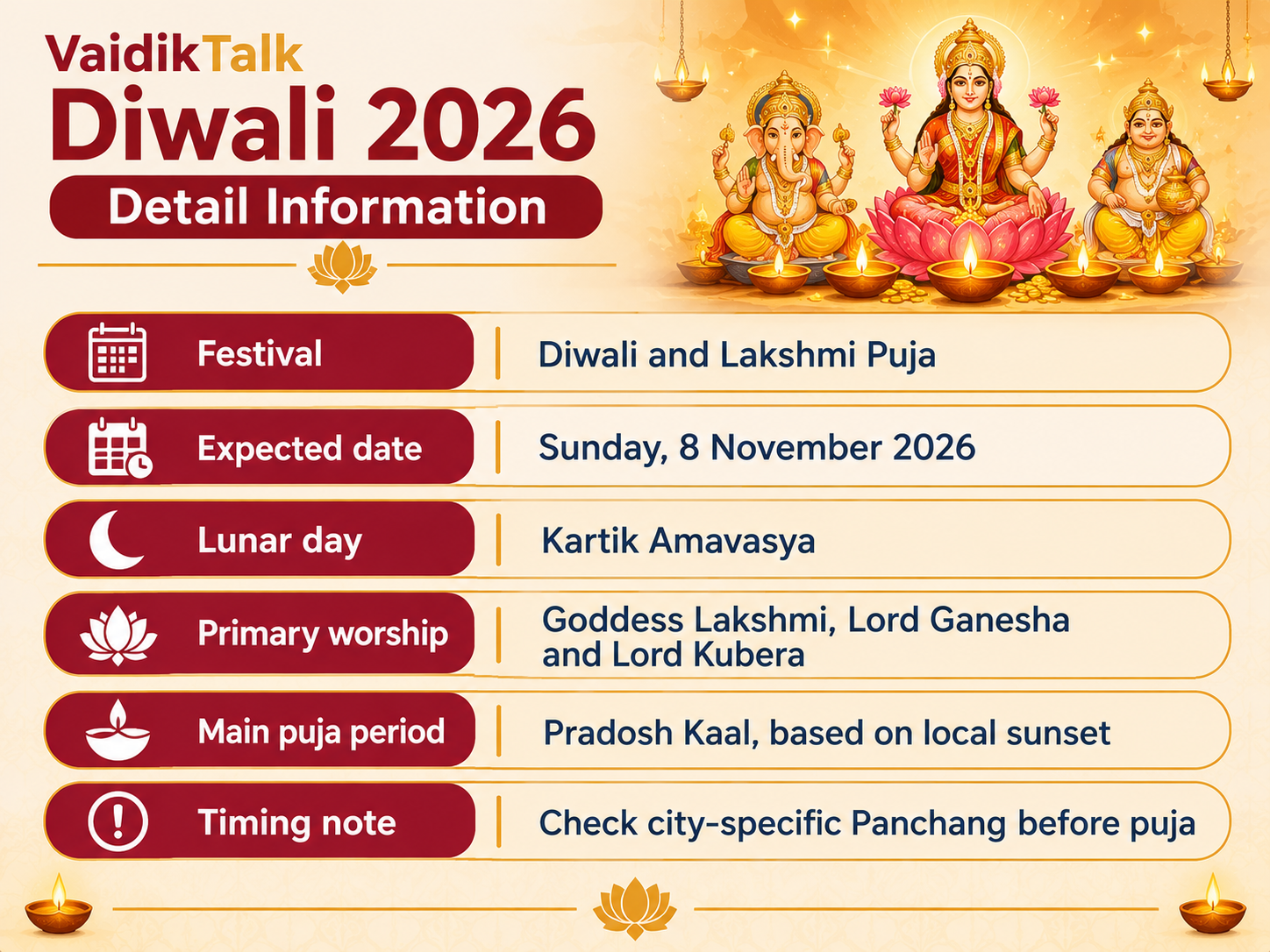
Diwali 2026 is expected to be celebrated on Sunday, 8 November 2026 in India. The main festival day is Kartik Amavasya, when families worship Goddess Lakshmi, Lord Ganesha and Lord Kubera, light diyas and welcome the values of prosperity, wisdom, gratitude and togetherness.
For many households, Diwali is more than a festival of lights. It is a time for cleaning and decorating the home, sharing sweets, helping others, meeting loved ones and beginning the Hindu New Year in several regional traditions. The precise Diwali Lakshmi Puja muhurat varies by city because sunset, Pradosh Kaal and local Panchang calculations differ by location.
A beginner’s guide to Vedic astrology and Jyotish can help readers understand why festival timings are calculated through local sunrise, sunset, Tithi, Nakshatra and other Panchang elements. Families should check a city-specific Panchang or consult a knowledgeable priest for the final puja timing.
Diwali 2026 Date and Main Puja Timing
Diwali is observed on the Amavasya Tithi of the Kartik month. In 2026, Lakshmi Puja falls on 8 November, subject to confirmation through regional Panchang calculations closer to the date.
The ideal Diwali Lakshmi Puja muhurat is often observed during Pradosh Kaal, the period shortly after sunset, when Amavasya Tithi is active. Some traditions also consider Vrishabha Lagna, known for steadiness, while others may consider Simha Lagna for a specific Lakshmi Puja period.
The Government of India’s National Portal of India recognises India’s rich cultural and religious diversity, which is reflected in the regional ways Diwali is observed. Dates, puja customs and local names may vary among communities.
Why Diwali Is Celebrated
Diwali carries different spiritual stories across India. In many North Indian traditions, it commemorates Lord Rama’s return to Ayodhya after fourteen years of exile and the victory of righteousness over Ravana. Homes are illuminated with diyas to celebrate the return of light, hope and dharma.
In other traditions, Diwali is associated with Goddess Lakshmi’s emergence during Samudra Manthan, the churning of the cosmic ocean. Lakshmi Puja expresses gratitude for livelihood, food, family well-being and the resources that support a household.
For Jains, Diwali marks the nirvana of Lord Mahavira. For Sikhs, it coincides with Bandi Chhor Divas, commemorating Guru Hargobind Sahib’s release from imprisonment. The Britannica overview of Diwali describes the festival’s diverse religious and regional meanings.
The common theme remains the movement from darkness toward clarity, from conflict toward harmony and from neglect toward care.
Significance of Lakshmi Puja
Lakshmi Puja is performed to honour Goddess Lakshmi, traditionally associated with prosperity, well-being, abundance and auspiciousness. Lord Ganesha is worshipped alongside Lakshmi because he represents wisdom, discernment and the removal of obstacles.
The spiritual message of Diwali does not limit prosperity to money. It may include good health, ethical work, peaceful relationships, learning, gratitude and generosity. A clean, welcoming home symbolises readiness for disciplined living and responsible use of resources.
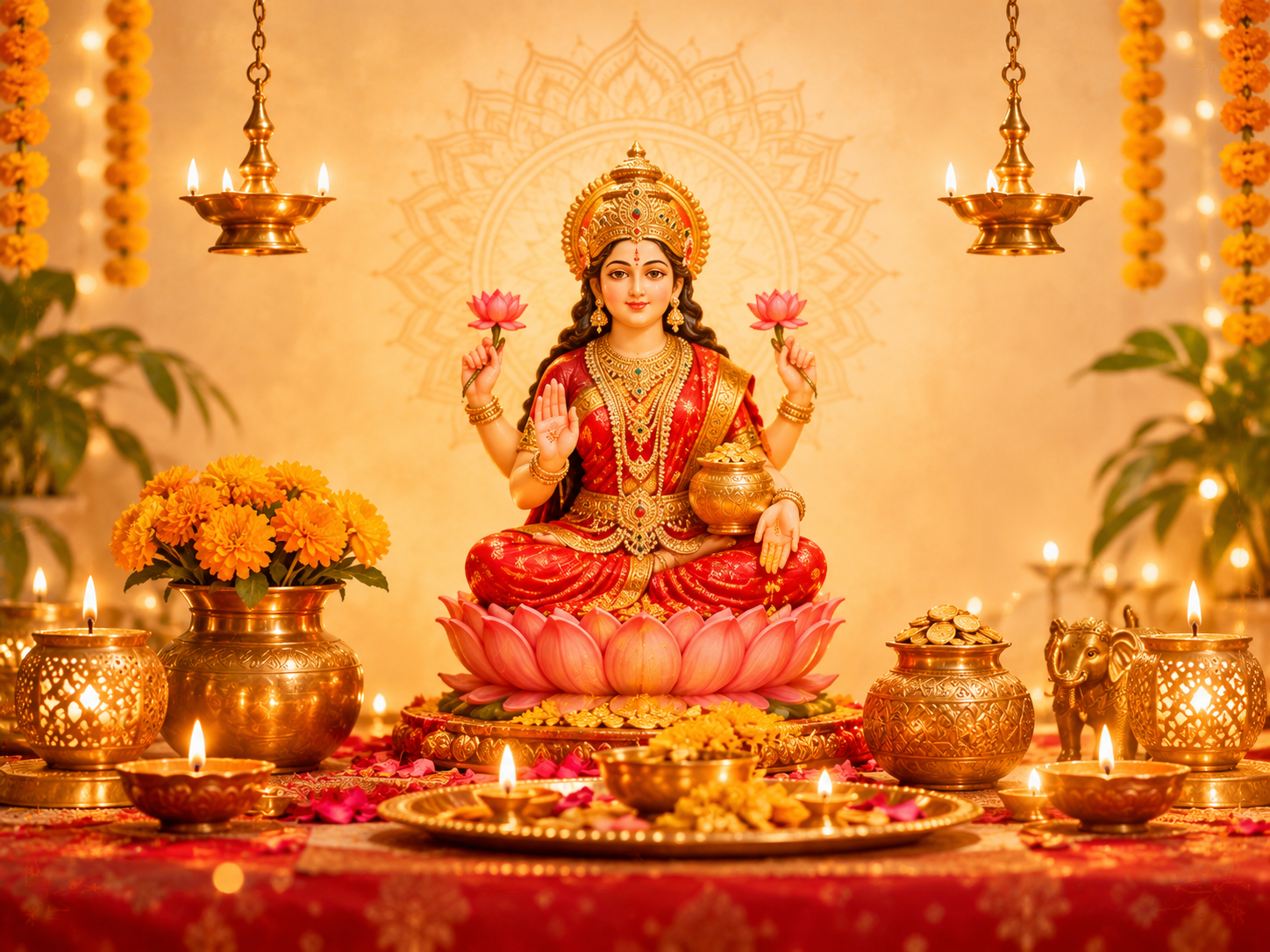
Many families also worship account books, tools, business documents or work equipment. This practice expresses respect for honest work and financial responsibility. Before beginning any major financial commitment, practical research and professional advice should remain the priority.
Diwali Puja Vidhi: Preparation
A simple Diwali puja vidhi can be performed at home with sincerity. Families may adapt the sequence according to regional customs, family traditions and guidance from their priest.
Clean and Prepare the Puja Space
The home is cleaned before Diwali, particularly the entrance and puja area. Many families create rangoli at the doorway and light lamps near entrances, balconies and windows.
A clean cloth may be placed on a raised platform or chowki. A small image or murti of Goddess Lakshmi and Lord Ganesha is placed there. The image should be clean and respectfully arranged.
Gather Puja Items
Common items for Diwali puja include:
- Images or murtis of Goddess Lakshmi and Lord Ganesha
- A clean chowki or puja platform
- Diyas, cotton wicks and oil or ghee
- Kumkum, haldi, rice and sandalwood paste
- Flowers, garlands and incense
- Kalash with water, mango leaves and coconut
- Fruits, sweets and dry fruits
- Panchamrit, if used in the family tradition
- Coins, account books or business-related items
- Betel leaves and nuts, if customary
- A bell, camphor and aarti thali
Those using prayer beads may explore the origin and spiritual significance of Rudraksha. Readers who are considering a purchase can also understand what Rudraksha certification means before selecting spiritual items.
Diwali Puja Vidhi: Step-by-Step
Begin With Personal Cleansing
Family members usually bathe, wear clean clothes and prepare the puja space before the Diwali Lakshmi Puja muhurat. Cleanliness is treated as a sign of respect for the occasion.
A diya may be lit before the puja begins. The family can sit calmly and take a simple sankalp, or intention, for well-being, ethical prosperity and harmony in the home.
Invoke Lord Ganesha
Lord Ganesha is commonly worshipped before Lakshmi Puja. Offer water, flowers, kumkum, rice, incense and sweets according to family tradition.
The prayer may focus on wisdom, clear judgment and freedom from obstacles in constructive work. This step reminds worshippers that prosperity is best supported by discernment and responsible choices.
Establish the Kalash
A kalash filled with clean water may be placed near the deities. Mango leaves and a coconut are placed above it in many traditions. The kalash represents abundance, life and sacred hospitality.
Families may add coins, rice or betel nuts depending on customary practice. The arrangement need not be elaborate. Respectful intent matters more than expensive materials.
Worship Goddess Lakshmi
Offer flowers, kumkum, turmeric, rice, incense, sweets and fruits to Goddess Lakshmi. Many families recite Lakshmi prayers, Sri Suktam, Lakshmi Ashtottara or simple devotional chants according to their comfort and tradition.
Lakshmi Puja may include worship of account books and work-related items. People may place new ledgers, notebooks, tools or business documents near the puja setup.
Offer Naivedya and Perform Aarti
Sweets, fruits, dry fruits or homemade food can be offered as naivedya. The family then performs aarti with a diya or camphor.
After aarti, prasad is shared with family members, neighbours and guests. Charity or food sharing may be included as a meaningful Diwali practice.
Light Diyas
Diyas are lit around the puja space and throughout the home after worship. Families may light lamps at the entrance to symbolise warmth, welcome and hope.
Open flames require attention. Diyas should be kept away from curtains, paper decorations, children and pets. A stable, heat-safe surface is recommended.
Diwali Lakshmi Puja Muhurat: Why Location Matters
The Diwali Lakshmi Puja muhurat depends on the city because sunset time changes across locations. A person in Delhi, Bengaluru, Mumbai, Kolkata or Jaipur may have a different Pradosh Kaal.
A Panchang considers several elements:
- Tithi, or lunar day
- Vaar, or weekday
- Nakshatra, or lunar constellation
- Yoga
- Karana
- Sunrise and sunset
- Pradosh Kaal
- Local time zone and geographical location
The Indian Meteorological Department provides official weather information that can help households plan outdoor lighting and travel on festival days. For the final religious timing, a local Panchang remains more relevant than a generic national time.
Vaidik Talk’s daily astrology section includes Panchang details such as Tithi, Nakshatra, Yoga, sunrise and sunset, which can assist readers in understanding the daily calendar framework.
Diwali 2026 and Sustainable Celebrations
Diwali can be celebrated with joy while reducing harm to people, animals and the environment. Diyas, community meals, rangoli, handmade decorations and gifting can bring festivity without heavy smoke or waste.
The Central Pollution Control Board has published guidance on air quality and pollution monitoring in India. Families may choose lower-smoke celebrations, follow local safety rules and avoid firecrackers in areas where restrictions apply.
The World Health Organization notes that air pollution can affect health, especially among children, older adults and people with respiratory or heart conditions. Safer choices can include clay diyas, reusable decor, paper-free greetings, limited packaging and locally made gifts.
Diwali Traditions Across India
Diwali traditions vary across regions, languages and communities.
North India
Many households celebrate Lord Rama’s return to Ayodhya. Homes are decorated with diyas, rangoli and lights, followed by Lakshmi-Ganesha Puja and the sharing of sweets.
West India
In Gujarat and parts of Maharashtra, Diwali may be connected with Chopda Pujan, where business account books are worshipped. It may also mark the start of a new financial year for many traders.
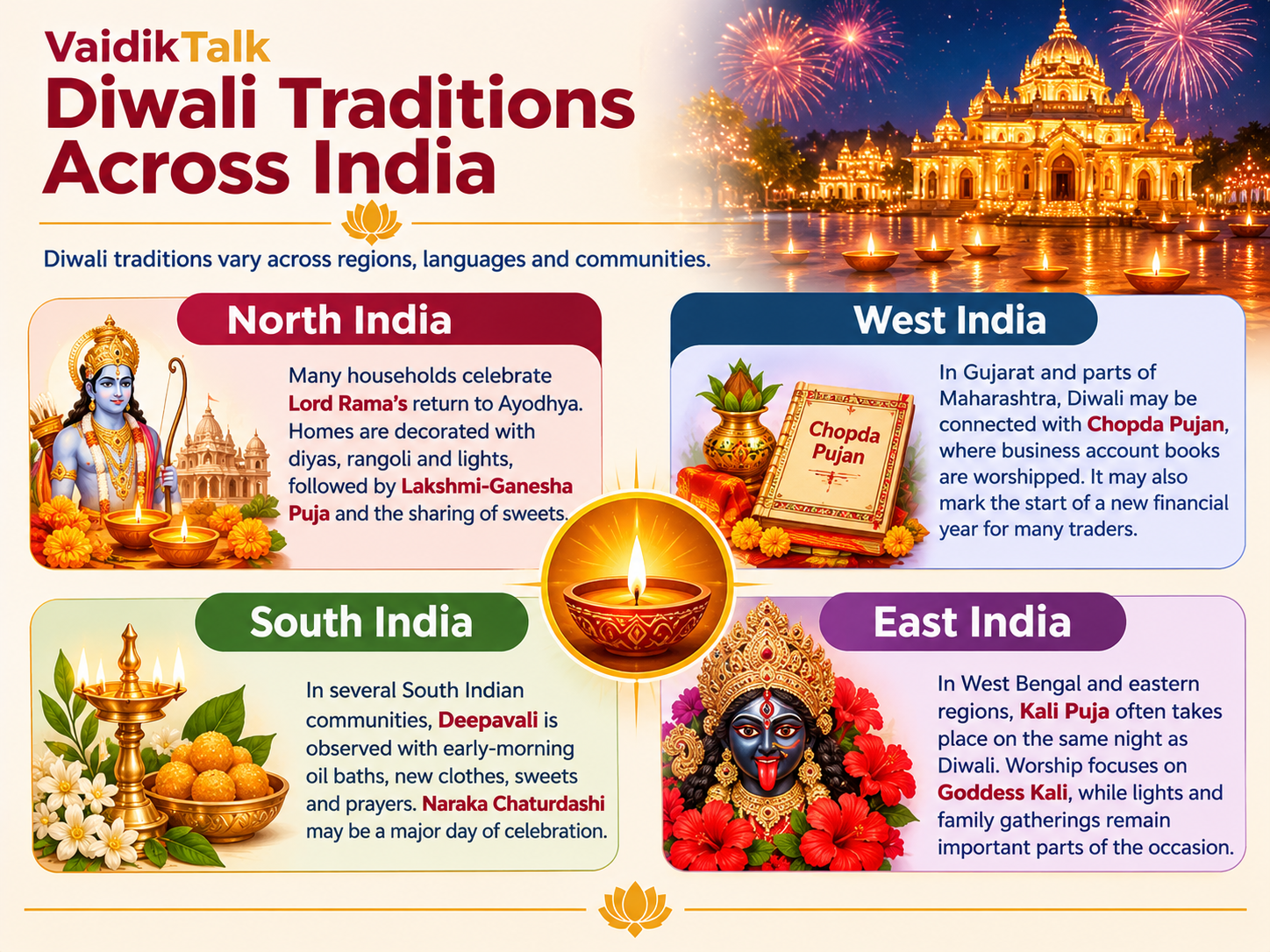
South India
In several South Indian communities, Deepavali is observed with early-morning oil baths, new clothes, sweets and prayers. Naraka Chaturdashi may be a major day of celebration.
East India
In West Bengal and eastern regions, Kali Puja often takes place on the same night as Diwali. Worship focuses on Goddess Kali, while lights and family gatherings remain important parts of the occasion.
The festival season also follows Navratri in many Hindu calendars. Readers can learn more through understanding the Navratri’s nine nights meaning and its spiritual importance.
Diwali, Wealth and Responsible Planning
Diwali often inspires purchases of gold, utensils, home items or gifts. Traditional belief may link this with auspicious beginnings, but financial decisions should be based on budget, product quality, long-term need and reliable documentation.
Those considering gemstones can read the main differences between emerald and peridot. Gemstones and spiritual items are faith-based choices, not substitutes for sound financial planning.
For readers interested in broader systems of reflection, a beginner’s guide to numerology and life path numbers offer additional perspectives.
Diwali and Personal Astrology
Some people choose the Diwali period to review their Kundli, start a spiritual practice or seek guidance on business, home and family matters. A complete chart reading considers the Ascendant, Moon sign, planetary placements, dashas and current transits.
Readers can explore Kaal Sarp Dosh and its traditional interpretations, how Sade Sati is traditionally understood and the difference between Sade Sati and Kaal Sarp Dosh.
For marriage-related discussions during the festive season, readers can compare online Kundli matching and traditional Guna Milan and learn how Manglik Dosh is assessed in marriage astrology.
Readers can also browse spiritual and puja-related items at Vaidik Talk Store for prayer essentials and meaningful festive gifts.
Celebrate Diwali 2026 With Meaning
Diwali 2026 is an opportunity for families to bring light, gratitude, kindness and responsible celebration into their homes. The central message of Lakshmi Puja is not limited to material gain. It encourages respect for honest work, wise decisions, generosity and harmony.
The exact Diwali Lakshmi Puja muhurat should be checked according to the local city and family tradition. A simple Diwali puja vidhi, performed with devotion and care, can make the evening meaningful without requiring elaborate arrangements.
For personal Panchang guidance, a Lakshmi Puja consultation or astrology-based Diwali support, readers can contact Vaidik Talk. Vaidik Talk offers astrology consultations, personalized Kundli reports, Kundli matching and spiritual guidance.
Frequently Asked Questions (FAQs)
When is Diwali 2026?
Diwali 2026 is expected to be observed on Sunday, 8 November 2026, subject to regional Panchang confirmation.
What is the Diwali Lakshmi Puja muhurat?
The Diwali Lakshmi Puja muhurat is generally observed during local Pradosh Kaal while Kartik Amavasya is active.
Can Lakshmi Puja be performed at home?
Yes, a simple home puja can be performed with clean space, diyas, Lakshmi-Ganesha images, flowers, sweets and sincere prayer.
Why are diyas lit on Diwali?
Diyas symbolise light, hope, welcome and the victory of clarity and goodness over darkness.
Does Diwali puja timing differ by city?
Yes, local sunrise, sunset and Panchang calculations mean the puja timing can differ from one city to another.