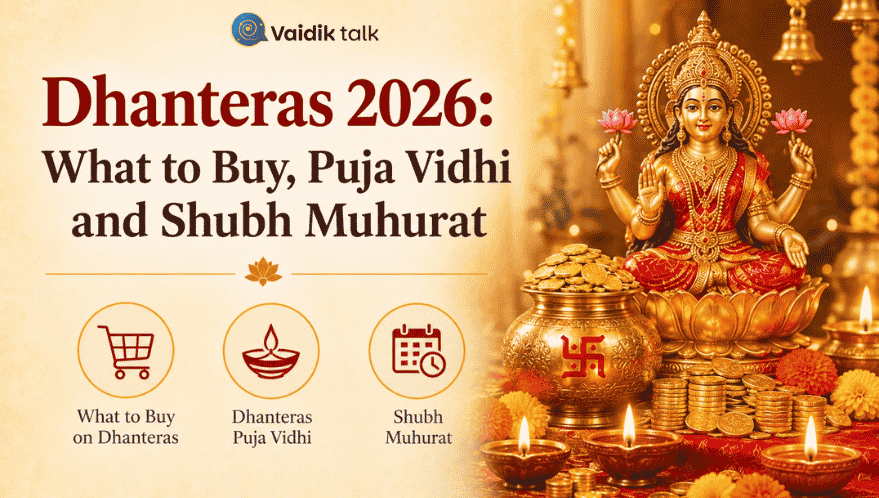
Dhanteras 2026 will be observed on Friday, 6 November 2026. Also called Dhantrayodashi, the festival falls on the Trayodashi Tithi of Krishna Paksha in the Kartik month and begins the five-day Diwali festival period. For New Delhi, published Panchang timings place Trayodashi from 10:30 AM on 6 November until 10:47 AM on 7 November.
The evening is traditionally devoted to worship of Lord Dhanvantari, Goddess Lakshmi and Lord Kubera. Families clean their homes, light diyas, perform prayers and make purchases that symbolise prosperity, health and positive beginnings. The exact Dhanteras shopping muhurat and puja timing change by city, so families should confirm local Panchang times before planning an activity.
Readers seeking context around Hindu calendar calculations can begin with what Vedic astrology and Jyotish mean. Tithi, sunset, Pradosh Kaal and local geography are among the factors used to determine festival timings.
Dhanteras 2026 Date and Shubh Muhurat
For New Delhi, the published Dhanteras puja vidhi period is linked with Pradosh Kaal and Vrishabha Kaal on Friday evening. The city-specific muhurat below should be treated as a reference for New Delhi only.
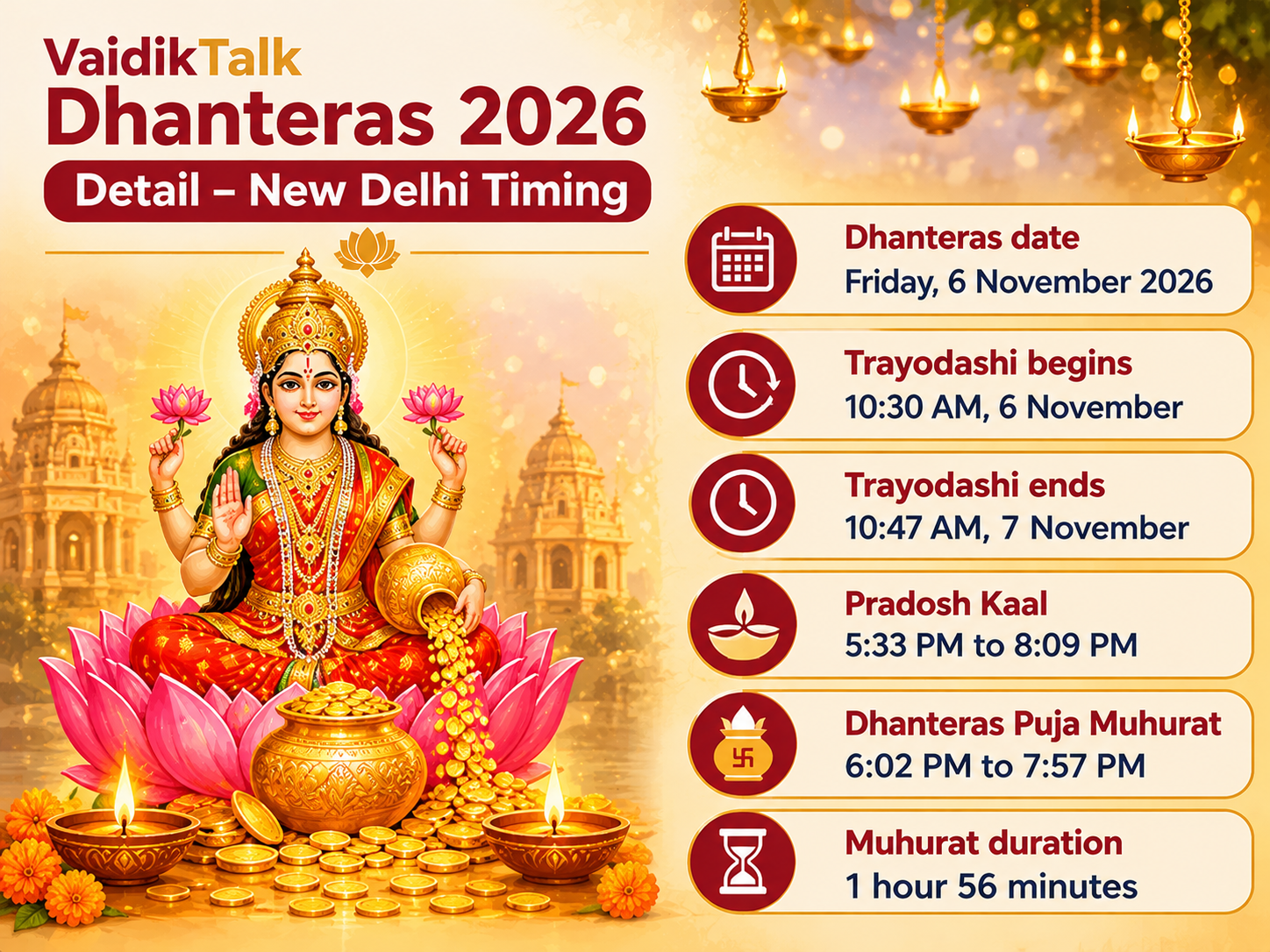
The listed Dhanteras Puja Muhurat for New Delhi is 6:02 PM to 7:57 PM, with a duration of 1 hour 56 minutes. Cities have different sunset timings, so households in Mumbai, Kolkata, Chennai, Bengaluru, Jaipur or other locations should refer to a local Panchang or consult a knowledgeable priest.
What Is Dhanteras?
Dhanteras combines the Sanskrit words dhan, meaning wealth, and teras, referring to the thirteenth lunar day. It is traditionally linked with the worship of wealth, health, disciplined work and grateful living.
A major tradition connects this day with Lord Dhanvantari, regarded in Hindu belief as the divine physician associated with Ayurveda. The Government of India has also recognised Dhanteras as the birth anniversary of Lord Dhanvantari and linked the observance with health and well-being.
Another tradition honours Goddess Lakshmi, associated with prosperity and auspiciousness, while Lord Kubera is worshipped as a guardian of wealth. The spiritual message is wider than buying expensive items. It includes respect for honest work, mindful spending, family well-being and generosity.
Significance of Dhanteras 2026
Dhanteras 2026 offers families an opportunity to prepare for Diwali with gratitude and intention. Cleaning the home, arranging diyas and preparing a puja space are traditional expressions of welcome and care.
The festival also encourages people to reflect on three forms of wealth:
- Material stability: Income, savings, useful household goods and responsible planning.
- Health: Nourishing food, rest, medical care and physical well-being.
- Inner abundance: Wisdom, family bonds, generosity, compassion and faith.
The National Health Portal of India provides public health information for citizens, offering a practical reminder that health is supported by reliable medical guidance, preventive care and healthy habits. Spiritual observances can complement personal values but do not replace medical treatment.
Dhanteras Shopping Muhurat 2026
Buying new goods on Dhanteras is a widespread custom. Many families purchase metals, utensils, kitchen appliances, vehicles, work tools, religious items or household necessities. These purchases symbolise growth and a fresh beginning.
For New Delhi, published Dhanteras shopping muhurat windows on 6 November include several periods associated with the active Trayodashi Tithi.
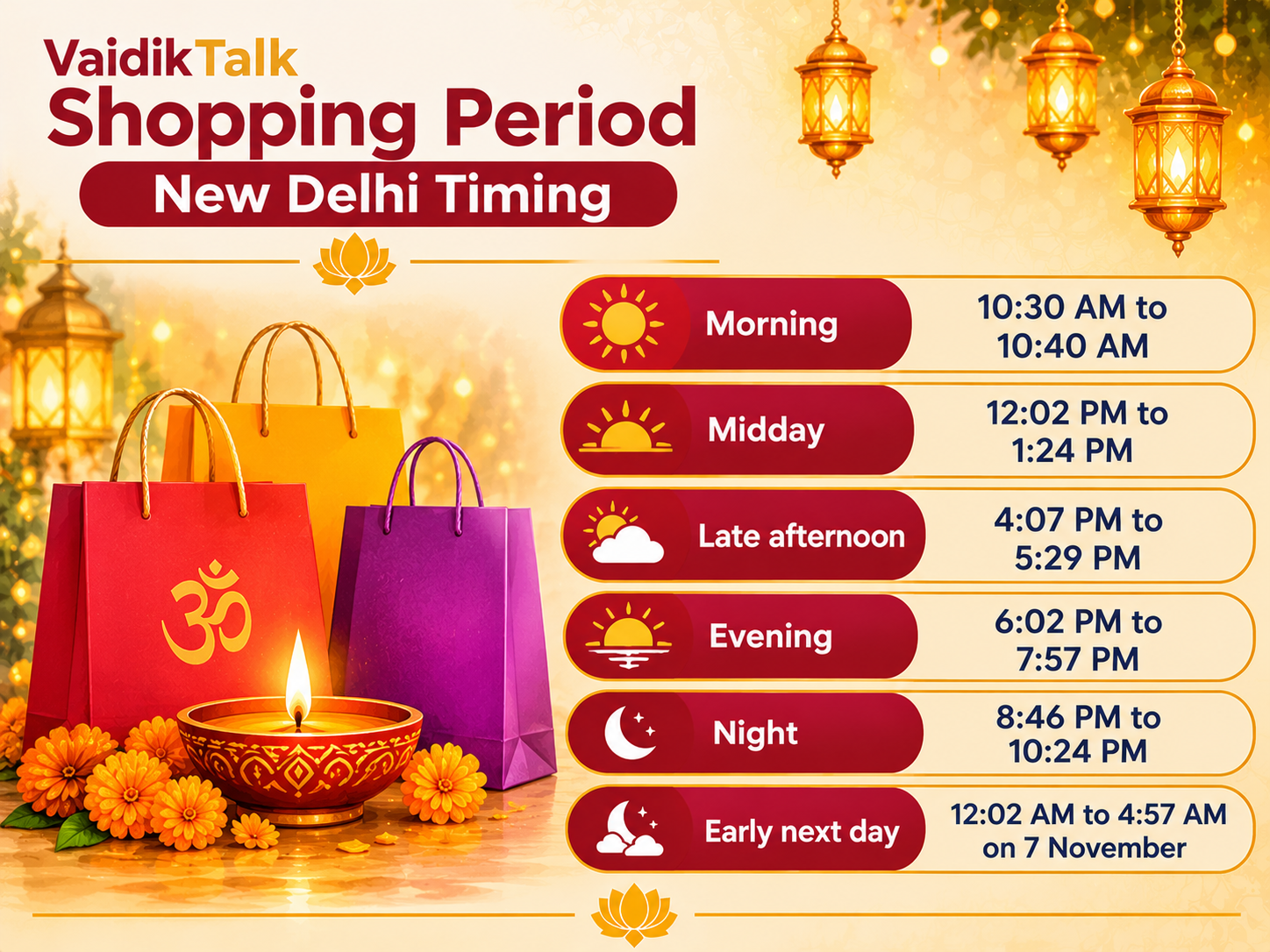
A shopping muhurat is a traditional timing preference, not a reason to make a rushed purchase. Families may benefit from setting a budget, comparing prices, requesting proper invoices and selecting items they genuinely need.
What to Buy on Dhanteras
Gold and Silver
Gold and silver coins, bars, jewellery or small Lakshmi-Ganesha coins are popular Dhanteras purchases. They symbolise stability and prosperity in many households.
Buyers should check purity markings, weight, making charges, return terms and a detailed bill. For jewellery, hallmark verification and authorised sellers are practical considerations.
Utensils and Kitchenware
New utensils, particularly steel, brass, copper or silver items, are traditional purchases. Many families buy a small vessel, plate, diya, kalash or cooking item for use in the home.
A useful utensil can hold greater daily value than a decorative purchase. Families may choose according to budget and household needs.
Diyas and Puja Items
Clay diyas, cotton wicks, incense, aarti plates, kalash, lamps and deity images are meaningful choices for Dhanteras. Locally made clay diyas can also support artisans and small sellers.
Those interested in spiritual items can explore Rudraksha origin, meaning and spiritual significance. Before purchasing beads, it is useful to understand what Rudraksha certification means.
Work and Household Essentials
Tools, electronics, books, furniture, safety equipment or kitchen appliances may be purchased if they fit a genuine need. Some business owners also buy ledgers, office supplies or work equipment as a respectful beginning for the festive period.
Gemstones and Jewellery
Some people choose gemstones as devotional or personal items. Readers can compare emerald and peridot before buying. Gemstones are faith-based products and should not be considered a substitute for financial planning, professional advice or healthcare.
What to Avoid Buying on Dhanteras
Traditional customs differ from one family to another, so there is no universal rule. Still, many households avoid:
- Borrowing money for unnecessary festive purchases.
- Buying products without bills, purity certification or return information.
- Making purchases driven by pressure or fear.
- Purchasing sharp objects if their family custom discourages it.
- Buying low-quality decorative goods that create avoidable waste.
- Spending beyond a planned budget.
Dhanteras is associated with thoughtful prosperity. A modest, useful purchase made responsibly can be more meaningful than an expensive item bought under financial stress.
Dhanteras Puja Vidhi at Home
A simple Dhanteras puja vidhi can be performed with devotion and respect. Families may follow their regional traditions or seek guidance from a priest for a more detailed ritual.
Prepare the Home and Puja Space
The house is cleaned, especially the entrance and puja area. A rangoli may be made near the doorway, and diyas may be placed safely around the home.
Place a clean red or yellow cloth on a chowki or stable platform. Arrange images or murtis of Lord Dhanvantari, Goddess Lakshmi, Lord Ganesha and Lord Kubera according to family practice.
Gather Puja Samagri
Typical items include:
- Diyas, cotton wicks and ghee or oil
- Images or murtis of Lakshmi, Ganesha, Dhanvantari and Kubera
- Flowers, kumkum, haldi and akshat
- Fruits, sweets and dry fruits
- Incense, camphor and an aarti thali
- Kalash, water, mango leaves and coconut
- Coins, new utensils or business account books
- Betel leaves and nuts, if customary
- A small quantity of coriander seeds, if used in the family tradition
The arrangement does not need to be expensive. Cleanliness, sincerity and safety are the main focus.
Take a Sankalp
After lighting a diya, family members may take a simple sankalp. The intention can focus on good health, ethical earnings, wise use of resources, peace in the home and service toward others.
A prayer practice may include quiet reflection, mantra recitation or gratitude. Each household may choose language and rituals that suit its tradition.
Worship Lord Ganesha
Lord Ganesha is commonly worshipped before other deities. Offer flowers, water, kumkum, rice, incense and sweets. The prayer can focus on wisdom and clear decision-making.
Worship Lord Dhanvantari
Offer flowers, fruits and prayers to Lord Dhanvantari. Many families remember health workers, caregivers and loved ones during this part of the puja.
A person with health concerns should consult qualified medical professionals. Religious practice can bring emotional comfort, but it should remain alongside evidence-based medical care.
Worship Goddess Lakshmi and Lord Kubera
Offer flowers, kumkum, rice, sweets and fruits to Goddess Lakshmi and Lord Kubera. Some families place coins, account books, a newly purchased utensil or business documents near the puja setup.
The worship represents gratitude for resources and a commitment to responsible use of wealth.
Perform Aarti and Light Diyas
Perform aarti with a diya or camphor, then share prasad with family, neighbours and guests. Diyas can be lit at the entrance and in safe places around the home.
Children and pets should be supervised near open flames. Diyas should stay away from curtains, paper decorations and crowded passageways.
Dhanteras, Ayurveda and Health
Dhanteras is linked with Lord Dhanvantari and is often connected with Ayurveda. Ayurveda is a traditional Indian system that focuses on diet, daily routines and holistic well-being.
The Ministry of AYUSH is India’s government body responsible for policy and research related to Ayurveda, Yoga and other traditional systems of medicine. Visit the Ministry of AYUSH for official information on these systems.
Families may use Dhanteras to build practical wellness habits, such as scheduling a health check-up, reviewing first-aid supplies, cooking balanced meals or supporting someone’s treatment needs. These actions align with the festival’s health-centred meaning.
Dhanteras and Diwali Traditions
Dhanteras is followed by Naraka Chaturdashi, Diwali or Lakshmi Puja, Govardhan Puja and Bhai Dooj in many regions. Practices differ across India, reflecting local language, family customs and community traditions.
Readers can learn more about the wider festival season through the significance of Navratri and its nine nights. Diwali’s main Lakshmi Puja further develops the theme of light, gratitude and household well-being.
People who want to understand Hindu calendar terms may also benefit from what a Kundli is and how its components are read. Both festival timing and birth-chart analysis use traditional astronomical and calendrical concepts, though they serve different purposes.
Responsible Festive Giving
Dhanteras and Diwali are often times for gifting. Useful gifts may include locally made diyas, dry fruits, books, reusable household goods, artisan products or donations made in someone’s name.
Giving can extend beyond family circles. Food donation, support for local artisans and contribution to community welfare may reflect the festival’s message of abundance shared with others.
Readers interested in prayer items can view Rudraksha and spiritual products at Vaidik Talk Store. They can also review traditional and buyer-reported Rudraksha benefits before choosing an item for personal use or gifting.
Dhanteras and Astrology
Some people choose Dhanteras for spiritual reflection, prayer or consultation about professional and family concerns. A full Kundli analysis considers the Ascendant, planets, houses, dashas and transits rather than one festival-day purchase.
Readers can explore Kaal Sarp Dosh, its causes and traditional remedies, traditional signs of Sade Sati and how Kaal Sarp Dosh differs from Sade Sati.
For relationships and marriage discussions, readers may review online Kundli matching versus traditional Guna Milan and how Manglik Dosh is assessed for marriage.
Other systems, such as Nadi astrology and Vedic astrology, use distinct methods. Readers interested in number-based reflection can also review what numerology means and how a life path number is traditionally interpreted.
Celebrate Dhanteras 2026 With Purpose
Dhanteras 2026 falls on Friday, 6 November, with the New Delhi Dhanteras Puja Muhurat listed from 6:02 PM to 7:57 PM. Families outside New Delhi should use local Panchang timings for the correct Dhanteras shopping muhurat and evening puja period.
A meaningful Dhanteras puja vidhi centres on gratitude, health, responsible prosperity and kindness. Whether a family purchases a single diya, a useful utensil or a larger item, thoughtful planning and sincere worship can bring purpose to the celebration.
For personal Panchang guidance, spiritual consultation or a detailed Kundli reading, readers can contact Vaidik Talk. Vaidik Talk offers astrology consultations, personalised Kundli reports, Kundli matching and spiritual guidance.
Frequently Asked Questions (FAQs)
When is Dhanteras 2026?
Dhanteras 2026 will be observed on Friday, 6 November 2026.
What is the Dhanteras puja muhurat in New Delhi?
The published New Delhi puja muhurat is 6:02 PM to 7:57 PM on 6 November 2026.
What can people buy on Dhanteras?
Popular choices include gold, silver, utensils, diyas, puja items, useful household products and work-related essentials.
Is Dhanteras shopping muhurat the same across India?
No, shopping and puja timings differ by city due to changes in sunset time and local Panchang calculations.
Who is worshipped on Dhanteras?
Families commonly worship Lord Dhanvantari, Goddess Lakshmi, Lord Ganesha and Lord Kubera.