Lal Kitab remedies are traditional astrological practices associated with planetary symbolism, charitable giving, personal conduct and household observances. Many people approach them as expressions of faith during periods of uncertainty about work, relationships or family life.
However, a remedy associated with one planet is not automatically suitable for every person. In Lal Kitab astrology, practitioners interpret planetary placements and relationships before suggesting an upay. A social-media checklist cannot provide the same context as an individual chart assessment.
Britannica classifies astrology as divination, rather than an established scientific method of predicting events. Accordingly, the practices discussed here should be understood as cultural and spiritual traditions, not proven treatments or promises of financial success.
Understanding Lal Kitab Astrology
What Makes This Approach Different?
Lal Kitab is a distinct astrological tradition known for its emphasis on house-based interpretation, planetary relationships and accessible remedial practices. Its methods should not be treated as interchangeable with every branch of Jyotish.
Readers unfamiliar with chart terminology can begin with what a Kundli represents and the foundations of Vedic astrology.
Astrological charts commonly contain 12 houses, each associated with areas of experience, as described in Britannica’s educational explanation of astrology. A Lal Kitab practitioner considers planetary context rather than choosing remedies solely from a Sun sign.
Why “Nine Planets” Includes Rahu and Ketu
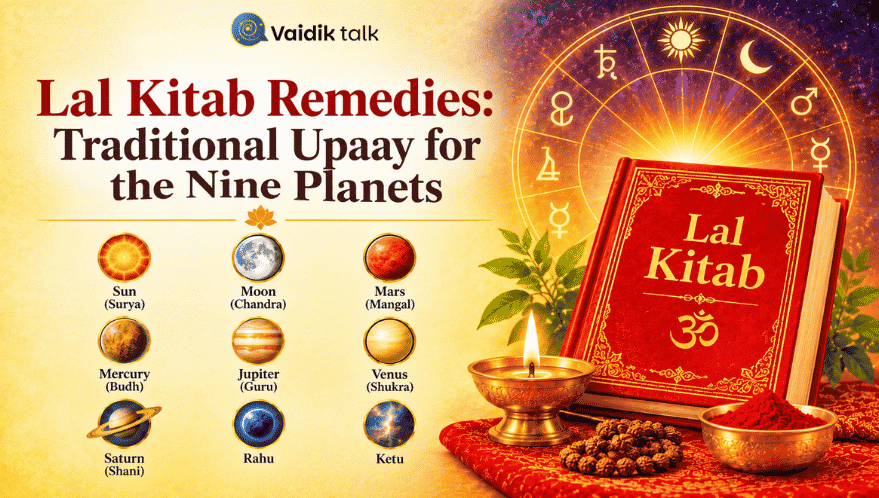
The traditional Navagraha comprises the Sun, Moon, Mars, Mercury, Jupiter, Venus, Saturn, Rahu and Ketu. Rahu and Ketu are classified as shadow planets within this framework.
Navagraha reference distinguishes these nine traditional astrological factors from the modern astronomical definition of planets.
This distinction matters when discussing Lal Kitab upay for planets: the terminology belongs to a spiritual interpretive system.
Traditional Upay for Nine Planets
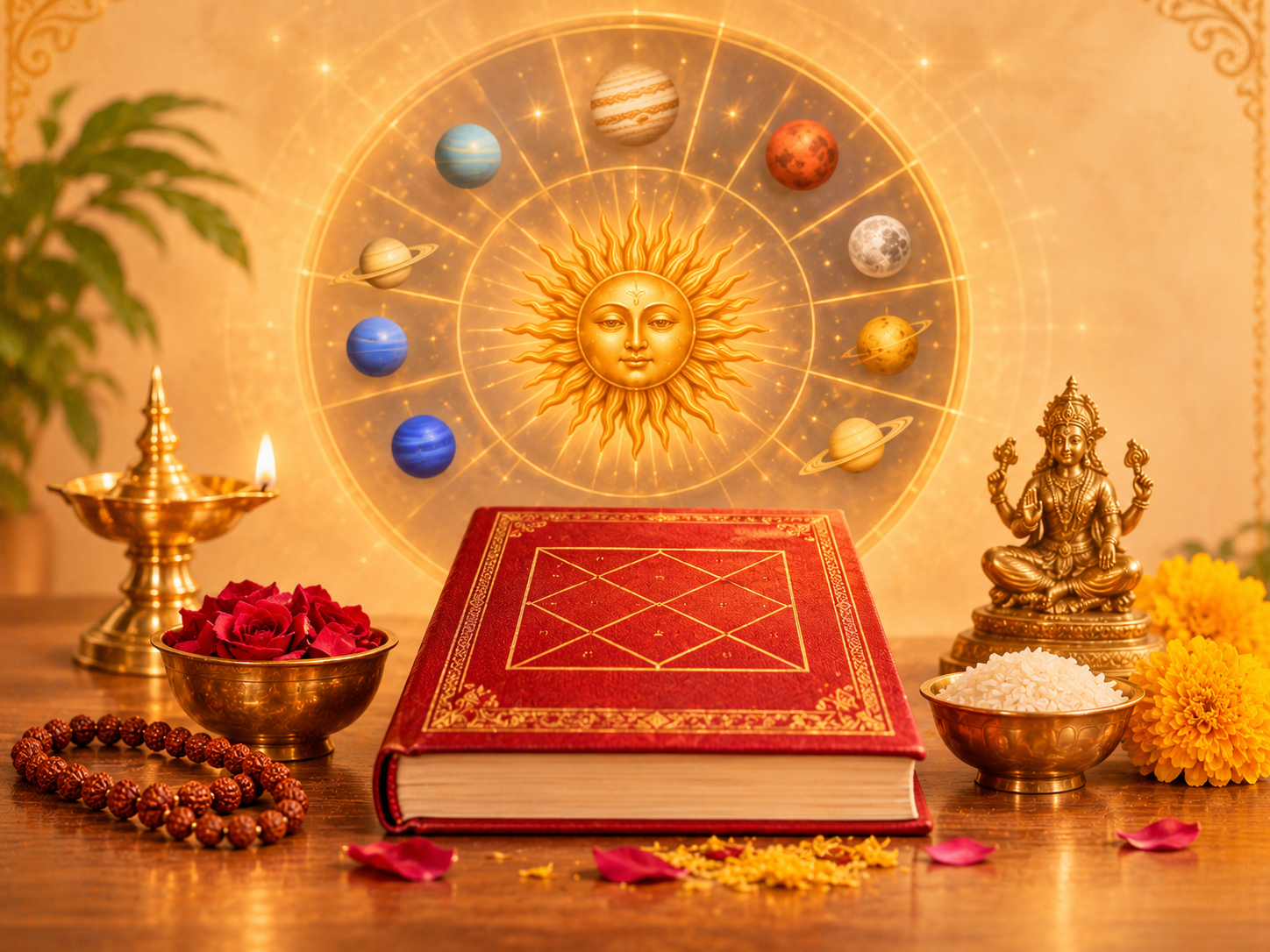
The following examples describe popular planetary associations and low-risk devotional alternatives. They are not verified quotations from a particular Lal Kitab edition, nor prescriptions suitable for every Kundli. Some practices also occur in broader Hindu traditions.
Sun: Responsibility and Respect
The Sun is traditionally associated with authority, confidence, visibility and father figures.
Popular observances include respectful conduct toward elders, keeping commitments and donating useful food supplies through an appropriate organisation. Some households offer water during morning worship.
A person undertaking this practice should avoid looking directly at the Sun or leaving water where it creates a slipping hazard. Symbolic worship is best accompanied by responsible action, such as completing obligations and communicating honestly.
Moon: Care and Emotional Steadiness
The Moon is traditionally connected with nurturing, family relationships, emotional experience and domestic life.
Commonly discussed practices include supporting caregivers, donating suitable food and maintaining a clean drinking-water area. A household might provide packaged supplies requested by a community kitchen.
These actions can express care without claiming to treat anxiety, depression or sleep disorders. Persistent emotional distress requires qualified support rather than a planetary diagnosis.
Mars: Constructive Effort and Restraint
Mars is associated with initiative, courage, physical activity and conflict.
Popular charitable associations include red lentils and assistance to people performing demanding work. A safer behavioural approach includes avoiding threats, managing disagreements calmly and directing energy toward constructive tasks.
A Mars-related observance should not involve self-injury, dangerous stunts or aggressive fasting. Supporting a community project may offer a practical expression of service without unnecessary risk.
Mercury: Learning and Honest Communication
Mercury is traditionally associated with speech, calculation, trade and learning.
Common devotional suggestions include donating green gram, supporting students and providing stationery through schools or charities. Clear communication and truthful business dealings are also consistent with Mercury’s symbolic themes.
A person seeking employment should pair any spiritual practice with applications, skill development and interview preparation. An upay does not replace these steps.
Jupiter: Knowledge and Generosity
Jupiter is connected with teachers, guidance, learning, faith and ethical judgment.
Popular practices include donating suitable yellow food items, supporting education and showing appreciation for mentors. A modest contribution toward books or school meals can express generosity.
Some traditions associate Jupiter with Thursday, but timing alone does not establish the suitability of a remedy. A practitioner should explain the chart-based reasoning behind a recommendation.
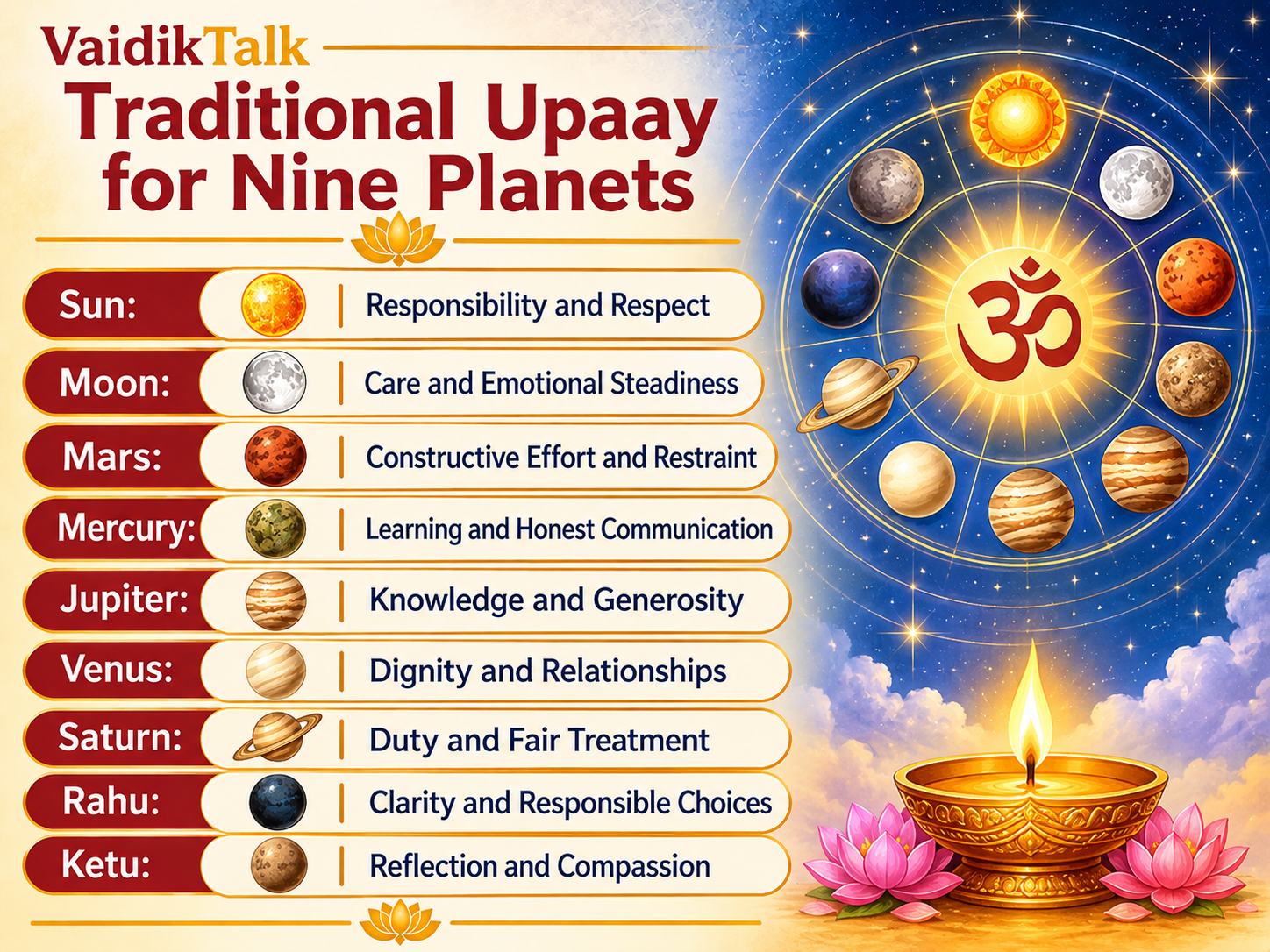
Venus: Dignity and Relationships
Venus is traditionally linked with relationships, aesthetics, comfort and enjoyment.
Common charitable associations include clean clothing, suitable food and support for people facing hardship. Respectful partnerships, fair household responsibilities and thoughtful spending offer practical expressions of these themes.
Relationship difficulties deserve direct communication and, where appropriate, counselling. Neither a Venus remedy nor a chart label excuses controlling or abusive behaviour.
Saturn: Duty and Fair Treatment
Saturn is associated with work, patience, responsibility and sustained effort.
Popular practices include donating blankets or suitable staples and supporting older people or workers experiencing hardship. Fair wages, timely payments and respectful treatment are meaningful ethical choices.
Readers exploring Saturn-related concerns can review traditional interpretations of Sade Sati. That transit concept should not be treated as proof that every setback has a planetary cause.
Rahu: Clarity and Responsible Choices
Rahu is traditionally associated with ambition, unconventional pursuits, confusion and strong desires.
Popular discussions of Rahu remedies vary considerably. A cautious approach favours honesty, avoiding deceptive schemes and seeking help for harmful substance use or compulsive behaviour.
Some ritual lists recommend handling unusual substances or depositing objects in public places. Such instructions should be questioned where they pose health, legal or environmental risks.
Ketu: Reflection and Compassion
Ketu is traditionally connected with detachment, contemplation and spiritual inquiry.
Popular observances include quiet prayer and assistance to animals. Animal support is safer through a recognised shelter, veterinary service or organised feeding programme using species-appropriate food.
A reflective routine may also draw on Vaidik Talk’s beginner meditation guide. Meditation should remain optional and comfortable rather than becoming a demanding ritual obligation.
Choosing Remedies Responsibly
Separate Faith From Treatment
Lal Kitab remedies should not replace medical care, legal guidance, counselling or financial advice. No dependable success percentage can be assigned to their planetary claims.
The WHO’s guidance on mental-health treatment and care supports access to evidence-based services. A person experiencing significant distress should seek appropriate professional help, even if prayer remains personally meaningful.
The NCCIH meditation safety resource also advises against postponing conventional care because of meditation.
Protect Waterways and Animals
Some circulating remedy lists suggest placing food, coins or other materials in rivers. These practices can create waste and should be replaced with lawful, environmentally responsible alternatives.
India’s official guidance on religious offerings and river pollution discourages dumping puja materials in water bodies. Suitable donations can instead reach people through community organisations.
Food offered to animals should be appropriate for the species and permitted locally. Milk, sweets and heavily seasoned leftovers are not universal animal foods.

Avoid Fear-Based Spending
A responsible consultation explains the proposed practice, its traditional basis, cost and limitations. Pressure to purchase expensive objects or threats of disaster are warning signs.
Those considering prayer accessories can read about Rudraksha’s spiritual significance, traditional and buyer-reported benefits, and what certification establishes.
VaidikTalk Store lists a 5 Mukhi Rudraksha bracelet and a 5 Mukhi Rudraksha Kantha Mala. Such accessories are optional devotional purchases, not proof of effective Lal Kitab upay for planets.vaidiktalk+1
Gemstone buyers may also consult the emerald-versus-peridot comparison before evaluating product claims.
Chart Context and Other Traditions
Different Systems Answer Different Questions
Lal Kitab astrology should not be blended casually with unrelated techniques. For example, Nadi and Vedic astrology use distinct approaches, while numerology and life path numbers involve number-based interpretations.
Likewise, Vastu remedies for prosperity concern traditional spatial practices. They do not establish a planetary condition in a birth chart.
Avoid Treating Every Chart Label as a Crisis
Readers researching planetary combinations can compare Kaal Sarp Dosh interpretations, its distinction from Sade Sati, and Raj Yoga formation.
For marriage questions, Kundli matching and Guna Milan and Manglik Dosh assessment involve separate considerations. A consultation should clarify these distinctions rather than attach multiple alarming labels to ordinary uncertainty.
Conclusion: A Considered Approach
The most responsible approach to Lal Kitab remedies combines cultural respect with clear limits. Charity, ethical conduct and reflection may hold personal value, but planetary claims should not become promises or sources of fear.
Readers comparing services can review Kundli-making options. For a discussion of Lal Kitab upay for planets, readers can contact Vaidik Talk and ask about practitioner experience, interpretive methods and consultation scope.
Frequently Asked Questions (FAQs)
What are Lal Kitab remedies?
They are traditional astrological observances involving conduct, charity and symbolic practices.
Can the same remedy suit everyone?
No, Lal Kitab practitioners generally consider individual planetary placements before recommending an upaay.
Are expensive products compulsory?
No, devotional accessories are optional and should not be presented as compulsory purchases.
Do remedies replace professional care?
No, they should not replace medical treatment, counselling, legal guidance or financial advice.
How can someone assess a recommendation?
A responsible recommendation explains its traditional basis, practical requirements, risks and limitations.